
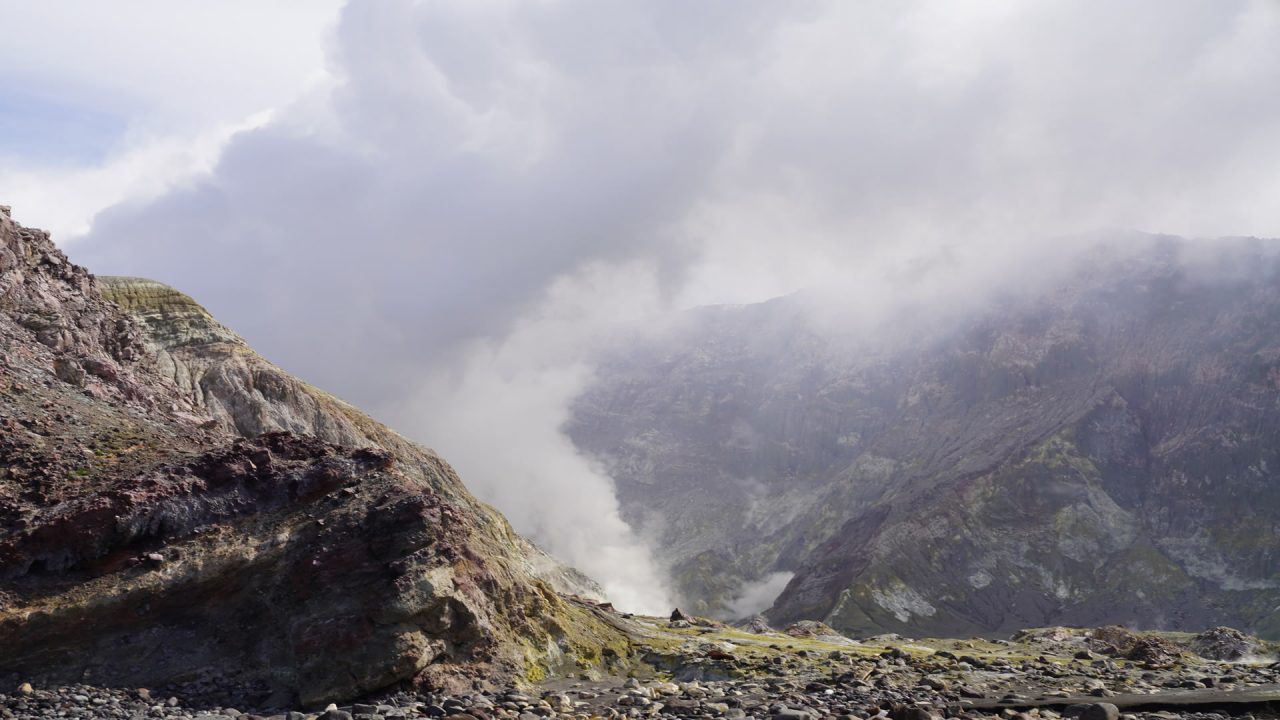
White Island, New Zealand / December 2019
At exactly 2.11pm on Dec 9, an unforeseen phreatic eruption occurred on White Island. Tragically, a number of tourists were in the direct impact zone at the time of the eruption. At present, eight people have died, a further eight are missing (presumed dead) and 31 are critically injured in hospital.
I have been deeply saddened by this tragedy and my thoughts and sympathies are with the families of those impacted. R.I.P. to those who perished – many of which would have been their first – and tragically their last visit to an active volcano.
In the days following the eruption, Kiwis across the country have had to come to terms with yet another major tragedy impacting our small nation. Emotions are raw and often the inherent tendency is to point blame. The time will come for a comprehensive review and likely Commission of Inquiry, but for now we need to rally around those most impacted.
Volcanoes are unpredictable beasts. When they erupt, the fallout can often be disastrous. Anyone who ventured near White Island would have felt a blazing sense of mother nature’s disinterest in us. But when volcanoes are not impacting people negatively, they’re a mesmerizing spectacle to witness. And this is why thousands of tourists flocked there.
But many have questioned why tourists were even on the island considering the volcano’s alert level had been recently increased to Volcanic Alert Level to Level 2 (moderate unrest).
The first signs of volcanic unrest came in late September when small-scale geyser-like explosions of mud and steam were observed. Other monitored parameters remained consistent. A month later, the amount of SO2 gas output and level of volcanic tremor heightened. It was not until November that the Volcanic Alert Level was raised to Level 2 due to further irregularities of monitored parameters.
It’s important to consider that the vast majority of former alert level changes (from Level 1 to 2) have not resulted in eruptive activity. Just five months prior, a change in SO2 gas output saw an increase to Level 2. Less than a week later, the alert was lowered.
Phreatic eruptions are notoriously difficult to predict due to the absence of prior seismic activity. They occur when hot material and water contact each other causing a sudden expansion of water into steam.
The last bulletin issued prior to the eruption noted that the volcano may be entering a period where eruptive activity is more likely than normal. GNS also noted that the current level of activity does not pose a direct hazard to visitors.
White Island Tours Limited continued their operations, as they have done for over 30 years – often at Volcanic Alert Level 2. Only this time, an unlikely eruption occurred with catastrophic consequences.
On my numerous visits to the island, the White Island Tours staff have always provided detailed safety briefings – even what to do in case of an eruption. I can only feel for the staff, who have not only lost their jobs and income, but have lost colleagues. They did however make the risks abundantly clear to all.
Risk comes part and parcel with our existence. Our basic survival requires calculated risk taking and sometimes, just sometimes, the fallout can be disastrous. This undoubtedly is no comfort for those impacted on Monday, but the odds of being killed by a volcanic eruption remain extremely low. Fewer than 1000 people globally have died by volcanic causes in the past decade.
I look forward to the recommendations of the impending Commission of Inquiry and hope prudent measures are taken to reduce and mitigate the risk that volcanoes pose. But to ban all visitations to volcanoes including White Island needs to be carefully moderated and well-considered.
Without volcanoes, our planet would not exist. They can take away life so quickly but they are also the seeders of our planet’s life ingredients.
Kia kaha and with deepest sympathies
One Comment:
JOhn
Awesome post! Keep up the great work! 🙂