
I’ve explored a lot of caves around New Zealand, from huge limestone systems to lava tubes and probably a thousand or more sea caves, but ice caves are a rarer find. A few of the smaller ones are fairly easy to reach on guided glacier trips at places like Franz Josef, Fox and the Tasman. Beyond those, though, there are some truly enormous ice caves that can hold their own against anything in Iceland or Alaska, and in some cases even outdo them.
Ice caves form in a couple of different ways, and the name gets used loosely for both. The first kind are true glacier caves, which are carved into the ice itself. Meltwater on the surface of a glacier finds its way down through cracks and holes called moulins, then runs along the base of the glacier or through channels inside it. That water is slightly warmer than the ice around it, so over time it melts out tunnels and chambers. Warm air flowing through the openings speeds the process up.
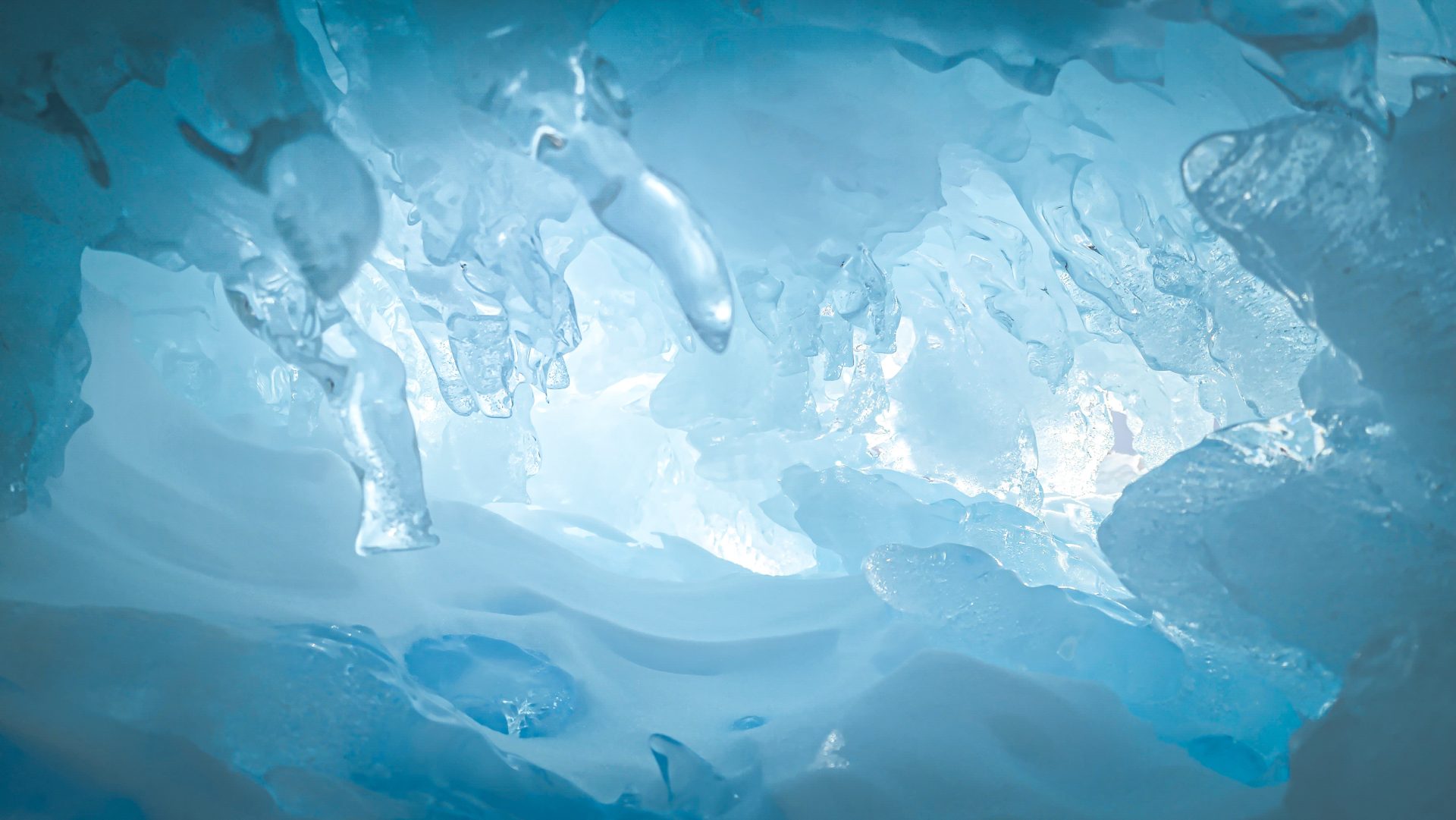
Glacier cave discovery, South Island, New Zealand….Colours almost too hard to believe.
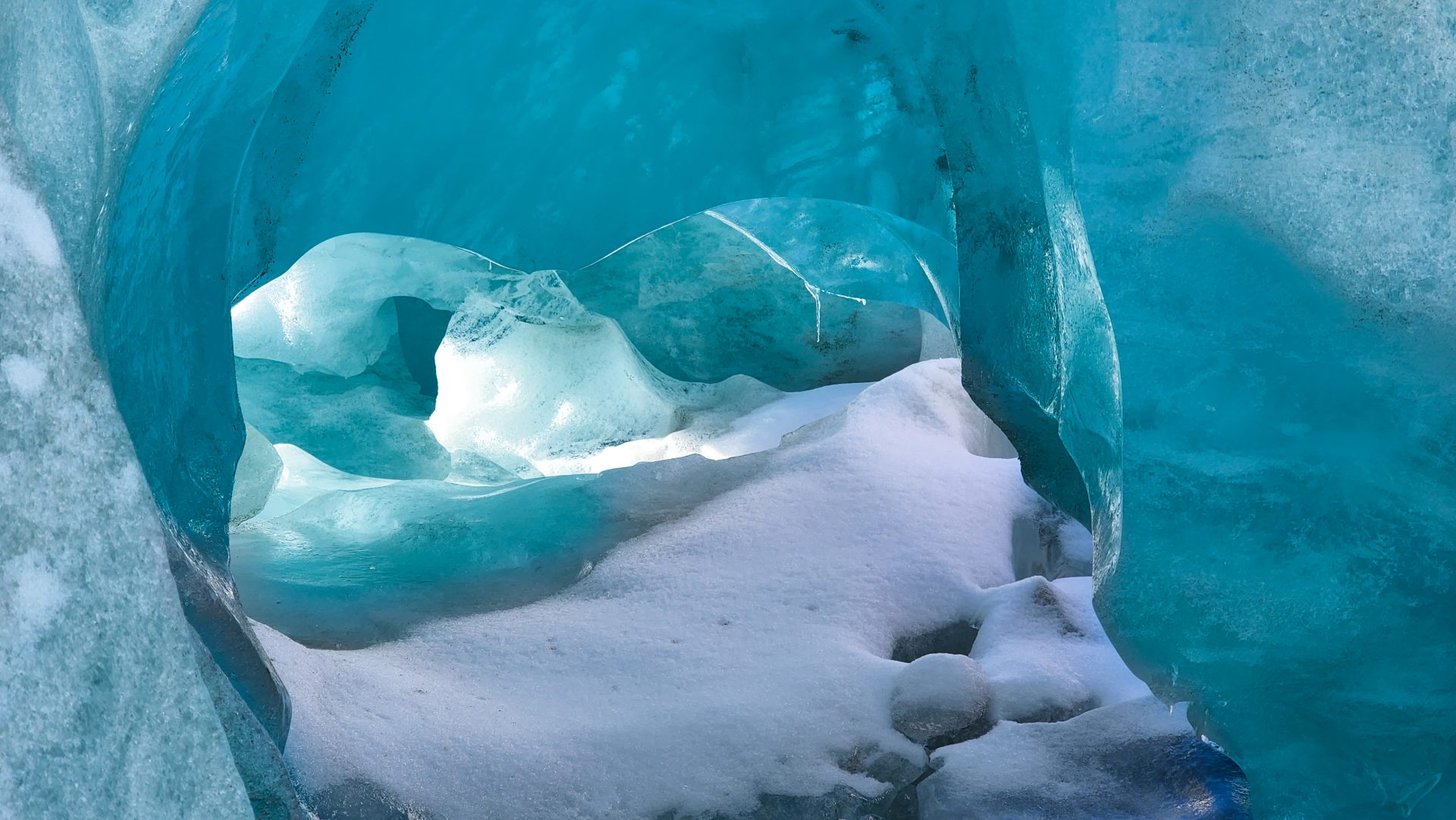
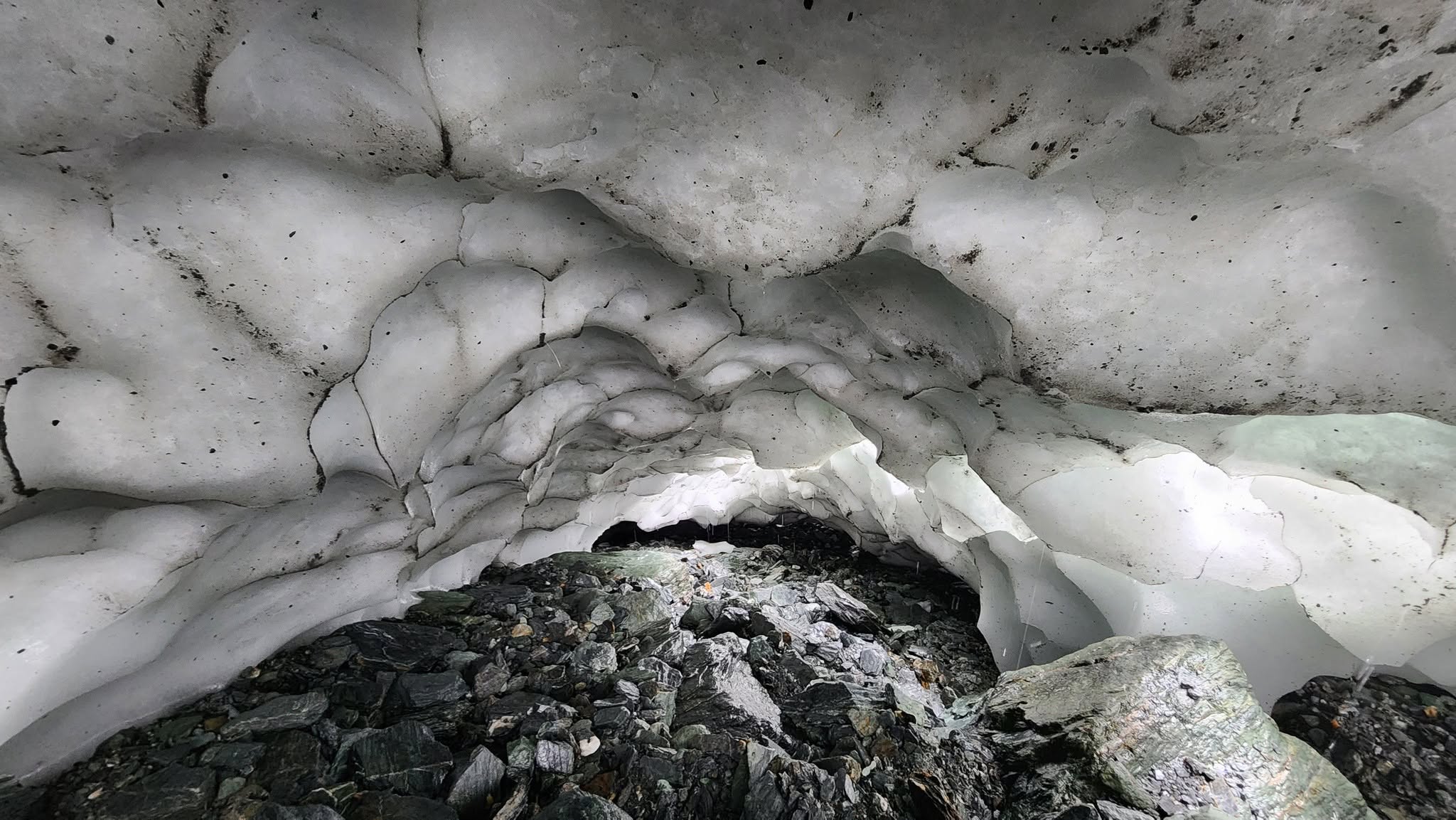
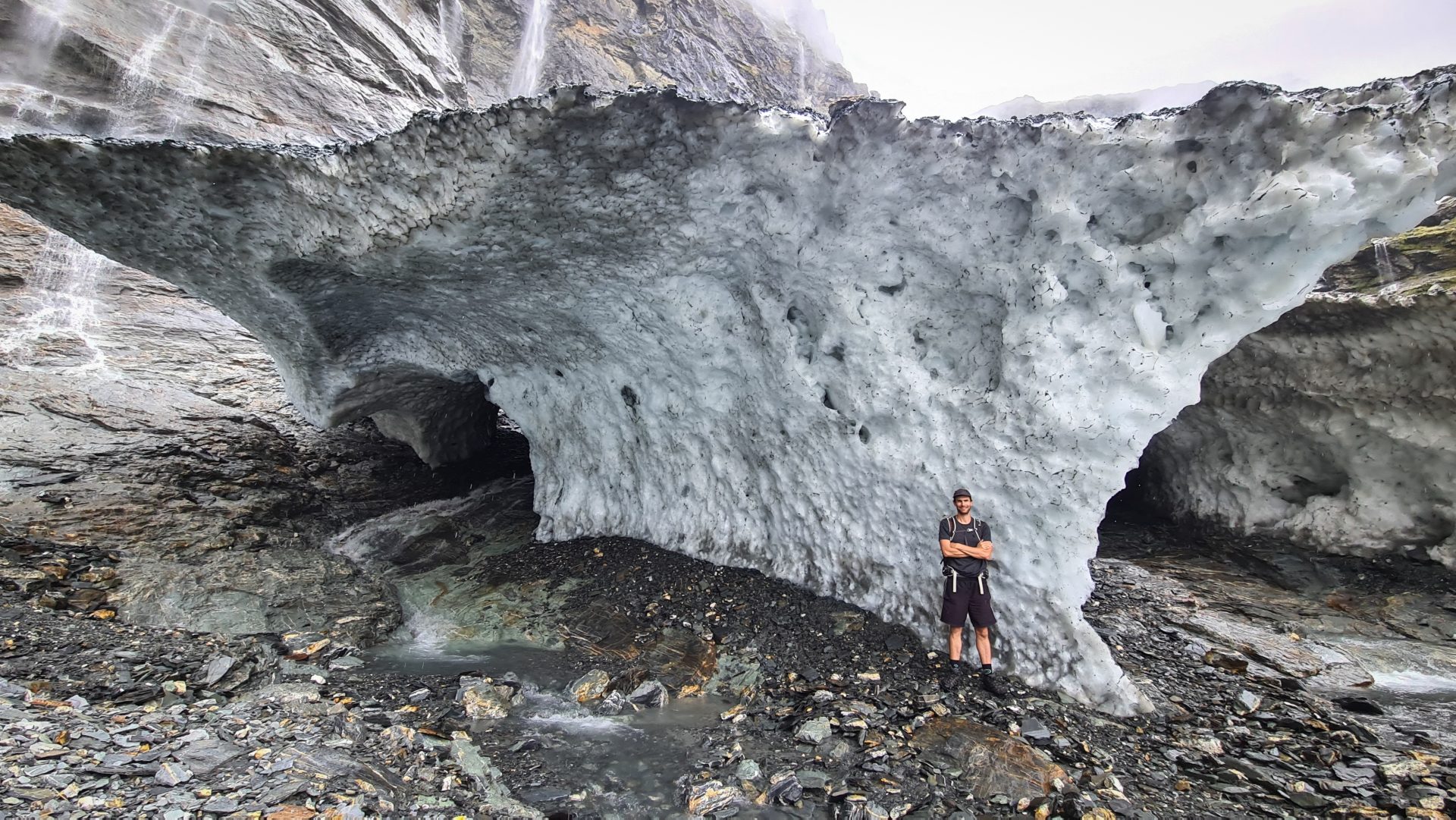
The second kind show up higher in the mountains, in thick snowfields and patches of old packed snow that never fully melt over summer. As the weather warms, snow and ice on the slopes above begin to melt, and the water trickles down and runs underneath the snowpack. Streams flowing beneath the snow slowly hollow it out from below, and air moving through the gaps keeps widening the space until a cave opens up. Some of these caves are big enough to walk into, with ceilings scalloped into rows of shallow dips by the moving air.
Compacted snow cave, South Island, New Zealand
A third kind of ice cave isn’t made of ice at all, but is an ordinary rock cave that happens to hold ice all year round.
The blue color people love in photos comes from the ice being so dense that it absorbs the red end of the light spectrum and lets mostly blue through.
Ice caves are extremely dangerous, and I generally advise people not to go inside them. Large chunks of ice can break away from the ceiling at any moment without warning. To make things worse, most of the ice caves I’ve found around the country were during the summer months, when there’s more melt, which is what tends to expose the openings in the first place. That also means they’re at their most unstable right when they’re easiest to find. It can be tempting to explore the caves at the base of a glacier, but these are some of the most dangerous places you can be. I’ve watched huge blocks of ice and boulders slide down glaciers and tumble straight over the terminus. I’ve also seen sudden shifts in the ice, collapses, and rushes of freezing water pouring out with no warning at all.
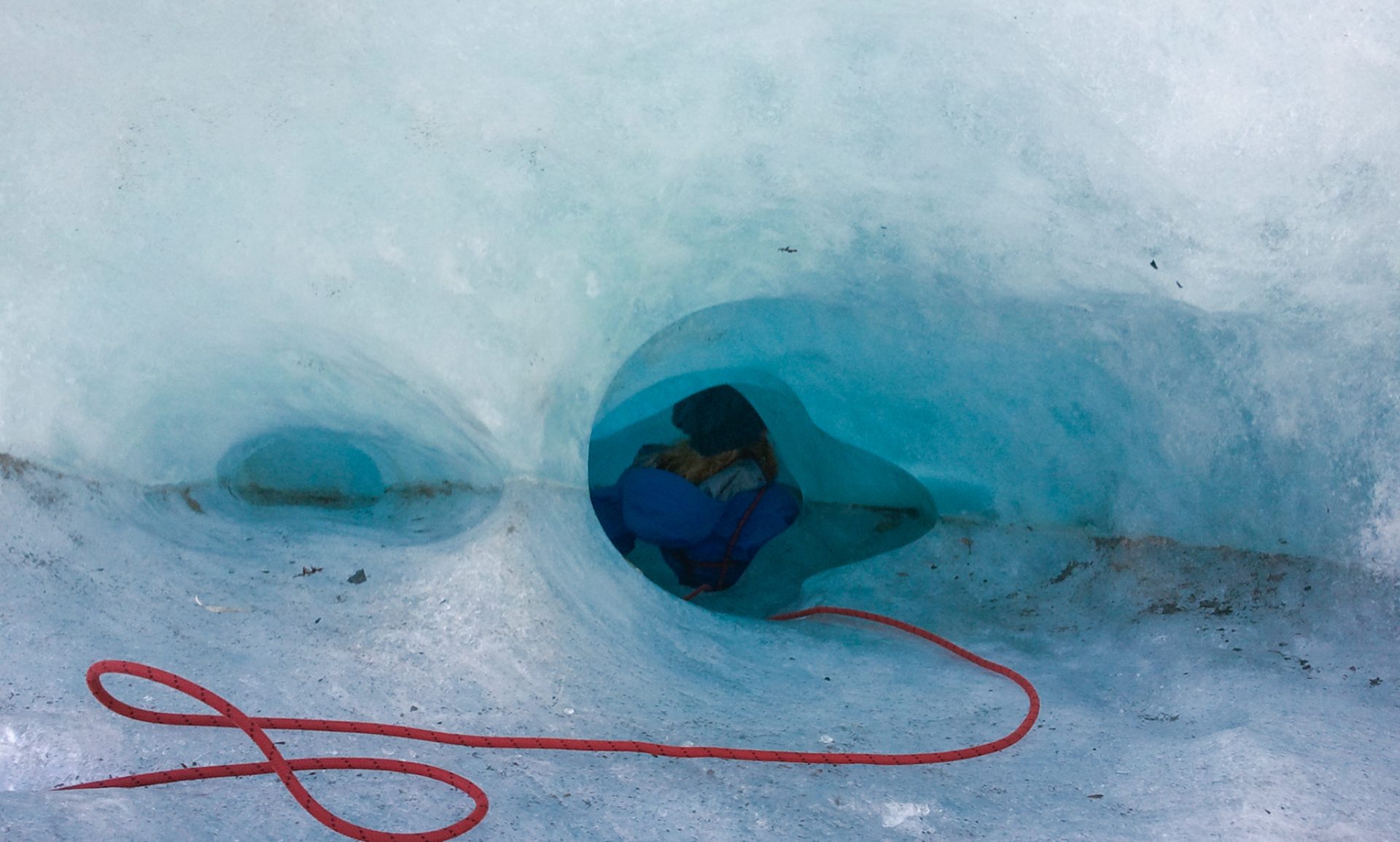
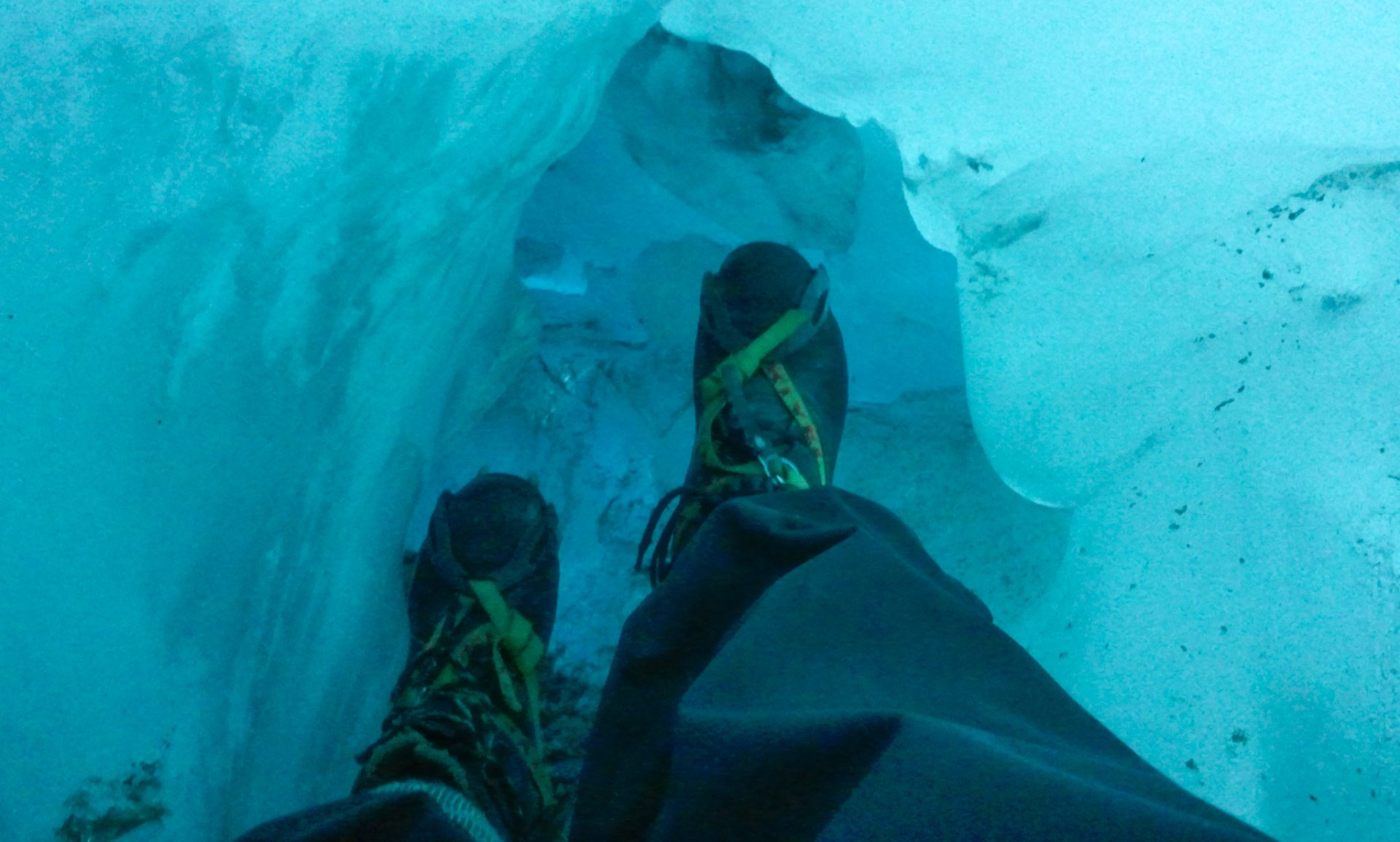
Prospecting for new ice caves. Rope and crampons a must!
New Zealand’s largest ice cave discovery
A few years ago I was up in the mountains of Fiordland National Park when I spotted a large, steep body of ice in the distance, covering many acres, with what looked like an entrance near the bottom. Getting there was a bit of a mission, with extremely steep terrain, loose scree and falling rocks to deal with. As I got closer, I had a clear view into the entrance, and it looked like there was a massive cavern inside. First, though, I had to get across a steady stream of ice-cold water. Going in probably wasn’t the best idea. The ceiling around the entrance was already patchy, and I could hear chunks of ice falling somewhere in the distance. But the temptation was just too great.
About 30 metres in, I stopped in awe. In front of me was an absolutely monstrous cavern, towering maybe 50 metres or more overhead, its walls a stunning blue, streaked with darker and lighter bands of ice. The cave stretched an estimated 500 metres or further, with a huge waterfall pouring down into it at its highest point. The whole place was loud and echoey with the rush of the stream running through it.
While New Zealand’s limestone caves have been well surveyed, I couldn’t find a single ice cave in the country that has been, and probably for good reason. Still, in all my research into ice cave discoveries across New Zealand, I haven’t come across anything close to the size of this one. Not even close. So I think it’s fair to say this is (or was) the largest ice cave ever discovered in the country.
This photo gives you an idea of the scale, and it went on to win a number of awards.

A lot of people have asked me to take them there, and I’m hoping to head back this coming summer, but I have my doubts the cave is even still there. Ice caves don’t last long, and even the ones that make it through a harsh summer are often reshaped into something completely different. What made this find even more special is that many of the glaciers that were once common in the park have long since disappeared, so stumbling across something like this in Fiordland felt all the more remarkable.
Other South Island glacier cave discoveries
On another four-day mountaineering trip, we passed close to a remote and rarely visited glacier in the lower South Island. I had caves on my mind the whole time and kept scanning for any sign of an entrance. When I finally spotted one, I had to find my way down an incredibly steep scree slope to reach it. It was sketchy as, and I sent a few fairly large boulders tumbling on the way down. The effort paid off though. Getting in meant a low crawl, but after about 20 metres the passage opened up into a stunning blue-ice chamber with its own waterfall, and the turquoise colours inside were unbelievably beautiful. Sadly, this cave is almost certainly gone by now, either melted away or filled back in with ice.
These photos remind me of the ones I took in Iceland, but this is New Zealand!


Further up the same glacier, I spotted another entrance with sheer walls of stunning blue ice, but it was just too difficult and dangerous to reach. See those rocks at the bottom? They’d come sliding down the face of the glacier.

There’s another spot that isn’t too hard to reach (still a 12 hour day!) and almost always has some stunning ice caves, which change from one visit to the next. I’ve been there a number of times and it’s never disappointed. My last trip was especially good, with at least three caves stretching around 150 metres each. The ice isn’t quite as blue here, but the patterns on the ceilings are some of the best I’ve seen.


Another South Island ice cave, with an perfectly round entrance. Note the big chunks of the ice on the cave floor….which came from the ceiling. Extremely dangerous!
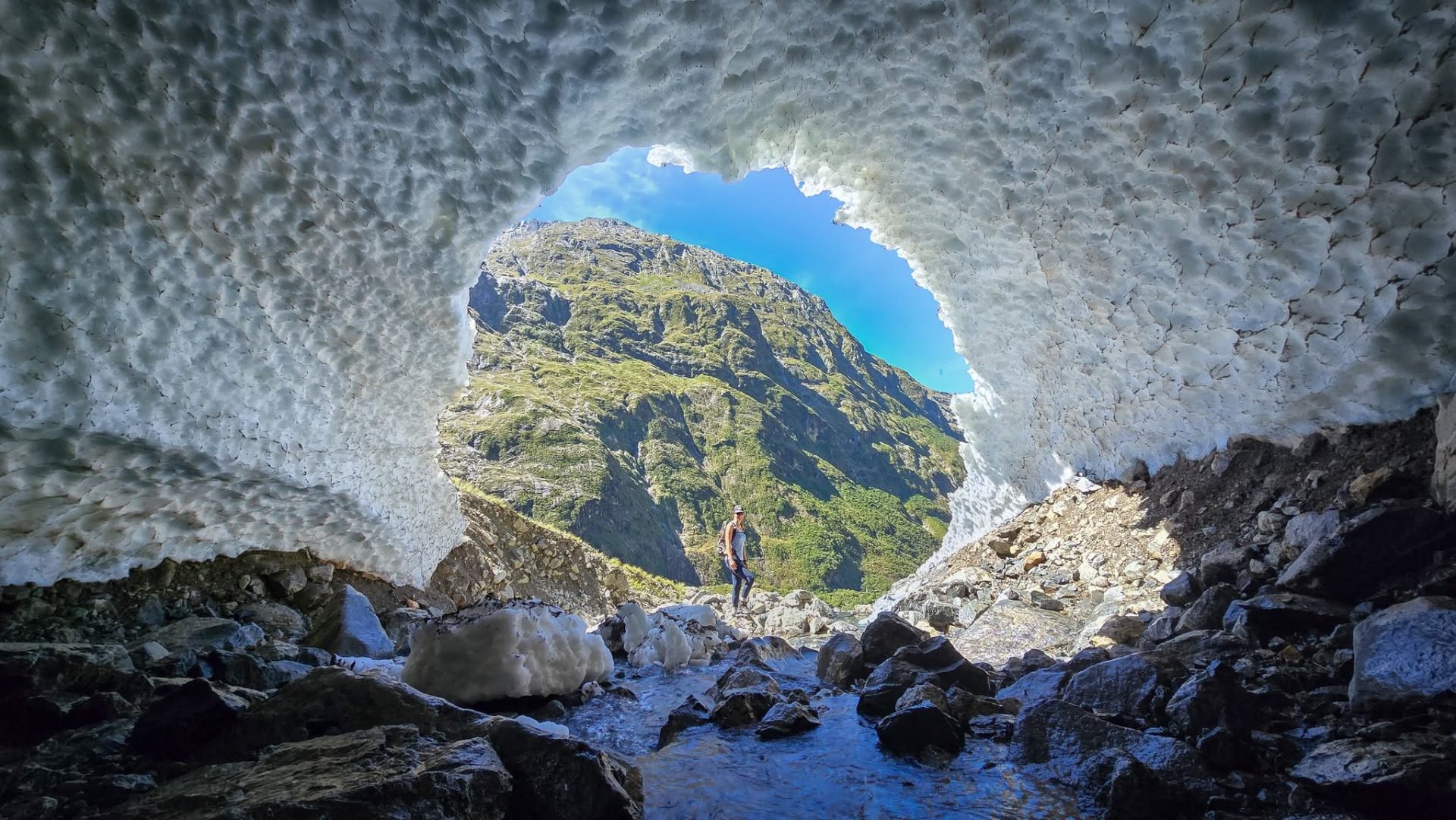
This cave had two entrances, each leading into its own tube, and the two joined up about 50 metres in.
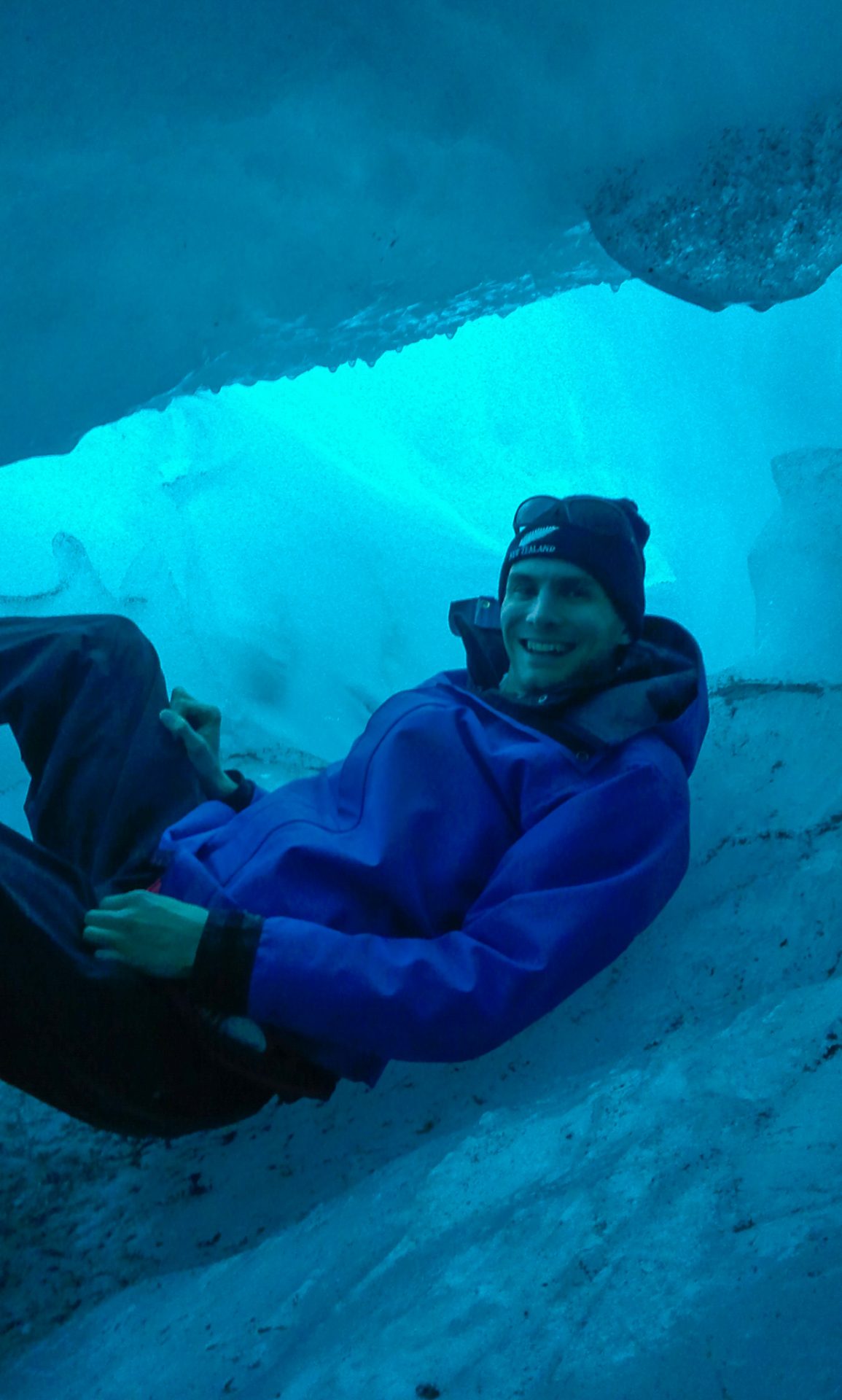
My happy place – a new stunning blue cave discovery
North Island ice-caves
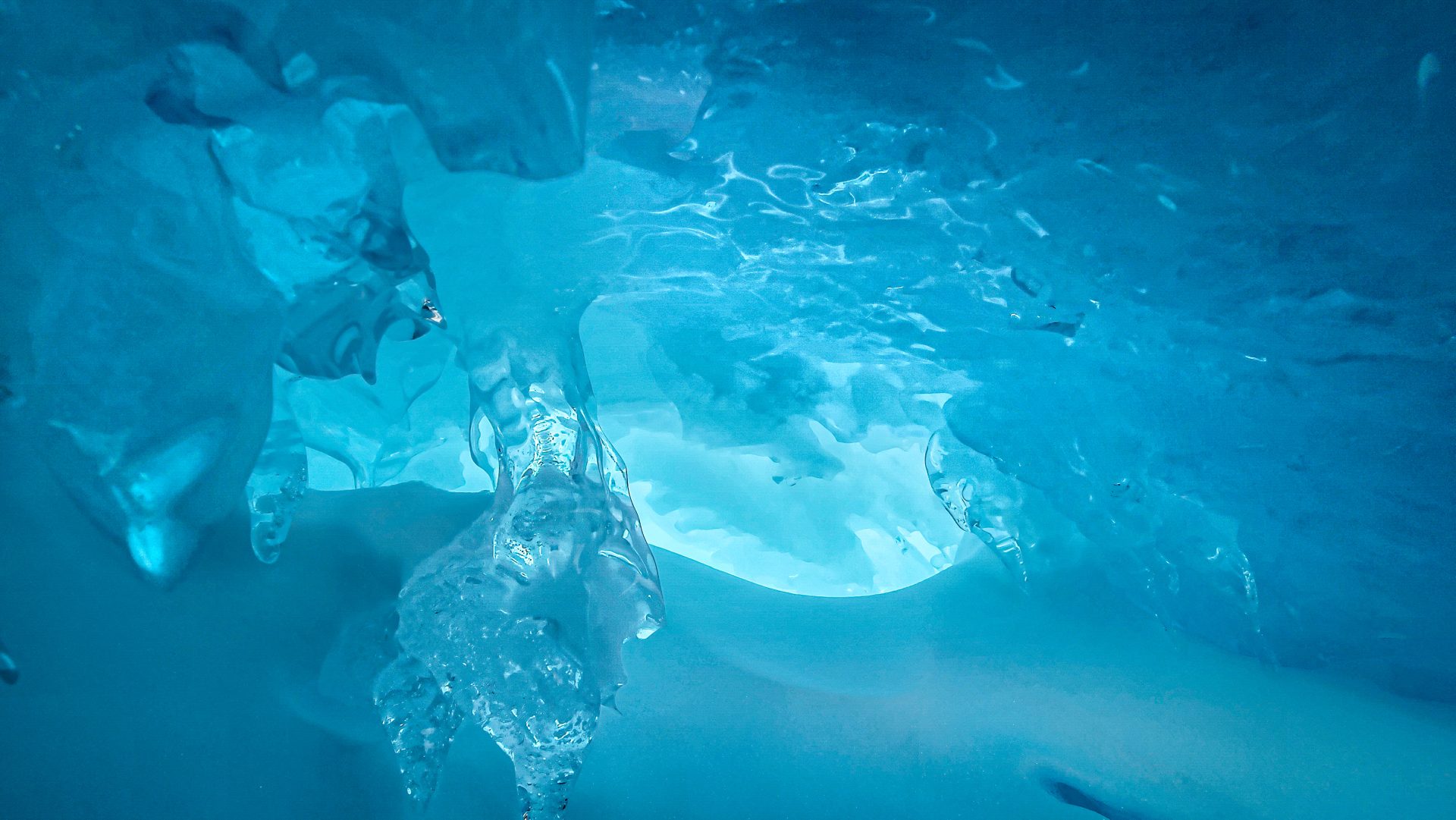
Generally speaking, the South Island is the place to go if you want to see ice caves. It has the big glaciers, the heavy snowfall and the high alpine terrain that all come together to create them. But it might surprise some people to learn that there are ice caves in the North Island too. Permanent ice is much harder to come by up here, with the island’s only glaciers clinging to the upper slopes of Mt Ruapehu, so the caves tend to be smaller and harder to find. They’re nowhere near the size of their southern cousins, but the ones I’ve found still have some wonderful features, from sculpted ceilings to trickling meltwater streams. And every now and then, you’ll find ice with that same deep, glowing blue that makes the South Island caves so special.
Visiting ice caves
If you’d like to see an ice cave for yourself, the safest way by far is to go with a guide. Heli-hike trips at Franz Josef and Fox glaciers are the most accessible option, and there are guided glacier trips around Aoraki/Mount Cook as well. The guides know the ice intimately, they check conditions every day, and they’ll only take you into caves or tunnels they’ve judged safe at that moment. Keep in mind that ice caves come and go, so there’s no guarantee you’ll see one on any given trip. It’s worth asking the operator before you book whether any caves are currently accessible.
As tempting as it might be, please don’t go looking for ice caves on your own. What you’ve read here comes from many years of experience, and even with that behind me, I’ve had some close calls and made a few decisions I probably shouldn’t have. Collapsing ceilings, falling rock and sudden surges of meltwater can catch out even the most experienced people, and in remote country, help can be a long way off. A guided trip lets you experience that incredible blue ice up close without taking on those risks, and honestly, you’ll enjoy it a lot more when you’re not worrying about what might come down on top of you.