
In early September, my mate Paul and I spent nearly two weeks trekking through the Faroe Islands. We didn’t just stick to the typical tourist hot spots – we pushed deep into the remote mountains and explored rugged coastlines, clocking over 200km on foot across many of the islands.
Our journey began on August 31st with a flight from Copenhagen that turned out to be a bit of a nail-biter. As we approached, the captain warned us that visibility was near zero. He told us he’d try to land a few times, but if it wasn’t possible, we were headed back to Denmark. There’s a specific kind of tension that comes with descending at high speed into mountainous terrain when you can’t see past the wingtips. Fortunately, with only about ten seconds to spare, the clouds broke, and we slammed onto the runway at Vágar Airport. The terminal was surprisingly packed for its size, but the real sour welcome was the weather. The arrivals screen predicted rain every single day for the week ahead. We’d heard the Faroese weather was unforgiving, which is exactly why we’d cleared two weeks on the calendar.
We picked up our rental car and drove to our guesthouse in Tórshavn. It was our first experience of the Faroe Tunnels. The islands are linked by an incredible network of tunnels that turn long boat journeys into quick drives, seamlessly stitching most of the islands together.
Tórshavn is a great little capital. It’s clean, charming, and home to most of the islands’ population. We spent some time poking around the old town, checking out the views from the Skansin lighthouse, and heading over to Kirkjubøur to see the historic turf-roofed houses and cathedral ruins.


The next morning, I checked the weather models. Even though the islands are small, there were huge disparities in the conditions across them. We decided the north looked most promising, so we headed to the very top to hike the Villingardalsfjall – Enniberg track. When we arrived, there was no rain, but we faced a different challenge: thick fog half way up the mountain. We climbed anyway, hoping it would break, but it never did. While the trail got quite steep in sections, we found it a breeze. We reached the summit only to find complete white out conditions. After waiting a while with no luck, we headed back down and walked along the coast instead. It was incredibly scenic, and the sun even made a brief appearance!

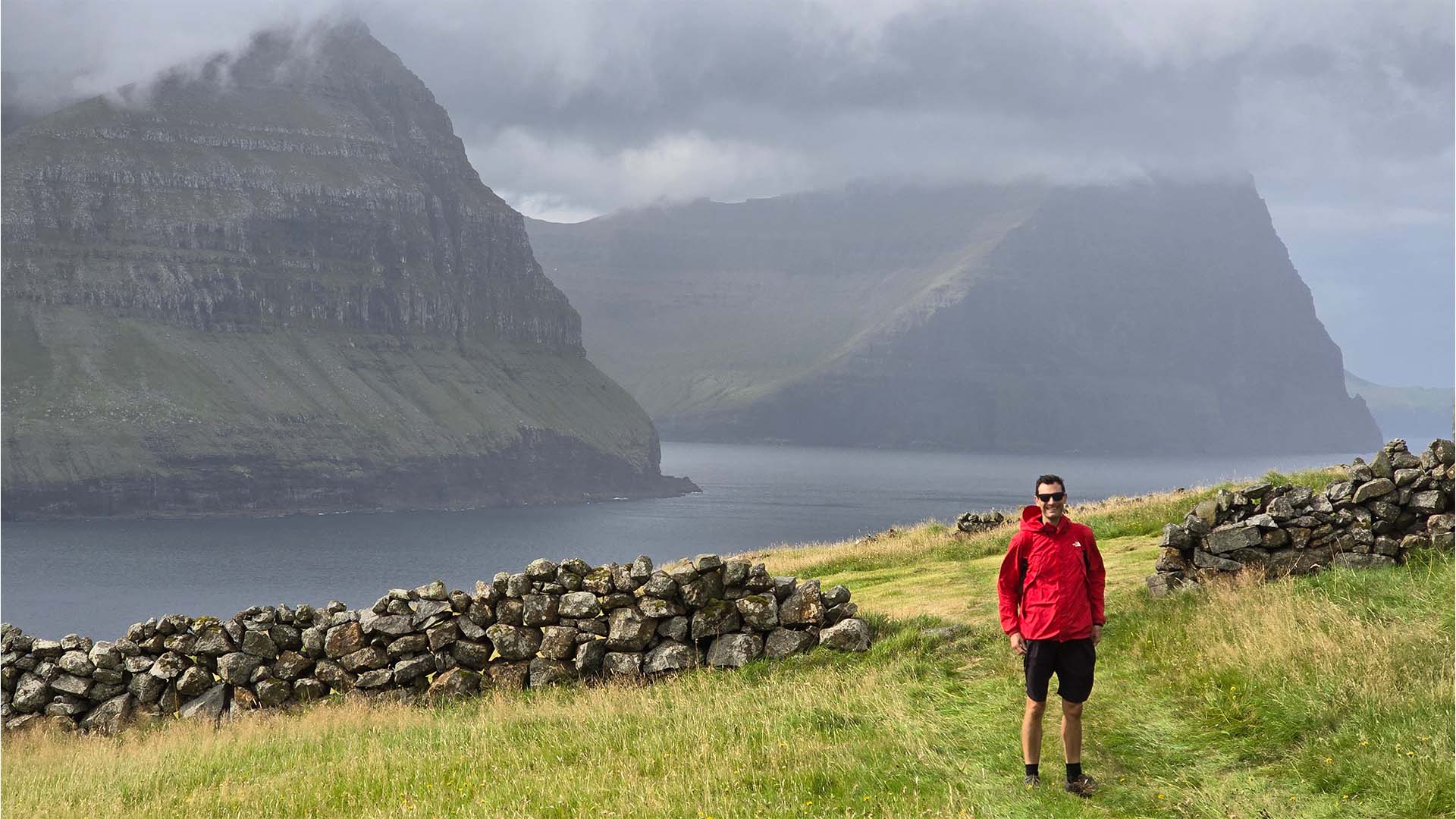
From Kunoy village, we followed the Mylla stream straight into the mountains. The basalt layers up there are a must-see


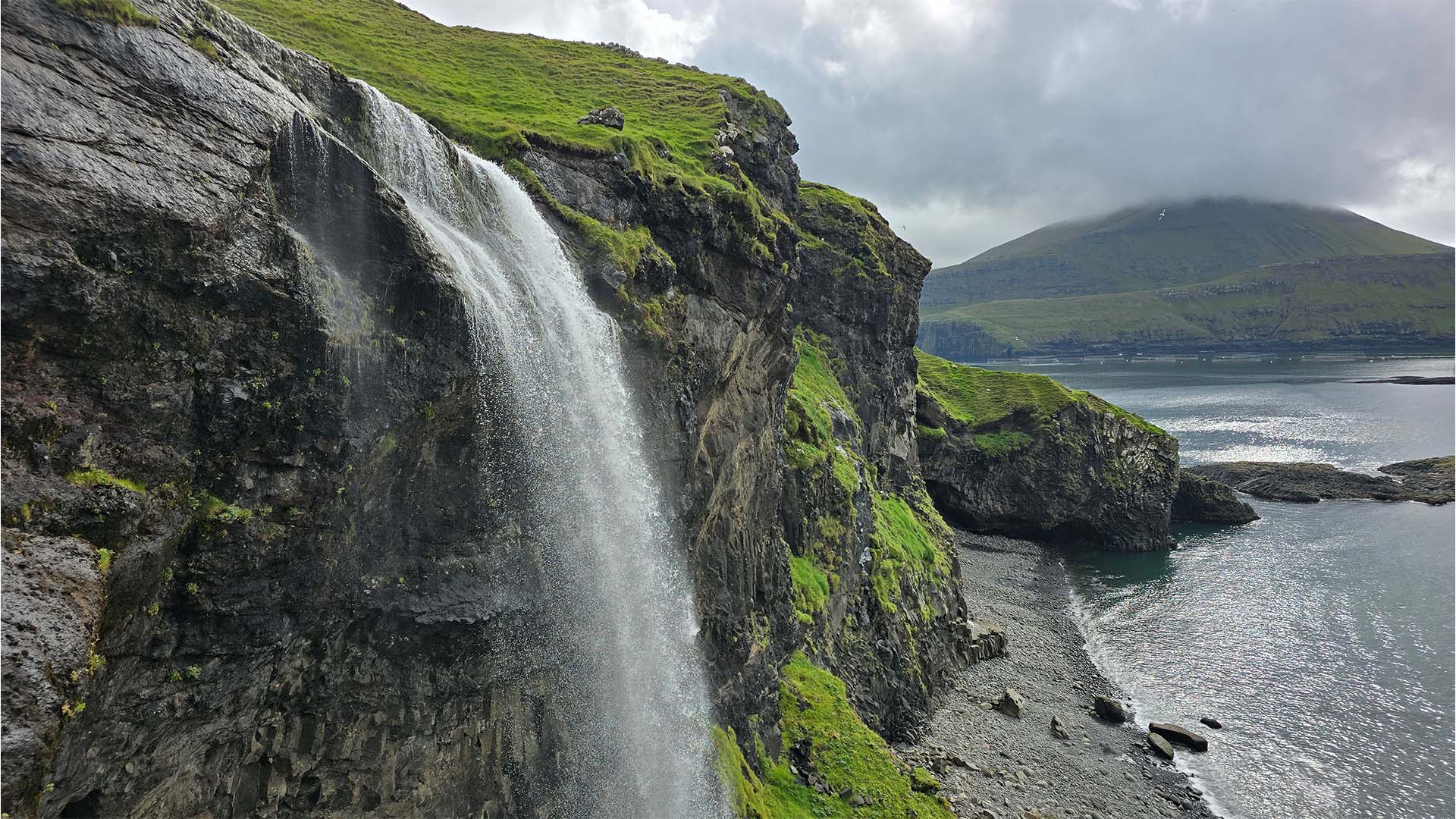
The next morning we drove out to Eiði. The town itself is pretty quiet, but there are two short walks there that are totally worth it. We started at the caravan park and followed a trail out through the fields. It’s not a long hike, but the views are massive. There was this dramatic waterfall dropping straight off the cliffs into the ocean below. We also found some huge sea caves, including one with a waterfall right in the middle of it. Really impressive to see.


Just north of Eiði, there’s another quick walk up to the Eiðiskollur headland. The views from the top are unreal. The cliffs are way bigger than they look in photos. We also spent some time exploring the caves along the coast, which were amazing.


At the end of the headland, there are some sea stacks known as Risin og Kellingin. It’s hard to get a good look at them on foot, so I sent the drone out to get a photo. Definitely the best way to see them.

We took the winding road up to the Hvithamar viewpoint next. The drive itself is pretty intense. It’s a quick walk from where you pull over, but the view ended up being one of my absolute favorites from the whole trip.

The last hike for the day was at Gjógv. There’s a wonderful short hike here which starts off with a bit of a climb, but offers breathtaking cliff views.


Faroe Island traffic on the way home…

The next day, the weather had made a turn for the worse, so we made a break for Suðuroy – the only spot with a decent forecast. It’s one of the few islands you can’t get to by tunnel yet (though apparently that’s in the works), so we headed to the port for the ferry. I was expecting a little boat, but instead, this massive ship was waiting for us. The MV Galaxy. It’s a huge Polish vessel from 1979 that holds 900 people, but since the regular ferry was in for repairs, they were using this beast instead. There were maybe 30 of us on board, so we had the run of the place, exploring everything from an old Polish bar to a prayer room. The crossing was actually great; we cruised past smaller islands that looked way too steep for anyone to ever climb.


After getting off the ship, we headed north to hike the Ásmundarstakkur trail – easily one of the highlights of the trip. The path started out clear enough but eventually just kind of vanished, so we ended up wandering along the coast. There’s so much packed into this area: massive cliffs, sea caves, and deep gorges. We even found this tiny bridge leading to a sea stack that sits nearly 300 meters up. It definitely didn’t look like the sturdiest thing in the world, which made crossing it pretty interesting.


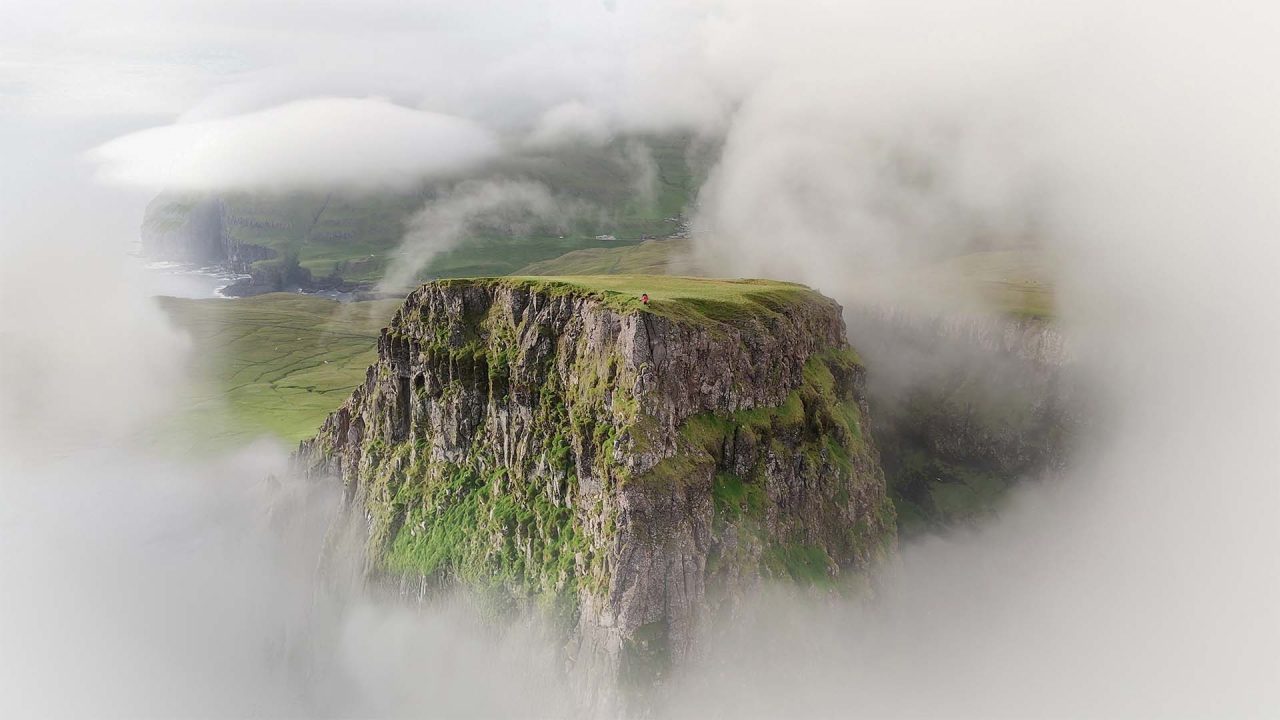
That afternoon, we drove up to Kikarin á Eggini, which ended up being my favorite spot in the entire Faroe Islands. The weather was perfect…completely still, without a breath of wind. The coastline there is just on another level, with some of the best geology and sea stacks I’ve ever seen. We planned to stay for sunset, but as evening hit, the fog started rolling in over the cliff edges. With birds circling everywhere through the mist, it was easily the most dramatic location of the entire trip.


And then the sun started to set and created more magic. I won’t forget this place for a very long time.

Once we got back, the weather really fell apart. We took a couple of days to just relax and recharge before heading back to where we started, Vagar Island. To be honest, it was probably the least interesting island for us, mostly because it felt busy and everything had a ridiculously expensive entrance fee.
First stop was Múlafossur Waterfall. I din’t really get it. It wasn’t anywhere near the best waterfall cascading into the ocean we’d seen and was overrun with tour buses. Nearby Skarðsáfossur was much more impressive and not a sole here at all.

The towering island of Tindhólmur

Next up was Sørvágsvatn. The ‘lake above the ocean’ spot everyone sees in photos. It’s easily the most crowded place we visited, and honestly, the entrance fee is a total rip-off, but I felt like I couldn’t come all this way and skip the most iconic site. It actually ended up being worth it, though. Seeing that massive body of water perched right on the cliff edge is a total mind-bender.


On the way back to the guesthouse, we found a epic canyon and so spend the late afternoon exploring that.

The next morning, we geared up for our longest hike yet. A massive off-track loop starting and ending in Tjørnuvík.
We made a quick stop at Fossá on the way, which is the tallest waterfall in the Faroes.

The hike itself started with a brutal climb straight out of Tjørnuvík. It took about two hours of uphill work before things finally leveled off on the ridge. From there, we had to navigate our way down into the Sjeyndir valley. It was pretty technical. Steep, rocky, and definitely more advanced than our other walks. Down in the valley, two huge waterfalls dropped right past a lone little house, with even bigger cliffs looming ahead of us for the next climb.


I actually had to get the drone up just to find a way out of the valley. The wall directly in front of us was way too steep to climb, so we pivoted left and dropped into a shallower valley instead. It ended up being a much better route, and we eventually came out right at some of the most dramatic sea cliffs I’ve seen on any of the islands.


From here, we climbed out of the valley and joined up on a trail back down to Tjørnuvík. It was such a great hike!
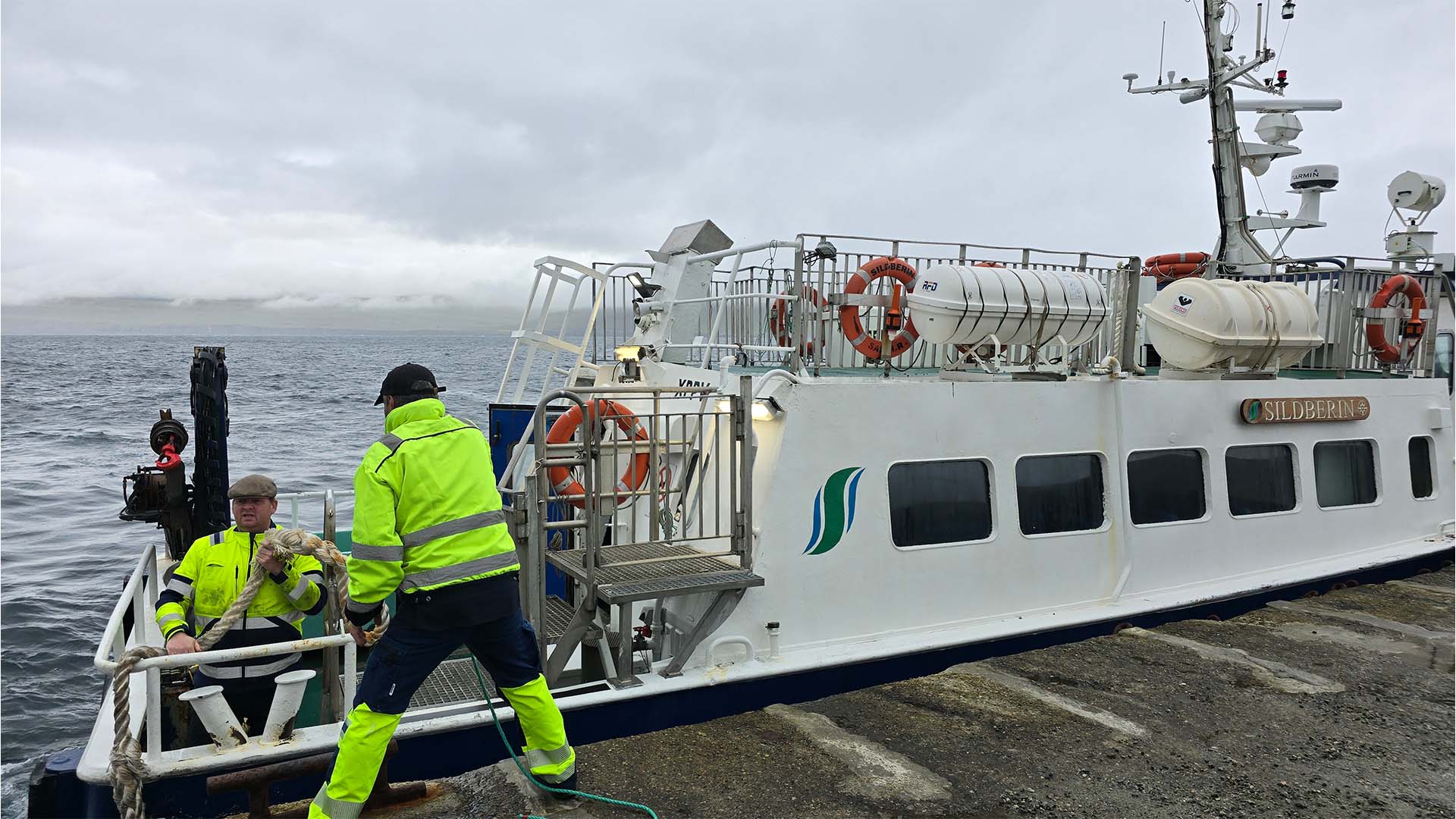
For our final couple of days, we took a tiny boat over to Skúvoy. It was so windy we weren’t even sure the ferry would run, and when we showed up, there was only one other person on board. The crossing was slow and rough, and we were both pretty relieved to hit solid ground. Skúvoy is a strange, beautiful place, but it felt a bit like a ghost town with all the decaying, abandoned houses. We chatted with some locals and found out there are only 17 permanent residents left. The youngest is almost 70. They told us it’s only a matter of time before the island is empty again.
After checking the map, we decided to do a full loop of the island. The sheep there were surprisingly friendly, and the hike turned out to be incredible. The western cliffs were massive, though a bit sketchy. A recent landslide had taken a huge chunk out of the coast. There were a few markers here and there, but for the most part, we just followed the cliff edge around.

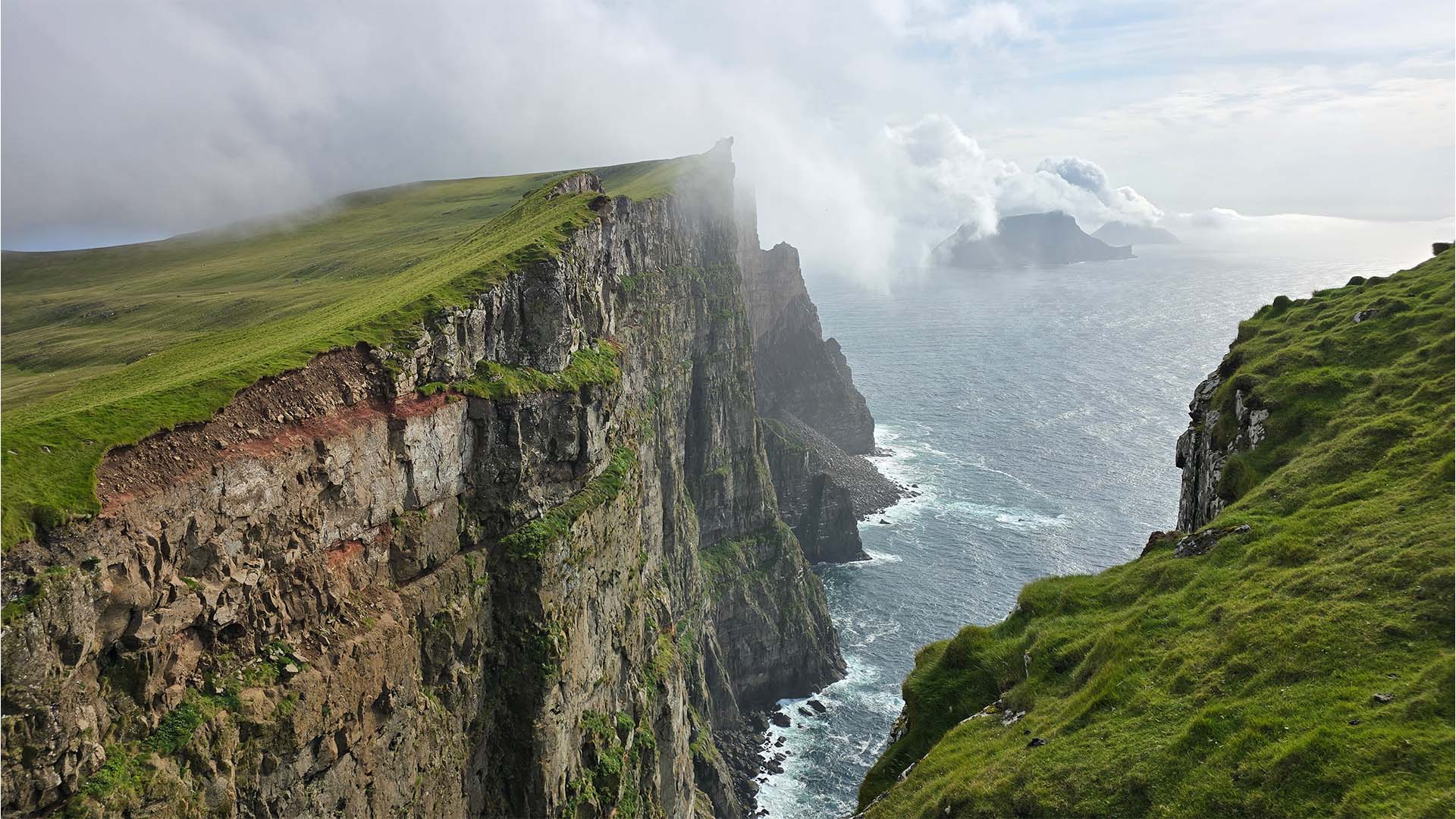

We had two things left on the checklist before heading home. First was a quick hike out to the Líraberg coastline to see the rock formations. It’s a short walk with some really impressive scenery, though you can’t park right at the trailhead anymore, so you have to hoof it along the road for a bit first.

The big finale was Slættaratindur, the highest point in the islands.
We’d passed the trailhead a few days earlier, but it was completely buried in clouds, so we waited. On our very last day, the clouds were still there, along with some pretty serious gale-force winds. The parking lot was empty…usually a sign to stay in the car, but we figured we’d give it a shot anyway. The climb itself wasn’t too bad, and we made the summit quickly, but we actually had to crawl the last bit to keep from being blown off. It was so incredibly windy! We’d been so lucky with the weather up until then, though, so we really couldn’t complain.

The Faroe Islands are honestly unlike anywhere else on earth. A raw, jagged world where the weather changes every five minutes and the landscapes feel almost impossible. Every hike felt like a genuine adventure rather than just a walk. It’s a place where you can find yourself completely alone on a cliff edge one minute and chatting with locals in a remote village the next. If you’re looking for somewhere that feels truly wild and dramatic, the Faroes are hard to beat.