Between late September and early October 2025, there was a significant and sustained increase in SO₂ emissions at Yasur Volcano, jumping from approximately 10–100 tons to 100–1,000 tons per pass, according to Copernicus Sentinel data (2025-2026). As of this writing, emission levels have remained consistently elevated. Then in early November, thermal readings shifted dramatically. What had been intermittent, low-level detections gave way to sustained, high-intensity thermal anomalies detected by MODIS/VIIRS sensors. Yasur had entered a particularly active phase, and I needed to see it for myself.
I departed Auckland on January 1, 2026, bound for Port Vila. Following the collapse of Air Vanuatu, Air Solomon now operates direct flights from Auckland to Port Vila, with service from Christchurch launching soon. The next morning at the domestic terminal, I discovered I’d be flying on an Air Calédonie ATR instead of the expected aircraft. Apparently the Air Vanuatu ATR had been out of service since August. My longtime friend Kelson was waiting at the airport. Over the years, he’s supported me on countless expeditions to Yasur. On the drive to his guesthouse, we stopped at a couple of markets to pick up supplies.

Fresh corn cooked on the fire – just just 50 vatu each.

Interestingly, the roads on Tanna continue to improve, with a tar-sealed road now circling the entire island. This is a remarkable change from the days of very bumpy trips over potholed dirt roads. Within an hour we arrived at the ash plain and observed ash and gas rising from Yasur. It’s always difficult to assess what’s really happening up there from a distance, but when we saw lava bombs being ejected high above the crater rim, we knew we were in for a treat. Kelson’s property sits on the flank of the volcano, conveniently located right across from the entrance. We dropped our gear off and headed up for our first viewing.
There goes a lava bomb! Yasur viewed from the ash plain.


Thankfully, conditions were excellent. The crater was clear with many of the vents fully visible, no rain, and calm winds. We stayed until midnight. Over the next three days and nights, we spent nearly all our time at the summit, watching, observing, documenting, and marveling at the spectacle. Yasur was indeed highly active, producing large Strombolian eruptions approximately every 30 seconds.
My observations (From 2/1/26 – 5/1/26)
Zone A (Southern Sub-Crater)
As the primary visitor viewing area, this zone contained four active eruptive vents, functionaing as individual outlets for a shared magmatic system. The two larger central vents (Zone A-2 and A-3) exhibited semi-persistent lava ponding. While all vents produced rapid Strombolian activity, the smaller Zone A-4 vent surprisingly generated the most vigorous ejections. Eruptions from Zone A occurred approximately every 30 seconds.
Moderate Events: Eruptions propelling material to the crater rim level happened roughly every 3 minutes.
Major Events: Eruptions powerful enough to eject material beyond the crater rim and outside the cone occurred approximately once every 2 hours.
Visibility: The Zone A-1 and A-2 vents were only visible from the crater lip. Zone A-3 and A-4 were only visible from the drone,

Day time view of Zone A-2 and A-3 vents

Zone B (Central Sub-Crater)
Zone B functioned primarily as a degassing centre, contrasting sharply with the eruptive behavior of the other zones. It emitted a thick, white plume of water vapor and SO2 that was clearly visible during the day. Because the magma sat significantly deeper within its conduit, no stable lava pond was visible at the surface; however, its presence was confirmed by infrequent orange pulses observed at night.

Zone C (Northern Sub-Crater)
This zone contained three active eruptive vents, none of which were visible from the main viewing area. The largest vent, Zone C-3, displayed active lava ponding. While all vents produced Strombolian activity, they did so at a much lower frequency than Zone A.
Timing: Eruptions from Zone C occurred approximately every 10 minutes.
Intensity: Larger eruptions reached the crater rim roughly every 25 minutes, while those ejecting material beyond the cone occurred about once every 2 hours.
Simultaneous Activity: At times, Strombolian activity was observed occurring simultaneously in both Zone A and Zone C vents.

Ash emissions accompanied many of the eruptions, with some medium-sized events producing columns that rose over 500 meters above the crater lip. During daylight hours, large blue plumes of SO2 were visible, and powerful shockwaves were frequently both observed and felt. A large shock wave, captured via drone, can be viewed in the video at the top of this post.

SO2 emissions

During our observations, lava bombs were seen being propelled directly over the crater lip. A relatively fresh example of such an ejecta was documented after it landed on the ash plain to the west of the crater.

Multiple lava bombs being propelled directly over the crater lip and landing on the eastern flank.

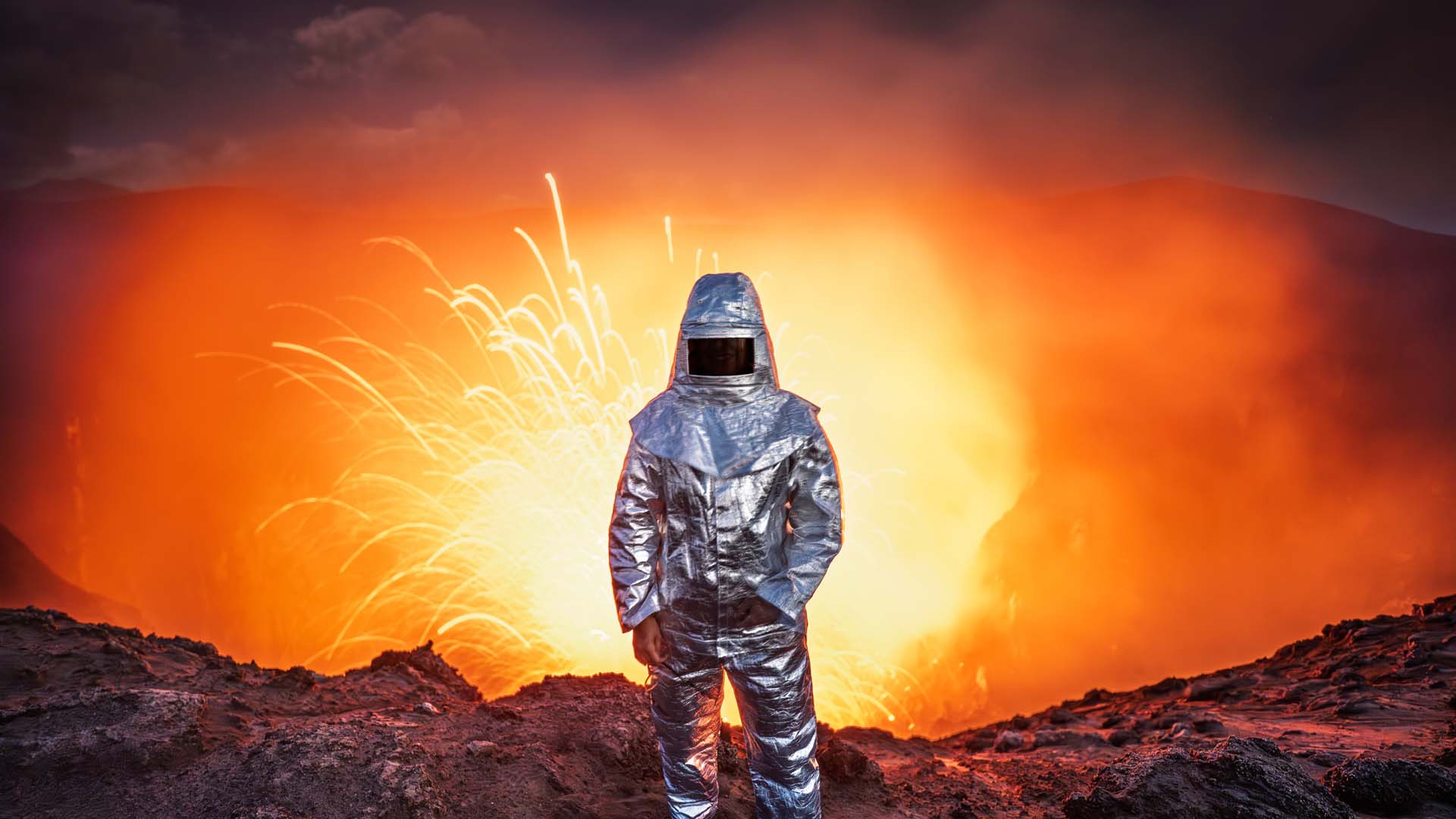
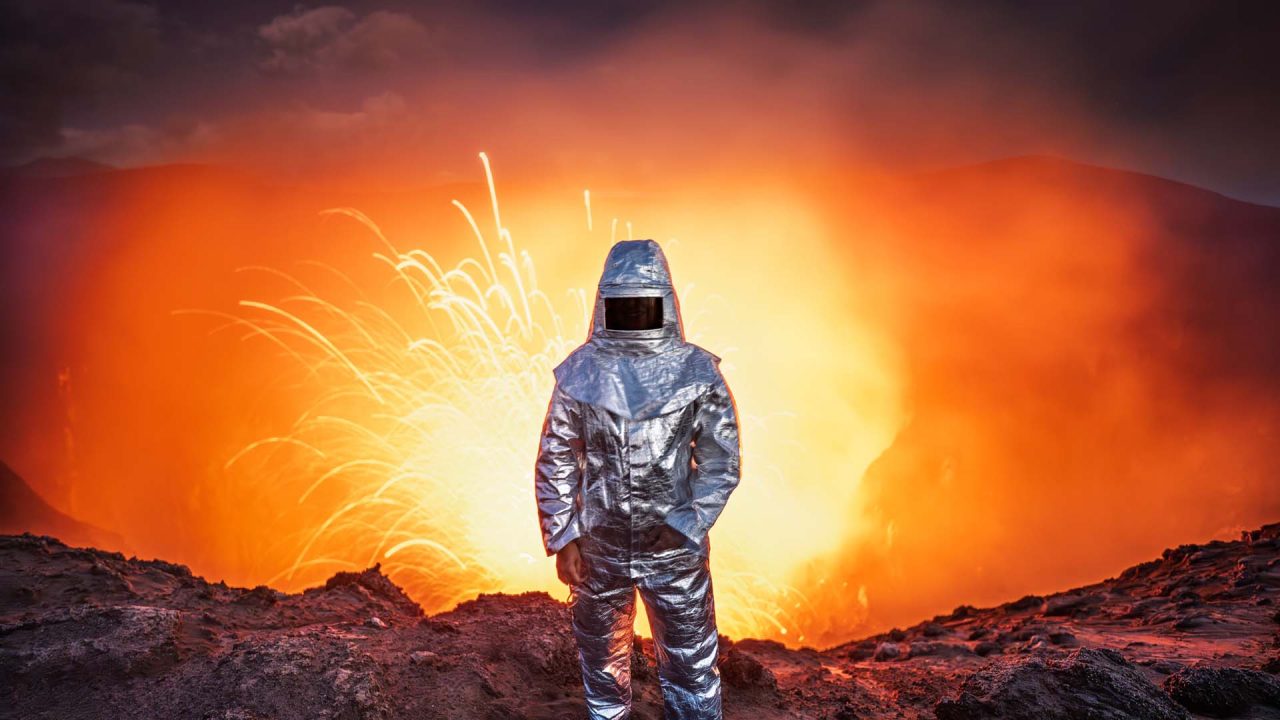
I’ll leave you with some of the many photos I took, including the dramatic ones 🙂