
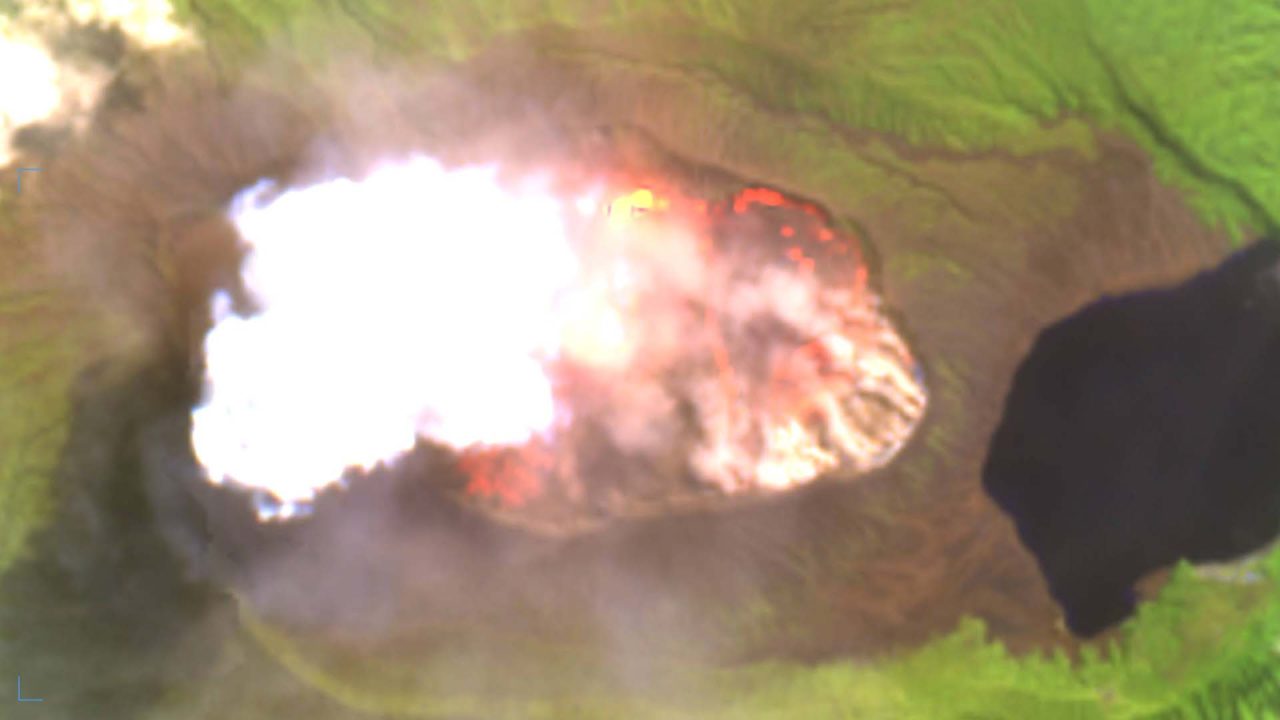
An extraordinary event has unfolded at the summit of Ambae Island, Vanuatu. The two central crater lakes, previously known as Lake Voui 1 and 2, have completely vanished. Once home to 8,000 Olympic swimming pools worth of water, these lakes have been swallowed by tephra and evaporated by a sudden, massive surge of lava.
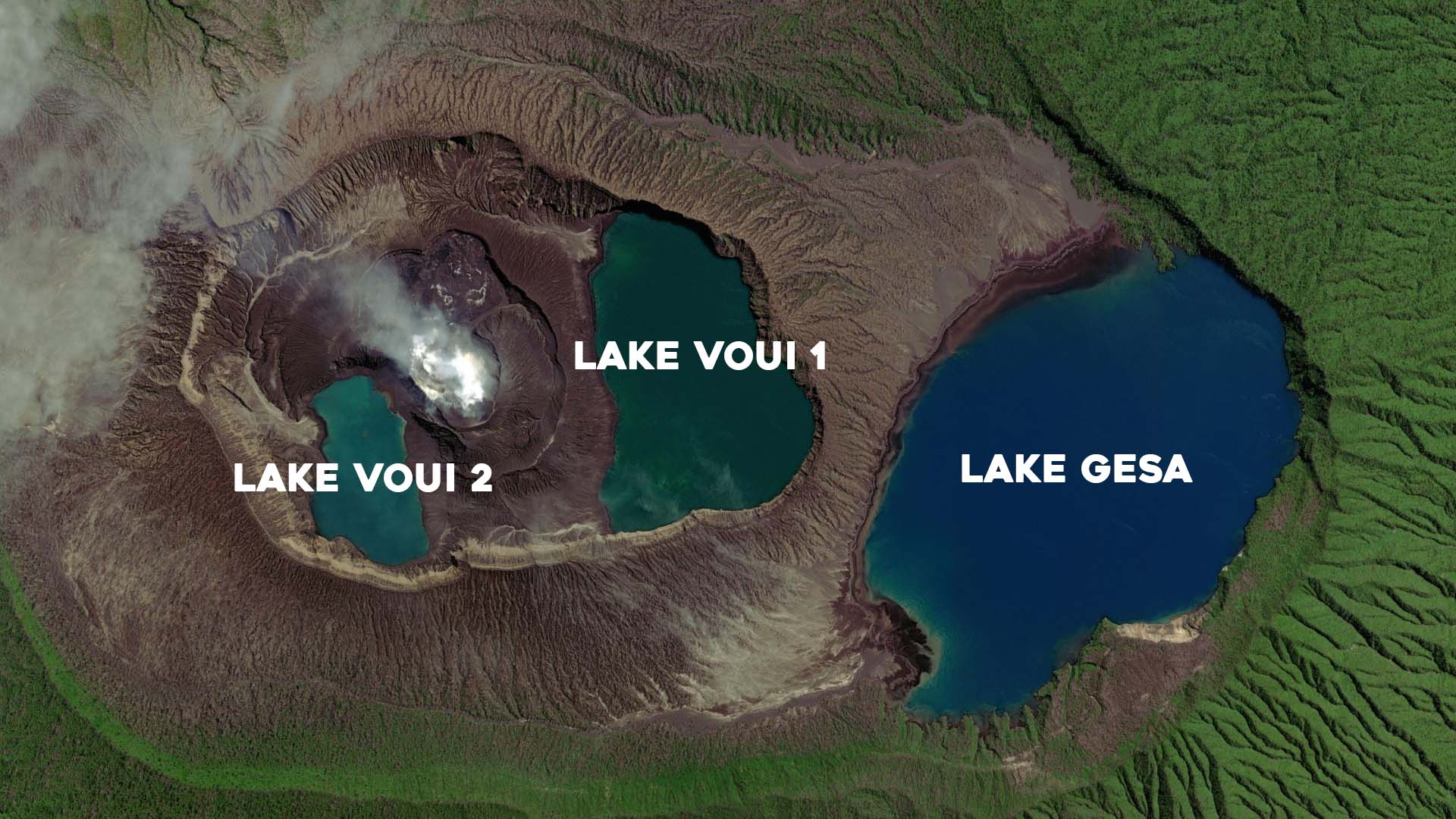
Just a few weeks earlier, the caldera contained three primary lakes. Lake Voui was a single body of water, but the 2018 eruption and the construction of a new volcanic cone bisected it into the central Lake Voui 1 and the western Lake Voui 2. Along with the eastern Lake Gesa, these formed the three primary water bodies within the caldera.
An aerial perspective of the three caldera lakes situated within Manaro Voui – Image from 2025.
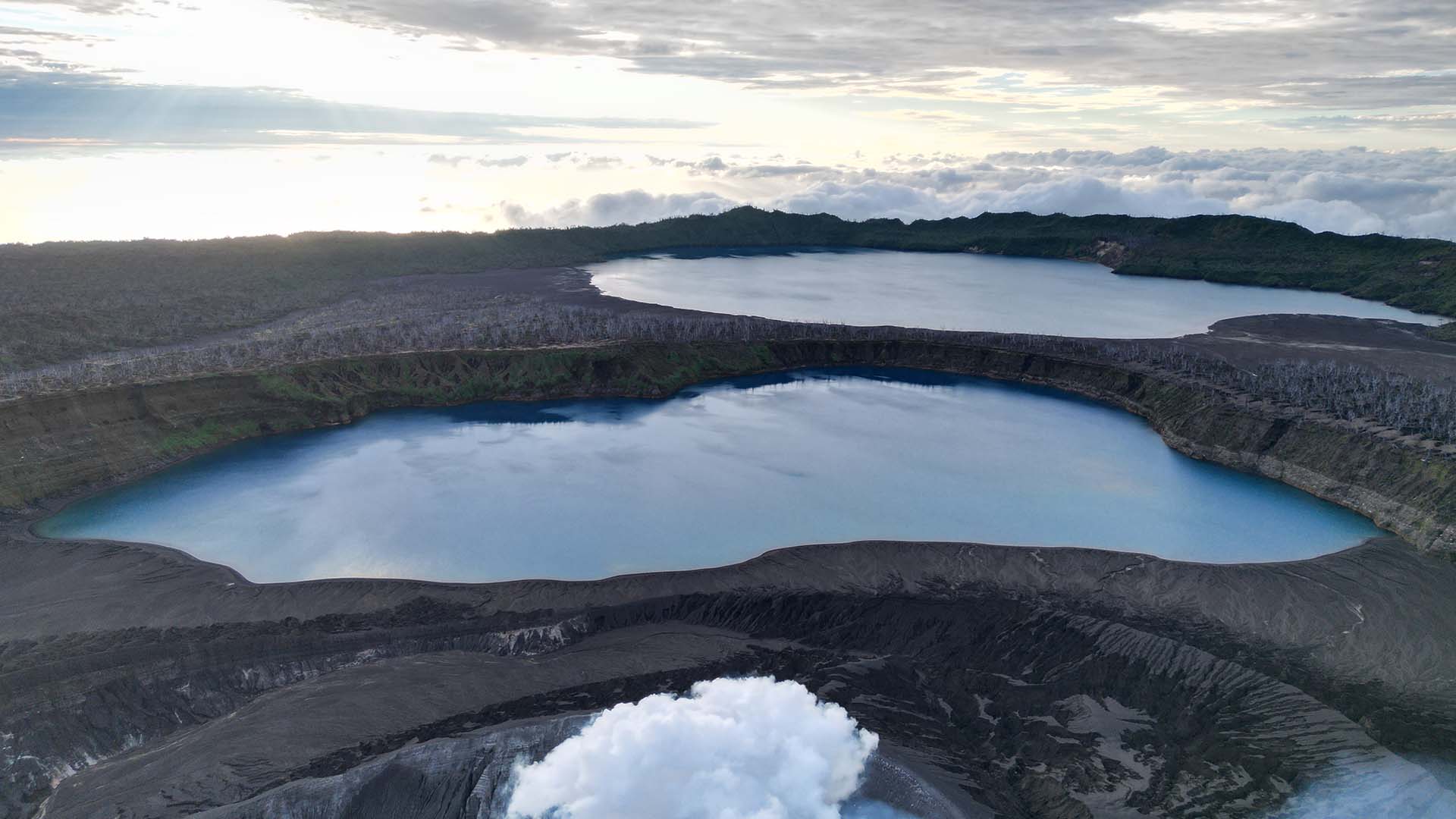
Lake Voui 1 (2025), with Lake Gesa in the distance:
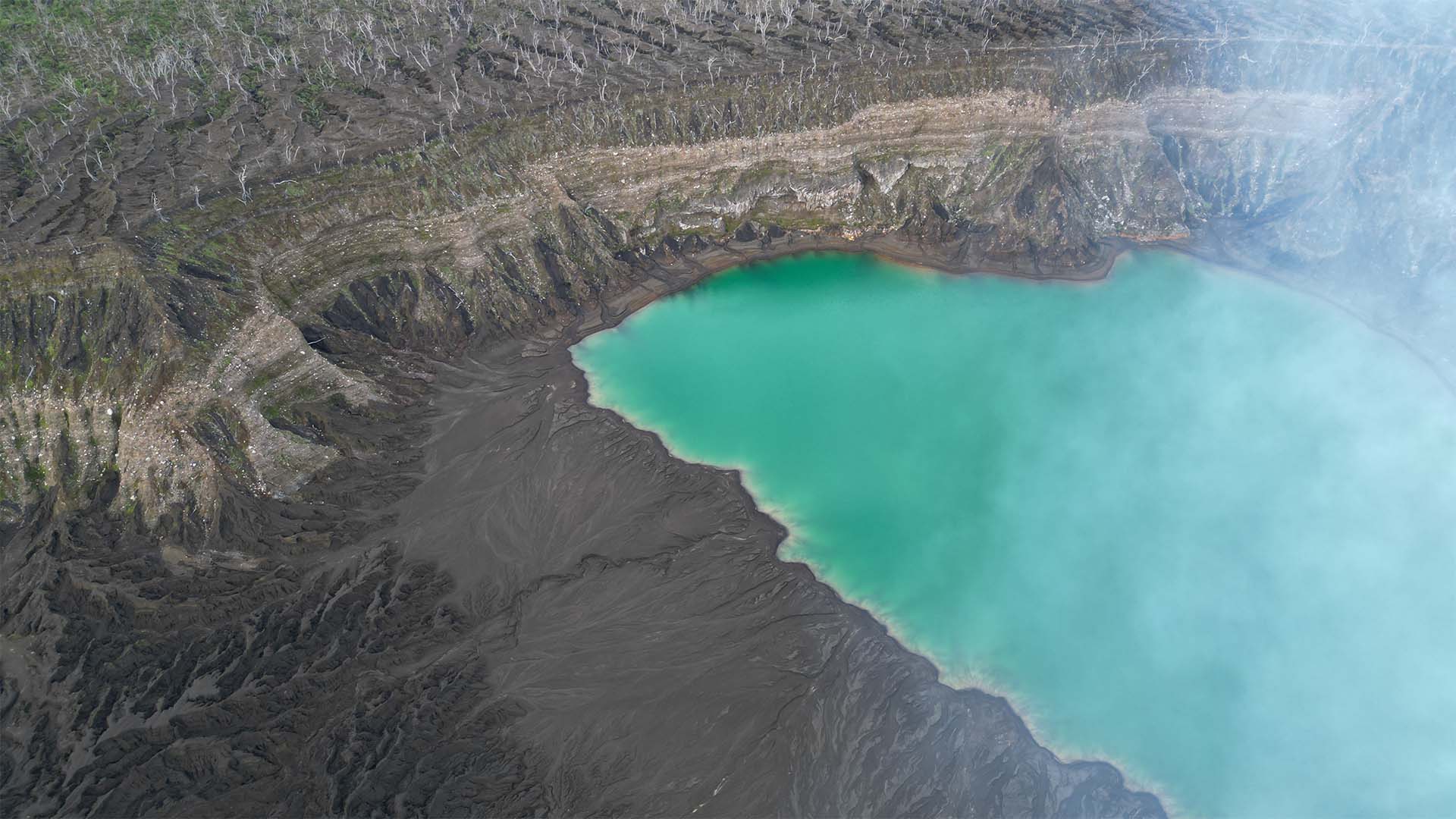
Lake Voui 2 (2025): The smallest of the three lakes, easily identified by its striking emerald-green colour.
The disappearance of the lakes began early-mid March, 2026. Lake Voui 2, the smallest of the three, was the first to succumb, being in-filled and evaporated. Satellite imagery from Landsat 8/9 captured a dramatic increase in thermal activity on April 23, signaling the start of a major eruptive phase. By late April, lava effusion rates spiked significantly. Massive flows moved north and south; the northern flow eventually struck the crater wall and redirected southeast into Lake Voui 1. The resulting contact between molten rock and water triggered violent phreatic steam explosions, rapidly boiling away the lake until much of its volume was replaced by a growing lava shield.
Landsat 9 False Colour – April 15, 2026: Lake Voui 1 has completely evaporated, while Lake Voui 2 remains relatively unchanged.
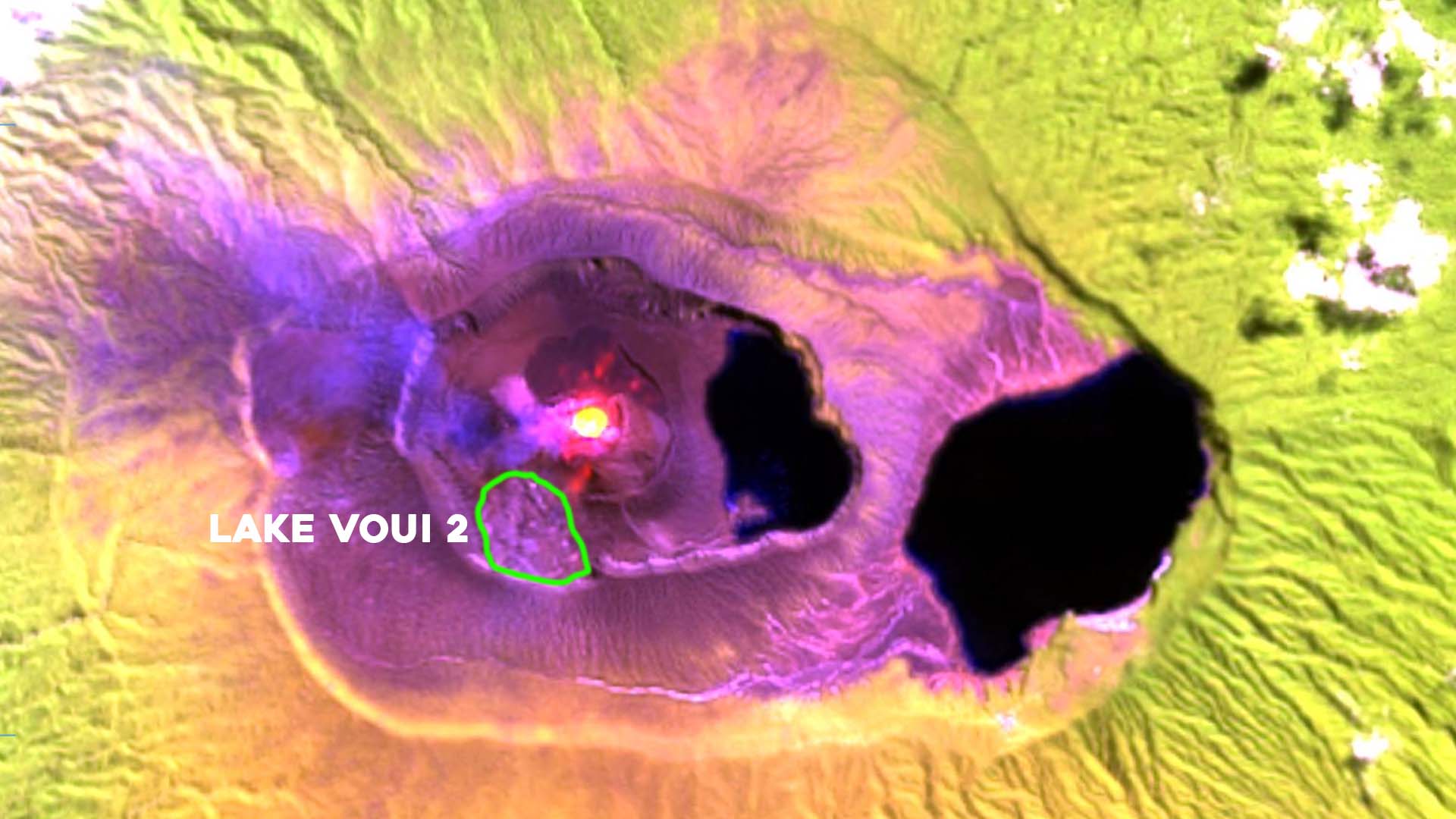
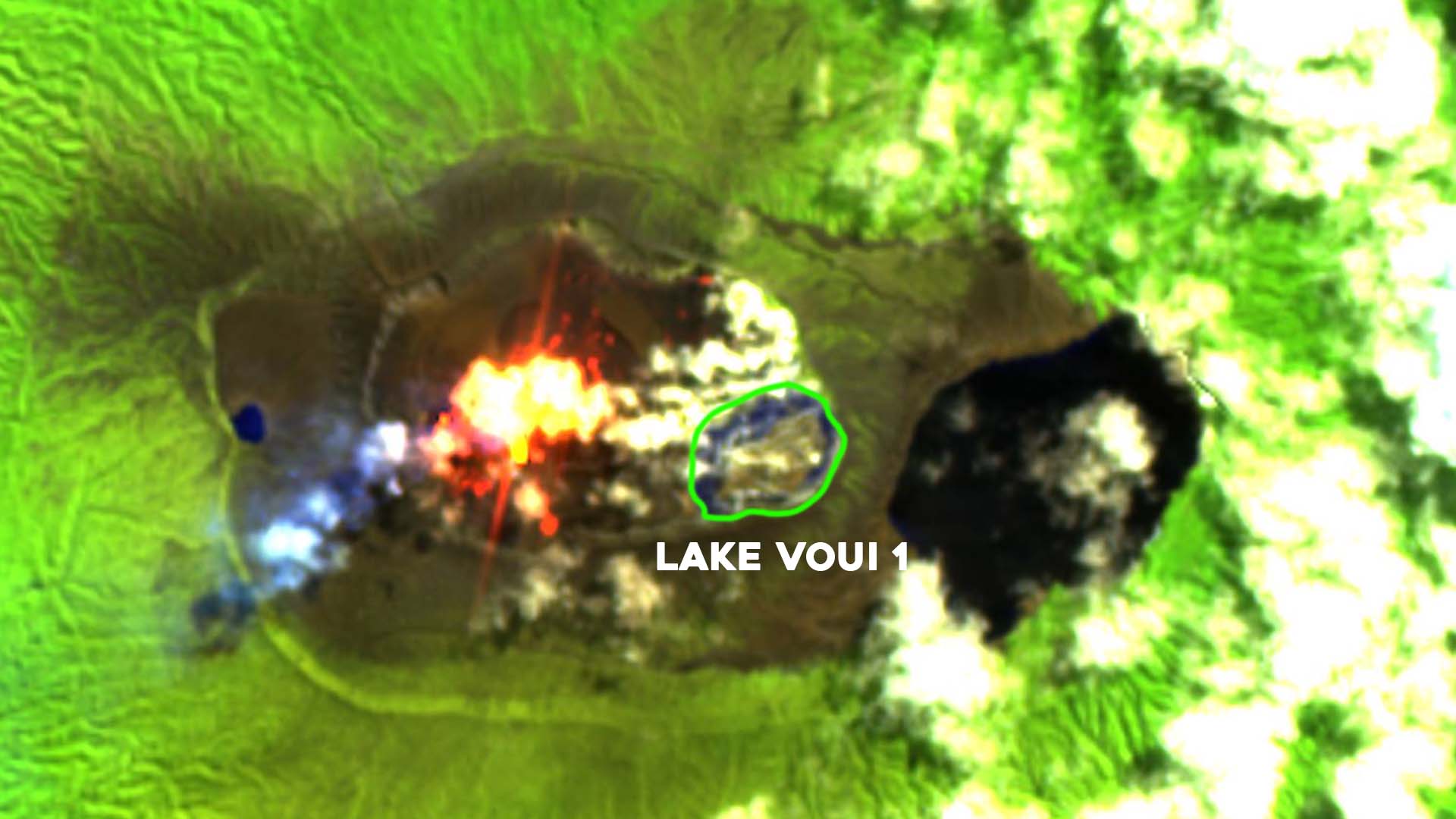
The final stage of this disappearance occurred at the beginning of May 2026. On May 1, Landsat imagery detected an even higher peak in effusion, and by May 2, Sentinel-2 false-color imagery confirmed that Lake Voui 1 had entirely vanished. While the central crater has been transformed into a hardened landscape of fresh lava, Lake Gesa to the east remains intact for now. However, observations suggest its water temperature is likely rising due to the proximity of the activity, which will lead to increased evaporation even if lava does not directly enter its basin.
Sentinel 2 False Colour – April 27, 2026: A possible pumice raft and debris on Lake Voui 1
Sentinel 2 False Colour – May 02, 2026: Lake Voui 1 is gone, with some evaporation still underway.
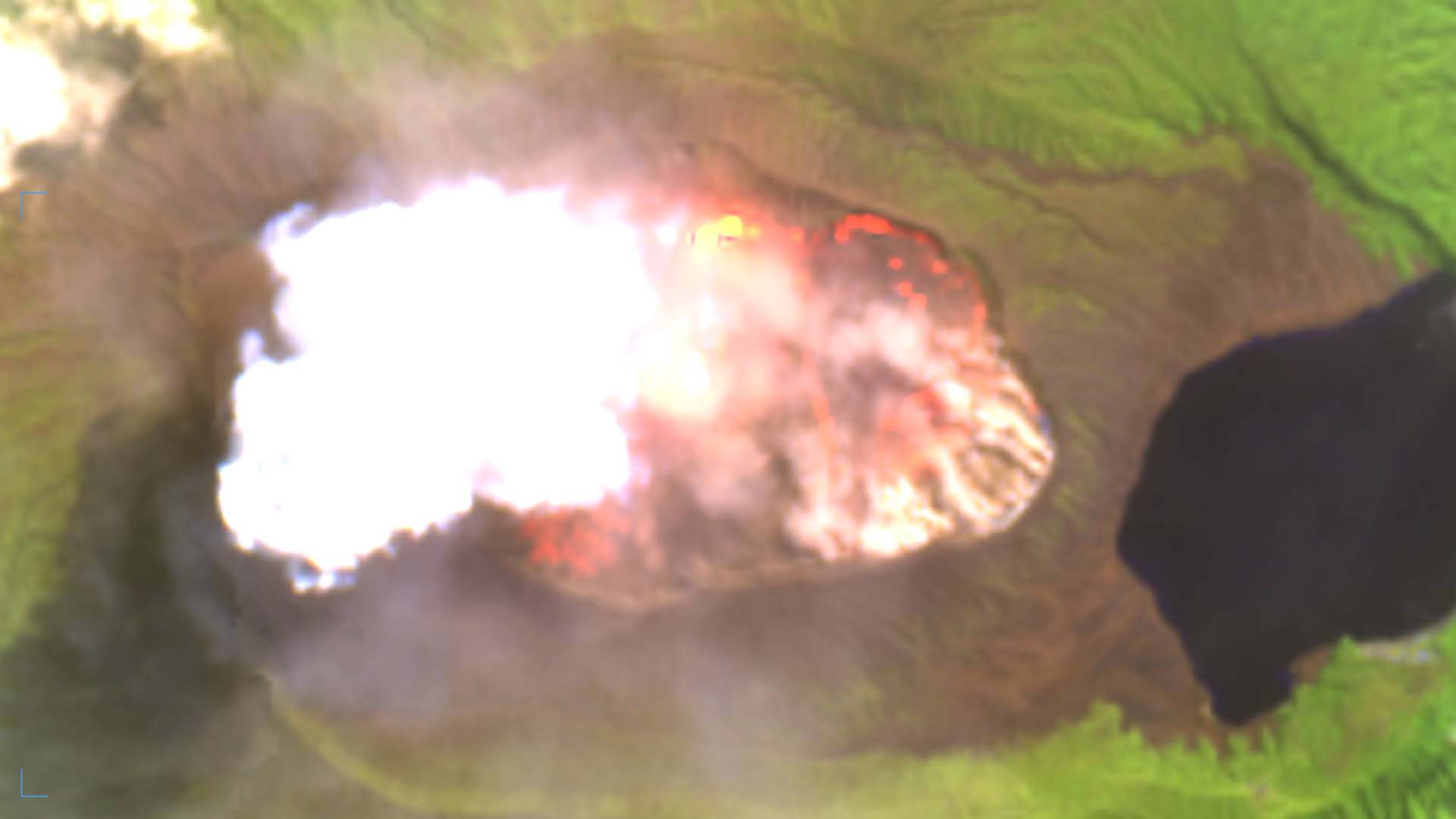
With the summit lakes now mostly gone, the volcano is expected to transition to a dry eruptive style. Without the presence of water to cause explosive steam reactions, the activity will likely shift toward Strombolian behavior, characterised by distinct fire fountains, lava flows, and the ejection of lava bombs. As effusion continues, the crater floor will steadily rise. While the lava is currently confined to the central crater, any sustained increase in volume could eventually cause it to breach the area and flow toward the outer flanks of the island.
For official information and warnings in Vanuatu, please always refer to the Vanuatu Geological Hazards Department.