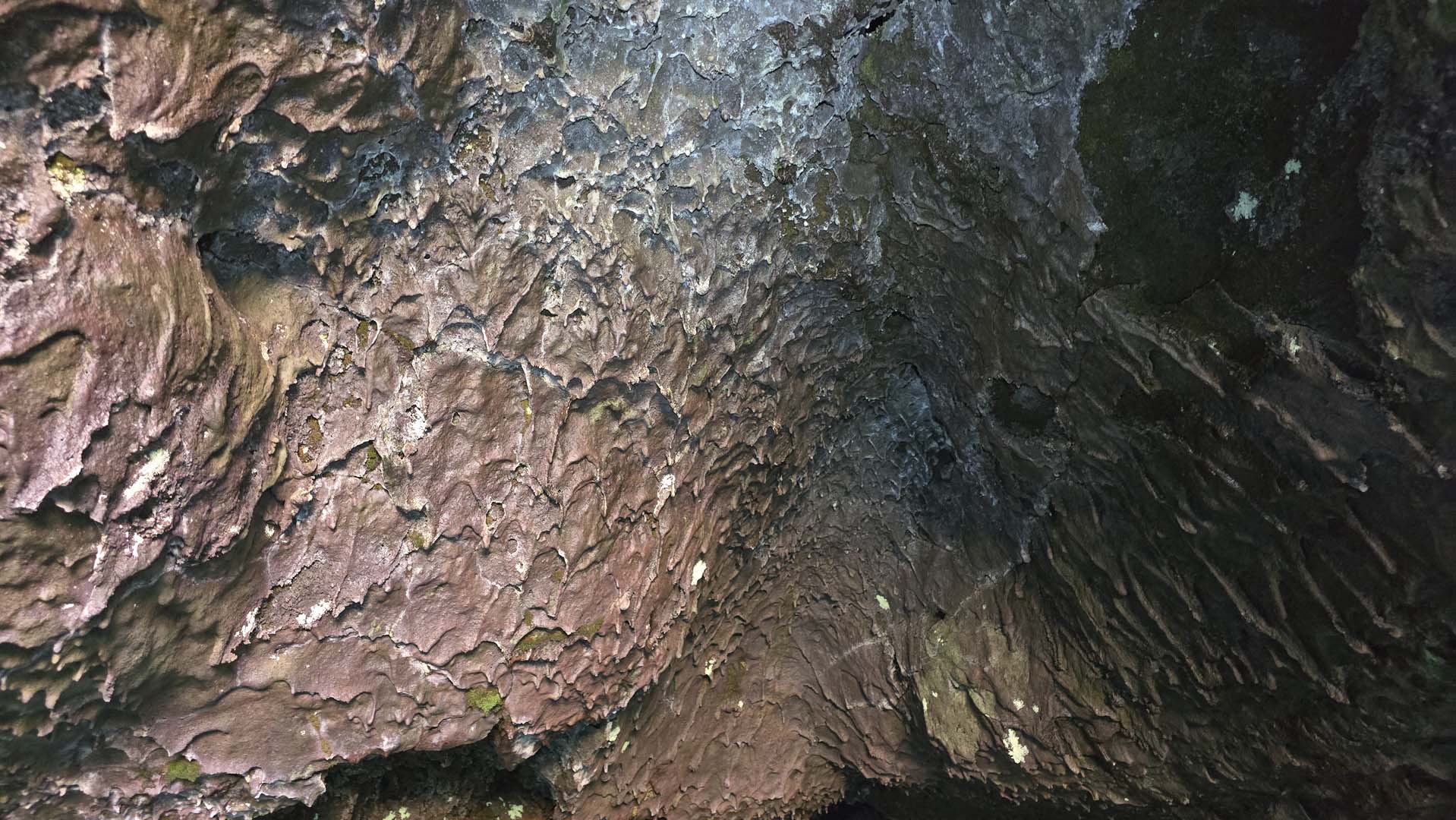

Iceland’s lava caves rank among the finest on Earth. Entering these passages is like stepping into a volcanic eruption caught mid-flow – remarkably recent geological moments frozen in time. Their scale is impressive. Sprawling tunnels that snake for kilometers, opening into vast chambers. Exceptional colours with vivid rust-red oxidation, yellows, and greens streaking across the walls. Then there are the features themselves: shark-tooth ceilings, meter-tall lava stalagmites rising from the floor, and walls glazed to a glossy finish that resembles liquid chocolate.
While several caves cater to tourists, they’re tightly managed with short viewing sections accessed by boardwalks, illuminated with garish, Christmas-tree lighting that overwhelms the natural beauty. The truly exceptional caves are the ones tourists never reach. During my previous trip to Iceland, I explored a handful of lava caves including some of these tourist ones. This time however, I made cave exploration a bigger priority, going so far as to connect with the Icelandic Speleological Society. I ended up visiting more than ten caves, though with over 500 documented throughout the country, I’d barely scratched the surface.
Given the extraordinary fragility of lava caves, I’ve deliberately withheld both the names and locations of those that I visited.
So firstly, lava caves are essentially the empty plumbing systems of a volcano. They form when a river of molten lava flows downhill and the top layer cools and hardens into a solid rock crust, similar to how ice freezes over a stream in winter. This hard crust acts like a roof that insulates the lava below, keeping it hot and allowing it to keep flowing. When the eruption eventually ends, the remaining liquid lava drains out of the pipe, leaving behind a hollow, tunnel-like cave. You can find more information about lava caves here.
Many of the caves we explored were massive, textbook lava tubes. Hollow, cylindrical passages carved by flowing molten rock. These tunnels extended for hundreds of meters at minimum, with some stretching several kilometers.
A large passage with rugged and chaotic cave ceiling, walls and floor, showing distinct layering, likely from different lava flows cooling over time. The colors are striking, ranging from charcoal blacks and greys to oxidised, rusty reds and yellows. On the right-hand wall, there are horizontal striations or ridges which are lava flow lines.
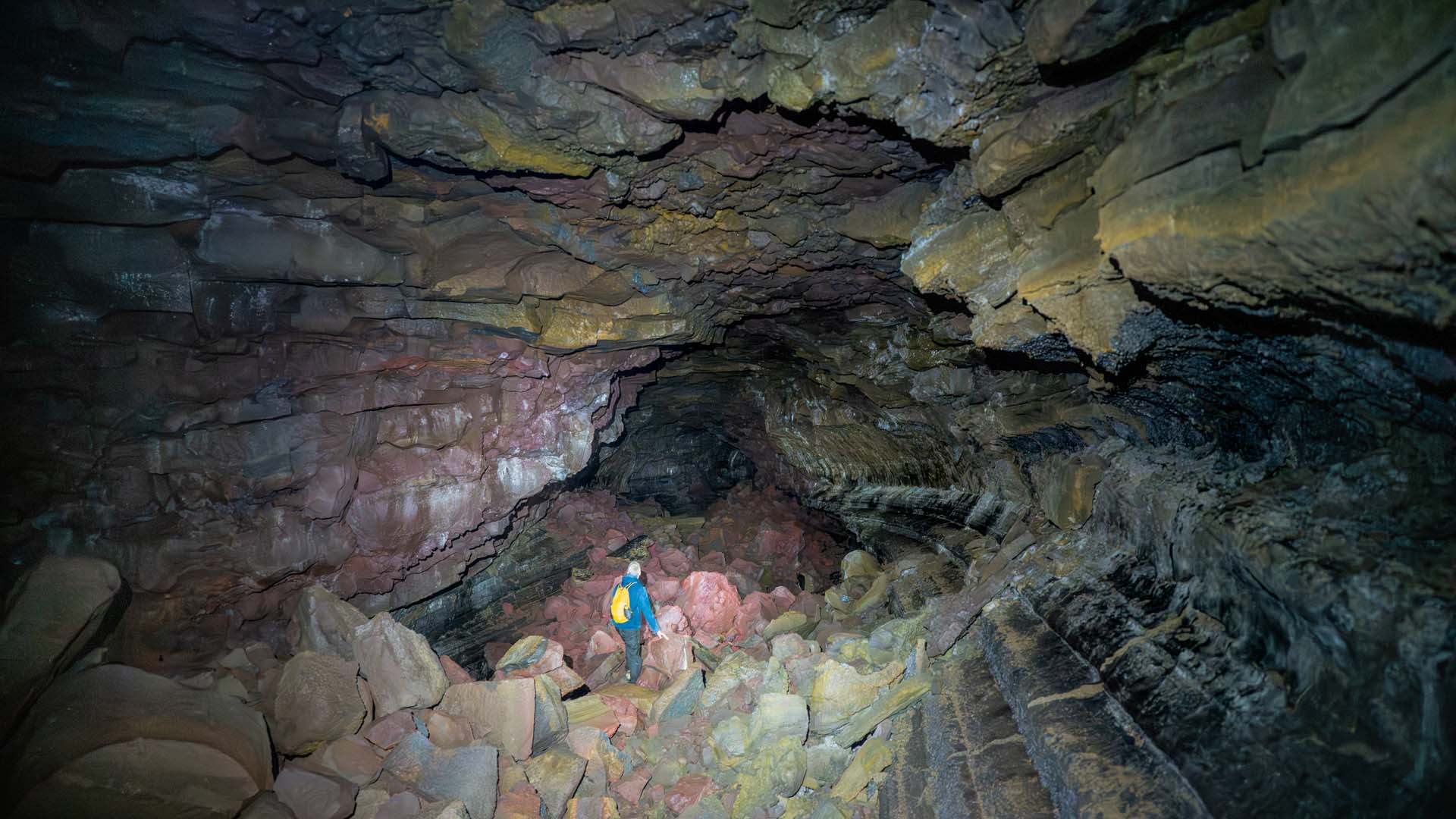
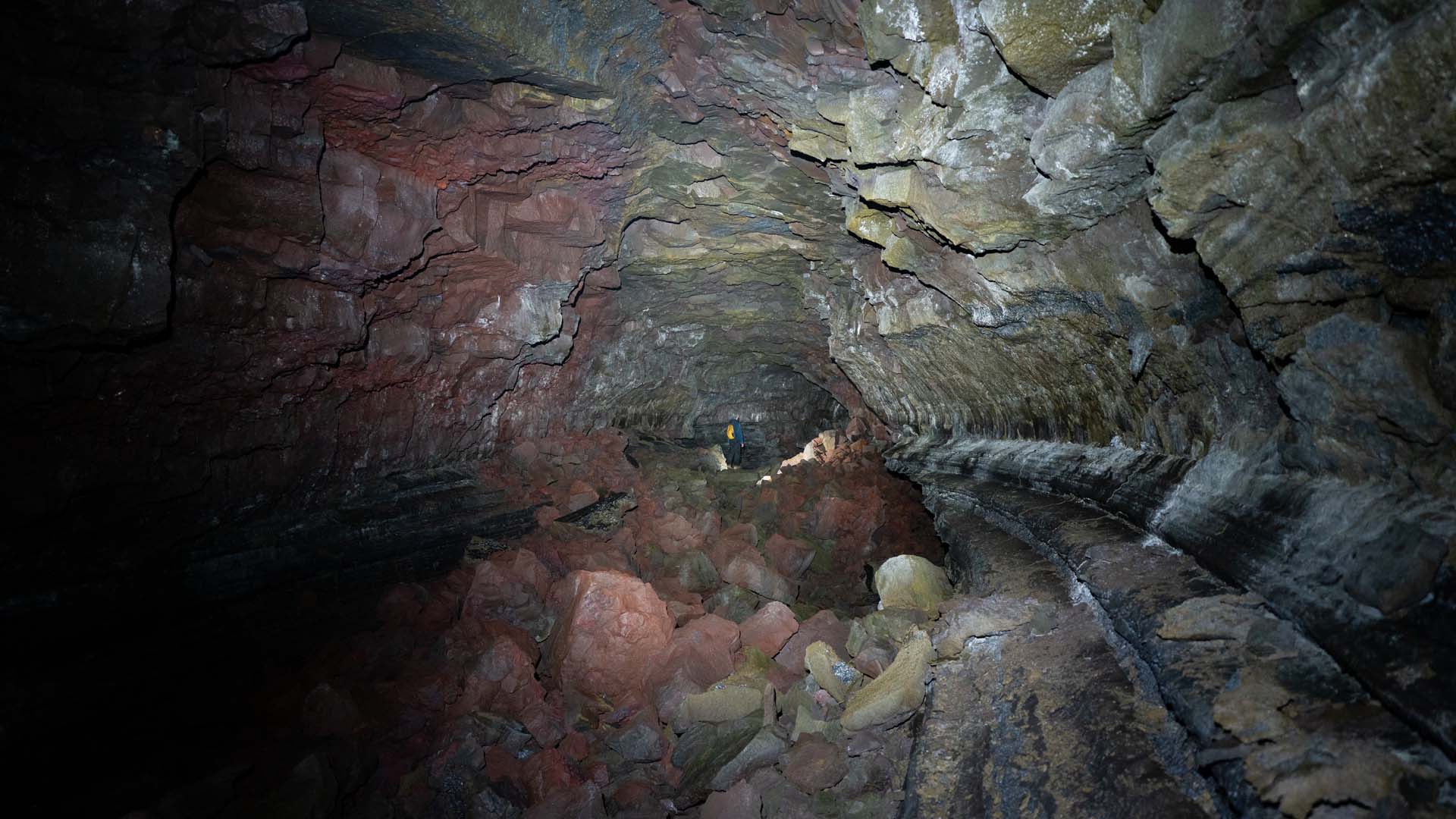
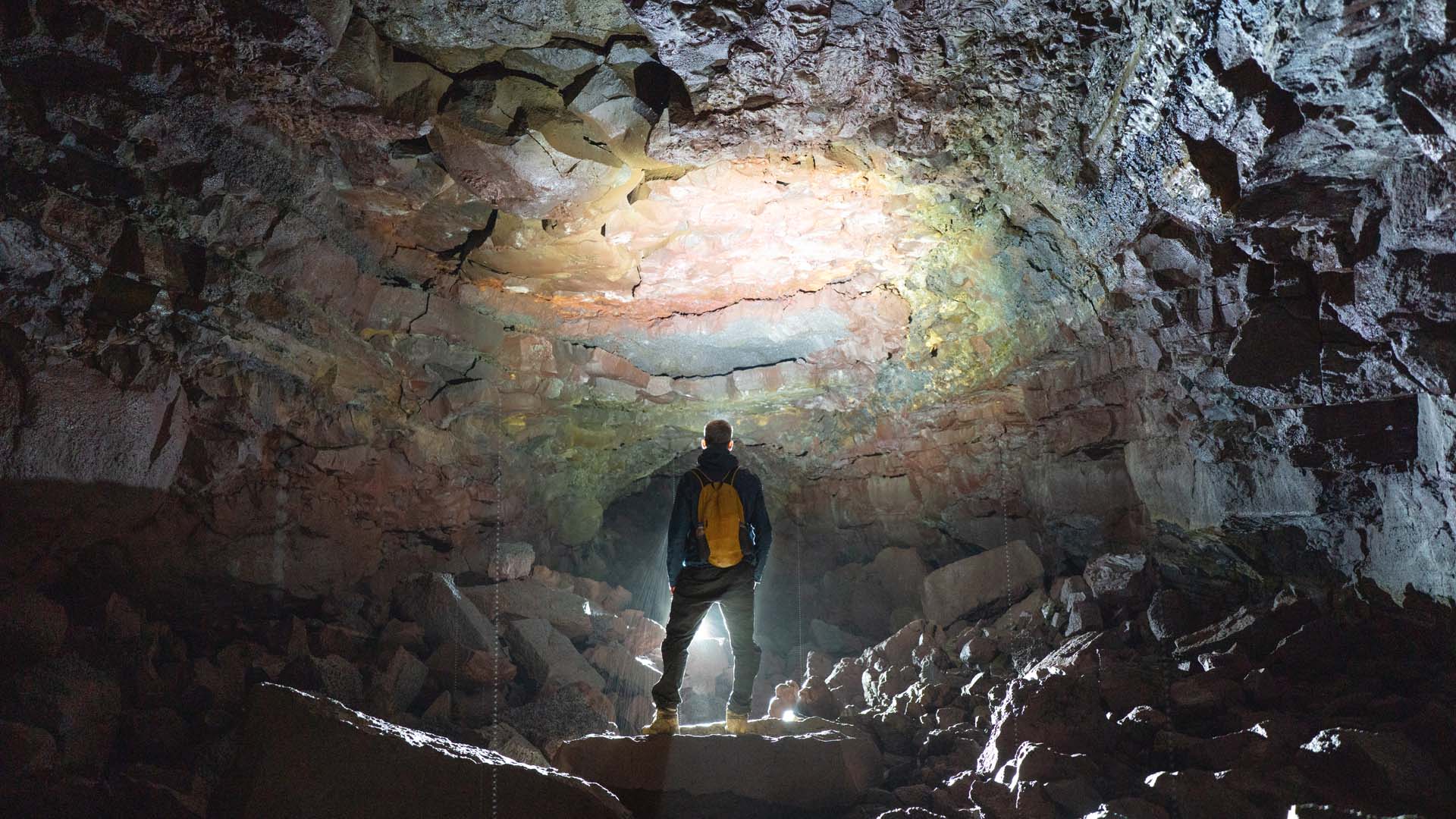
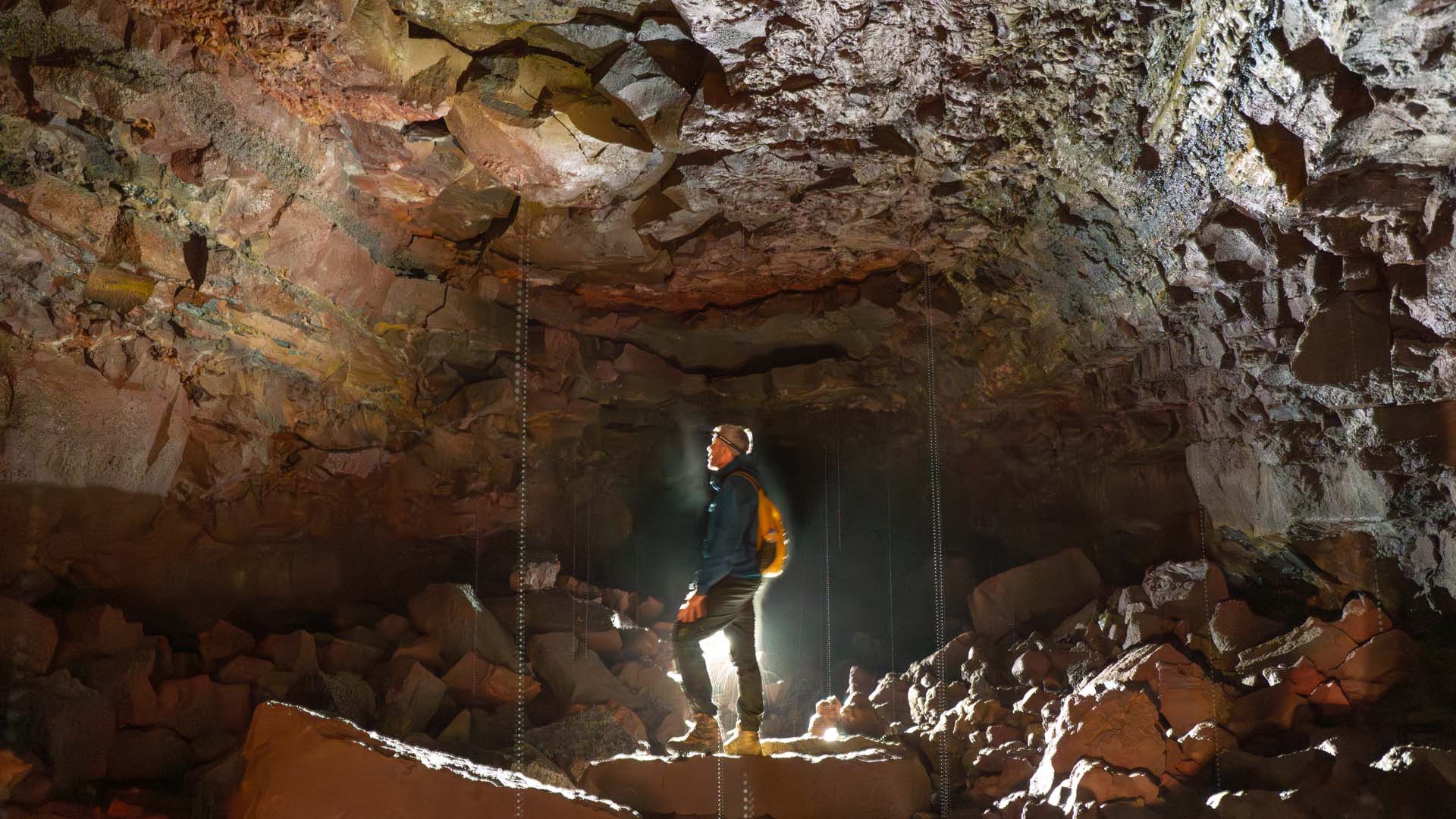
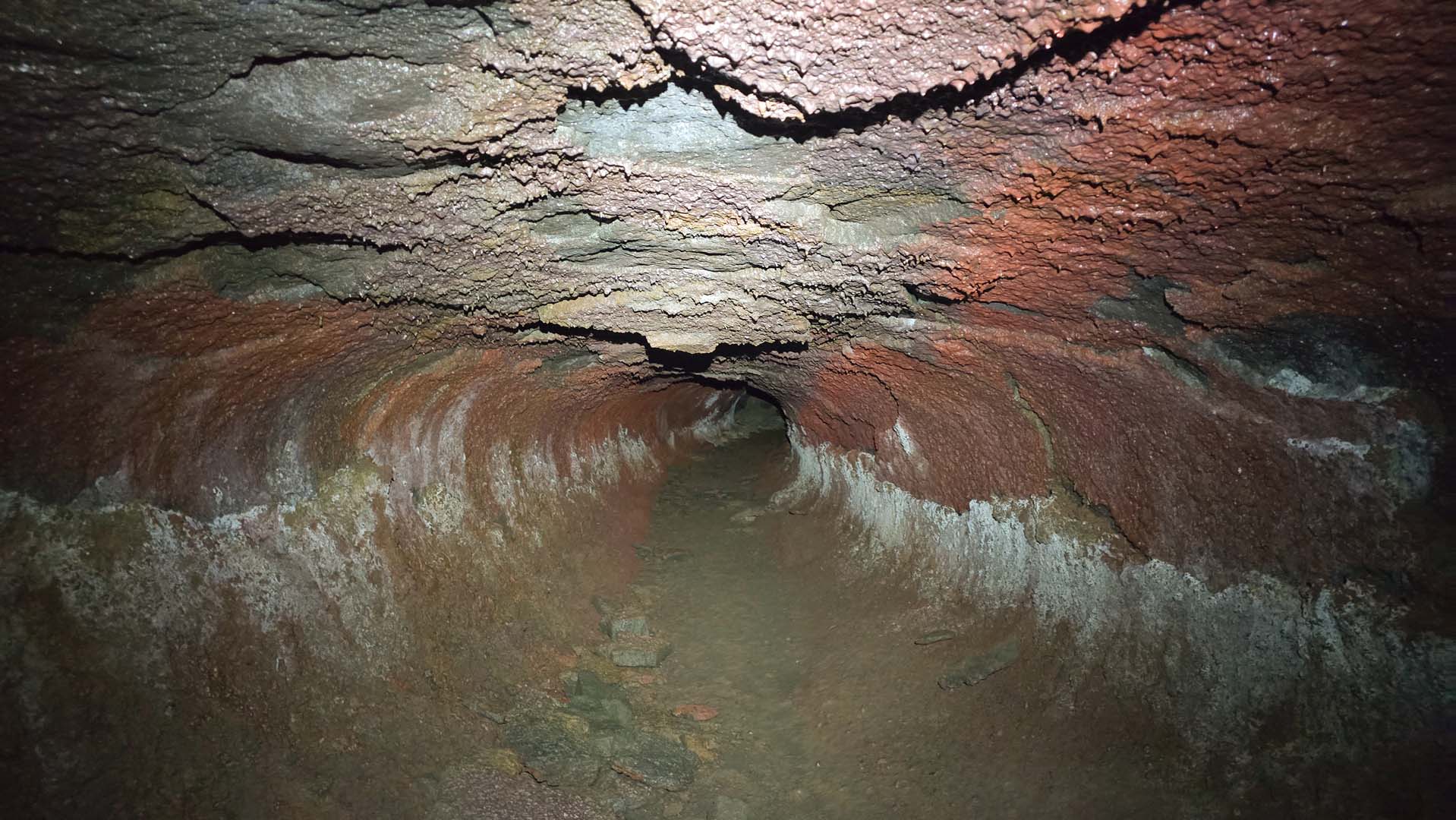
This lava cave had a relatively low and arched ceiling comparatively, showing distinct horizontal layering or laminations. These layers represent different cooling phases or flow levels of the lava as the tube was forming. You can see where slabs of rock have peeled away from the ceiling, creating a jagged, stepped appearance.
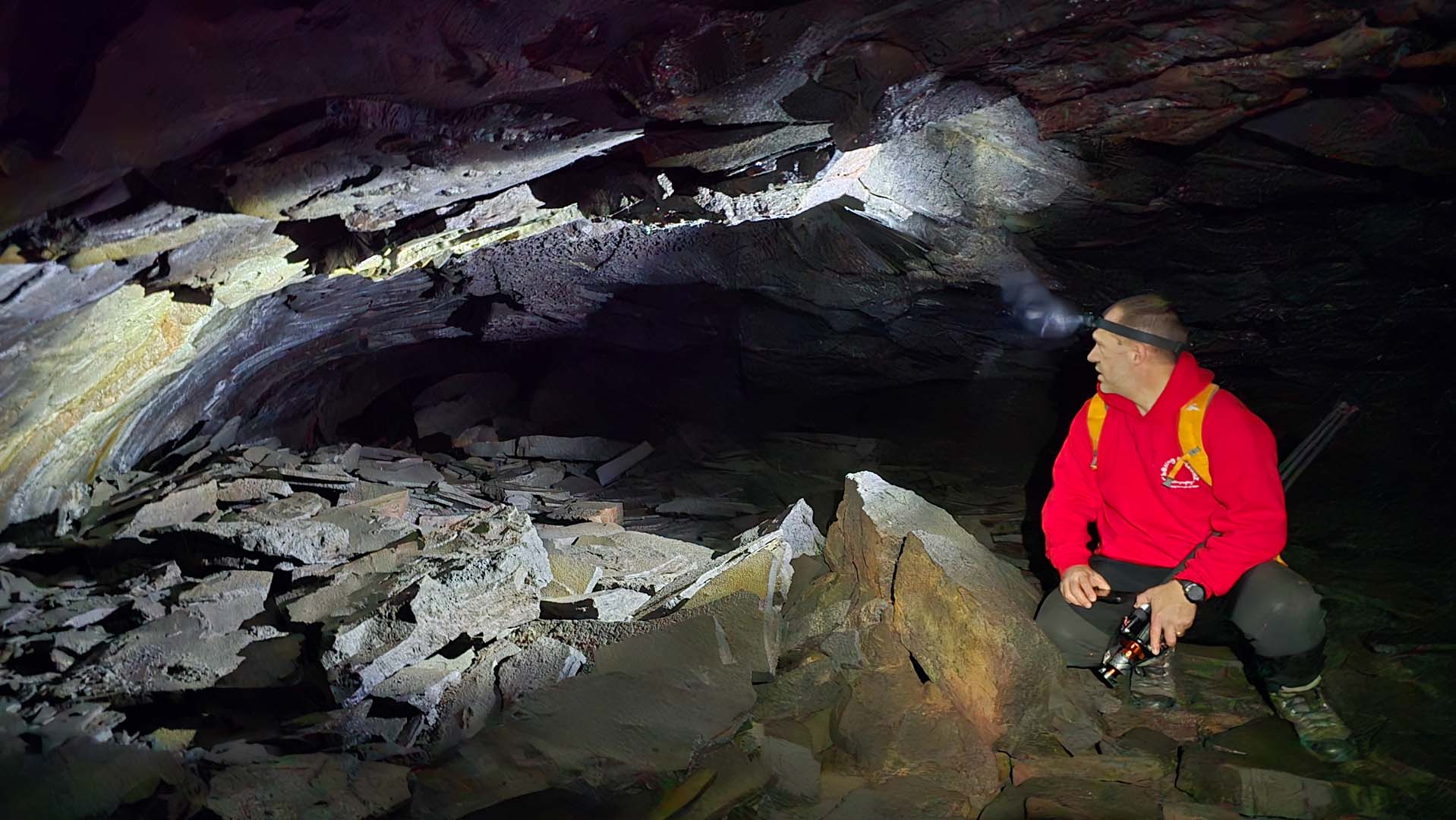
A classic arched lava tube with relatively smooth walls and ceiling with drip formations. Its floor is covered in pahoehoe lava flows and lava stalagmites.
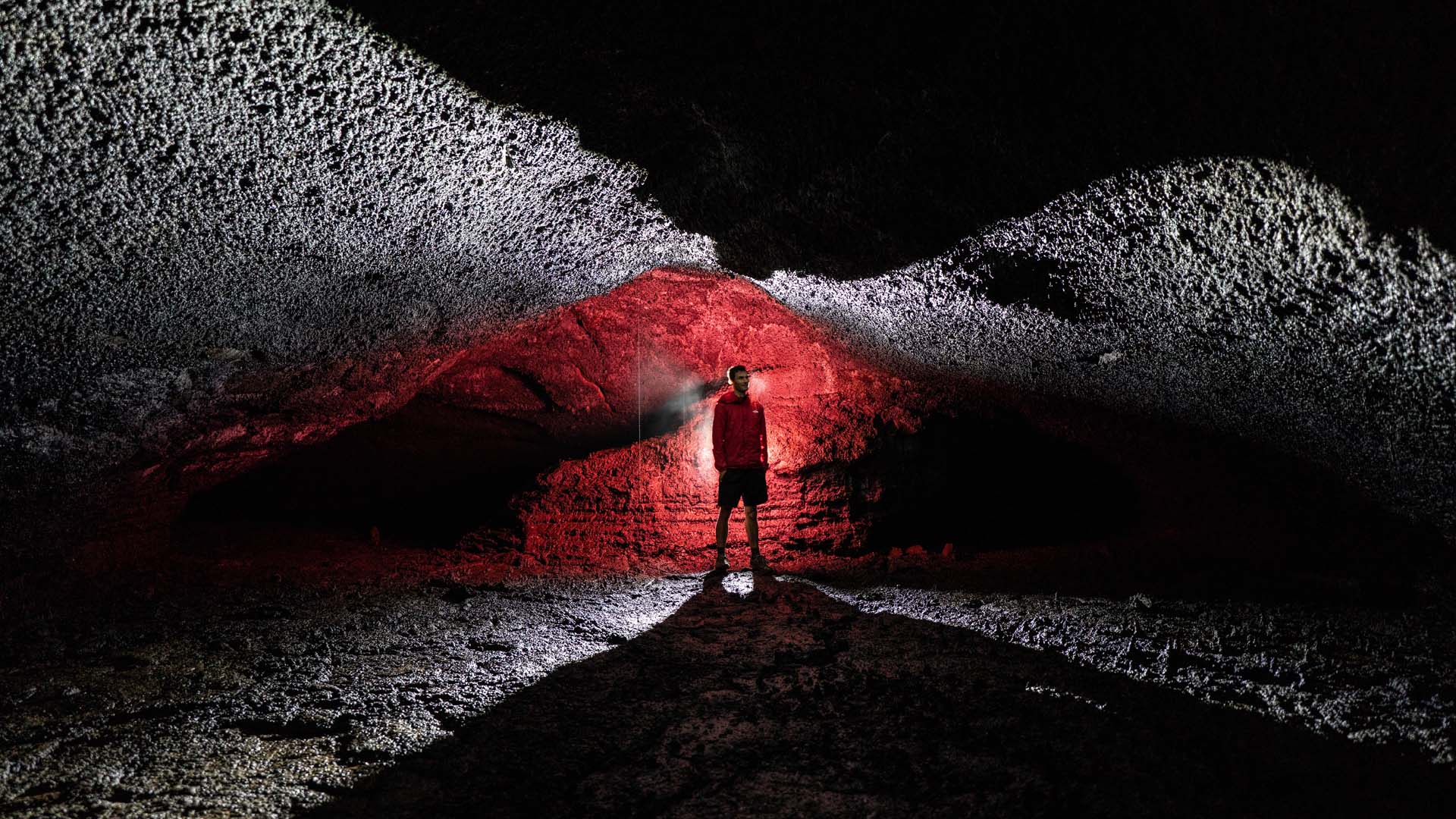
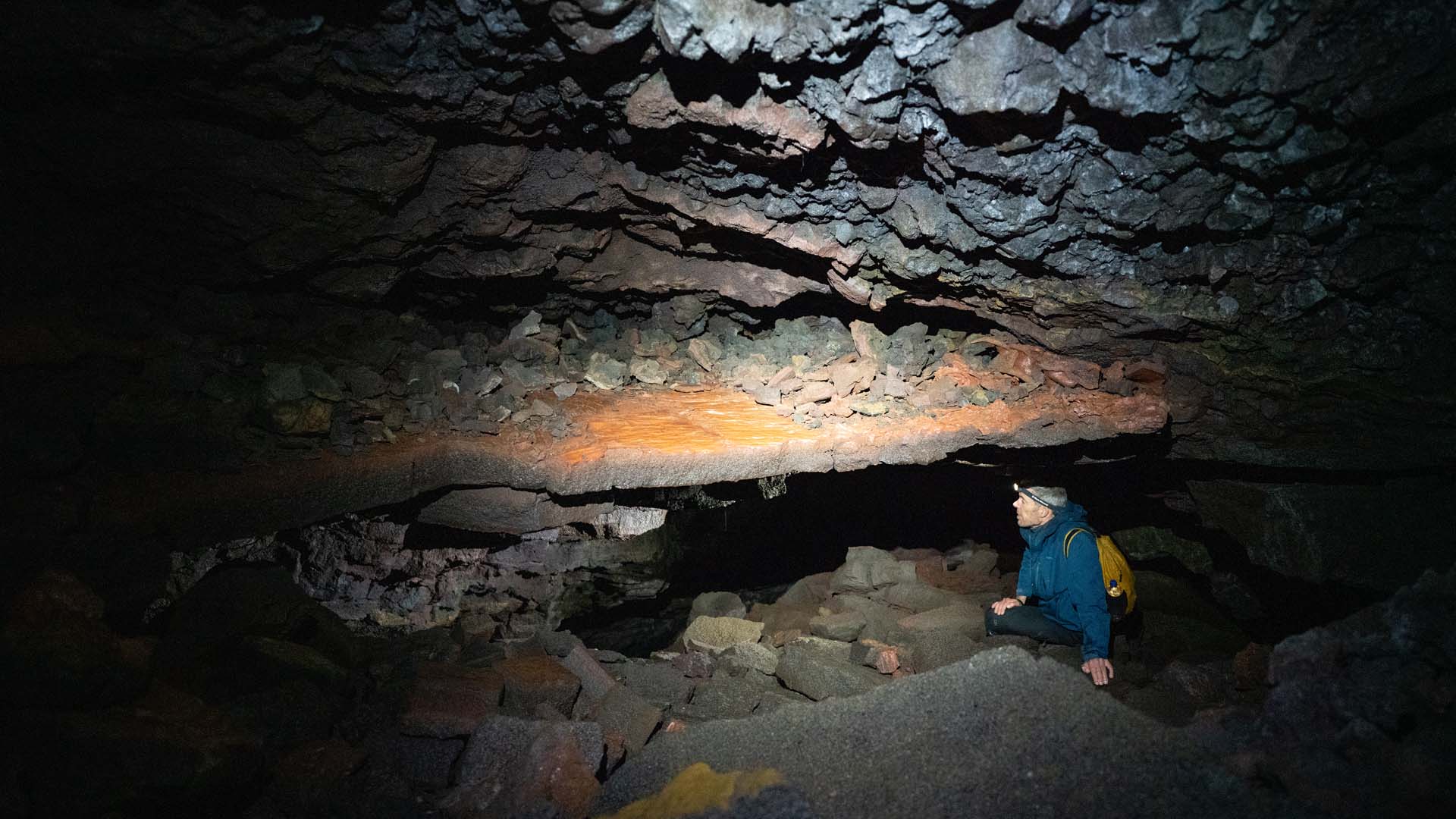
A narrow and chaotic tube with a wonderful oxidised lava shelf.
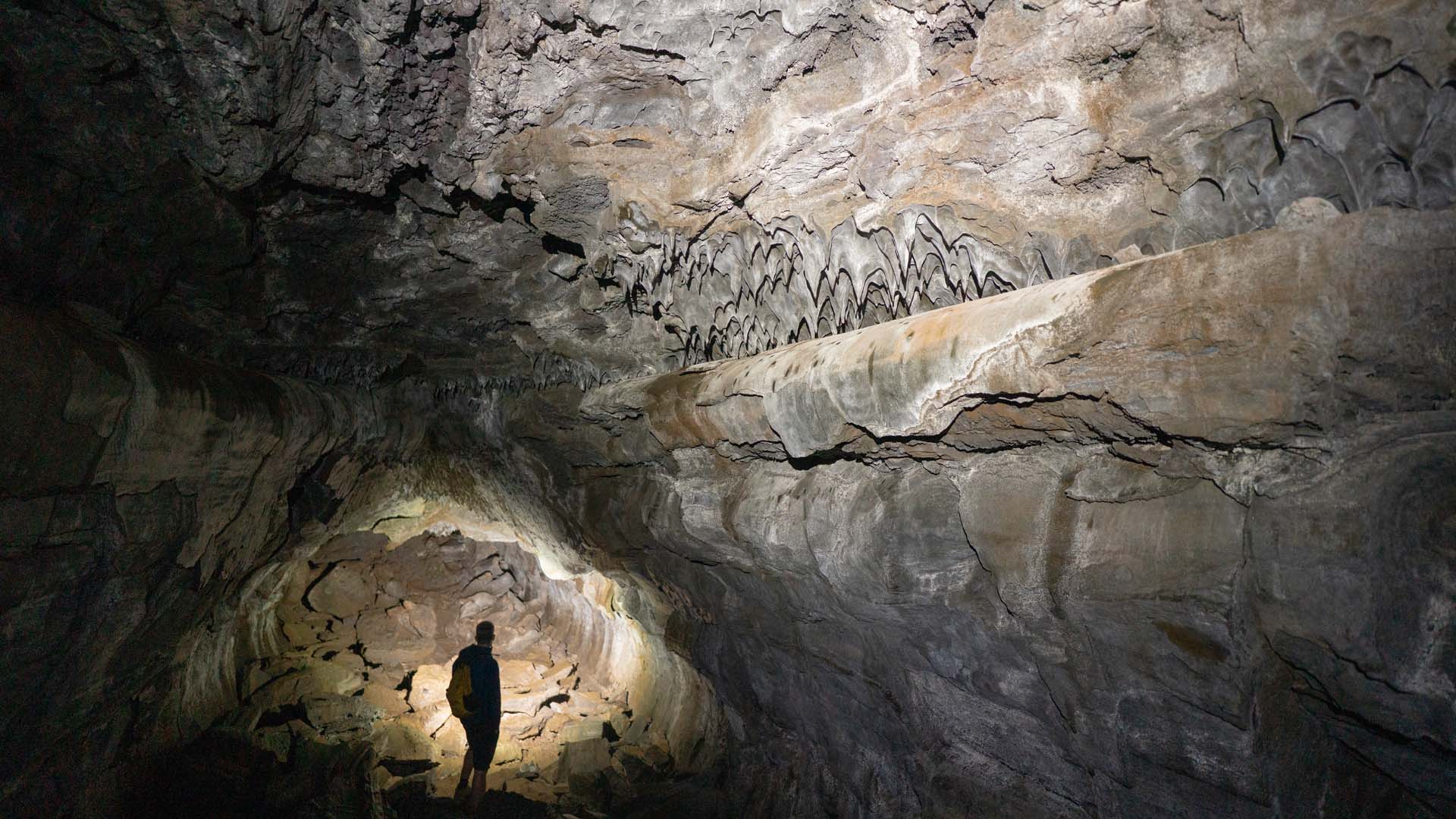
Lava cave with wonderful flow line structures and levees. Interestingly, one side is oxidised orange, the other is darker and non oxidised. My interpretation is that this is due to spalling, where the lining on the left has peeled off exposing the black interior rock underneath, whilst the right hand side lining (that has oxidised) has remained attached.
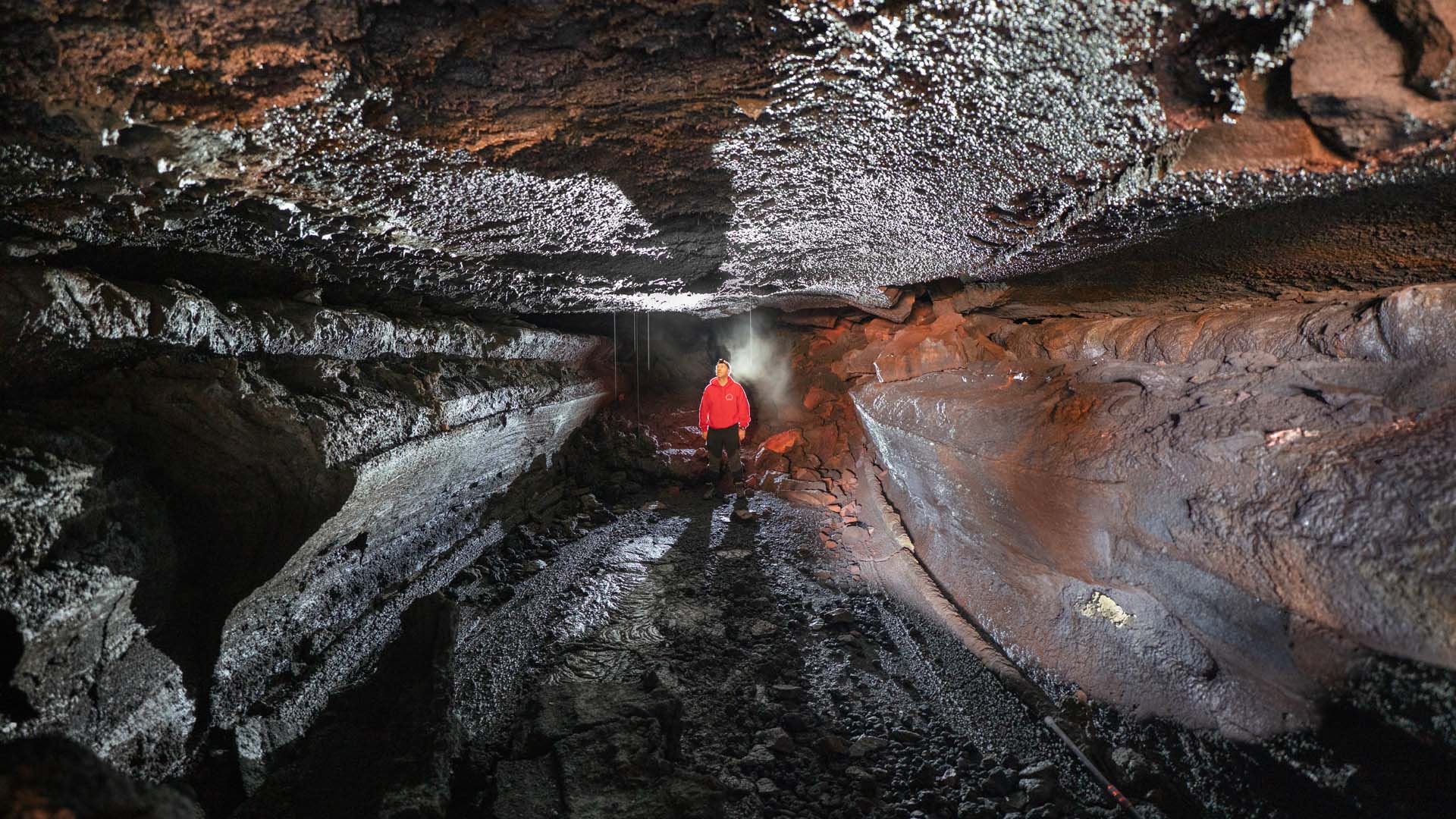
Each cave I explored had its own remarkable features, all of which I’ve documented and detailed below.
Lava Stalactites. Nowhere have I seen better examples of lava stalactites than Iceland. They were present in just about every cave I visited, some reaching almost a metre high. Lava stalagmites form relatively quickly when molten lava drips from the ceiling onto a solid floor, piling up like dripping candle wax. They are extremely fragile and be easily damaged. A number of caves in Iceland have been closed to preserve such features.
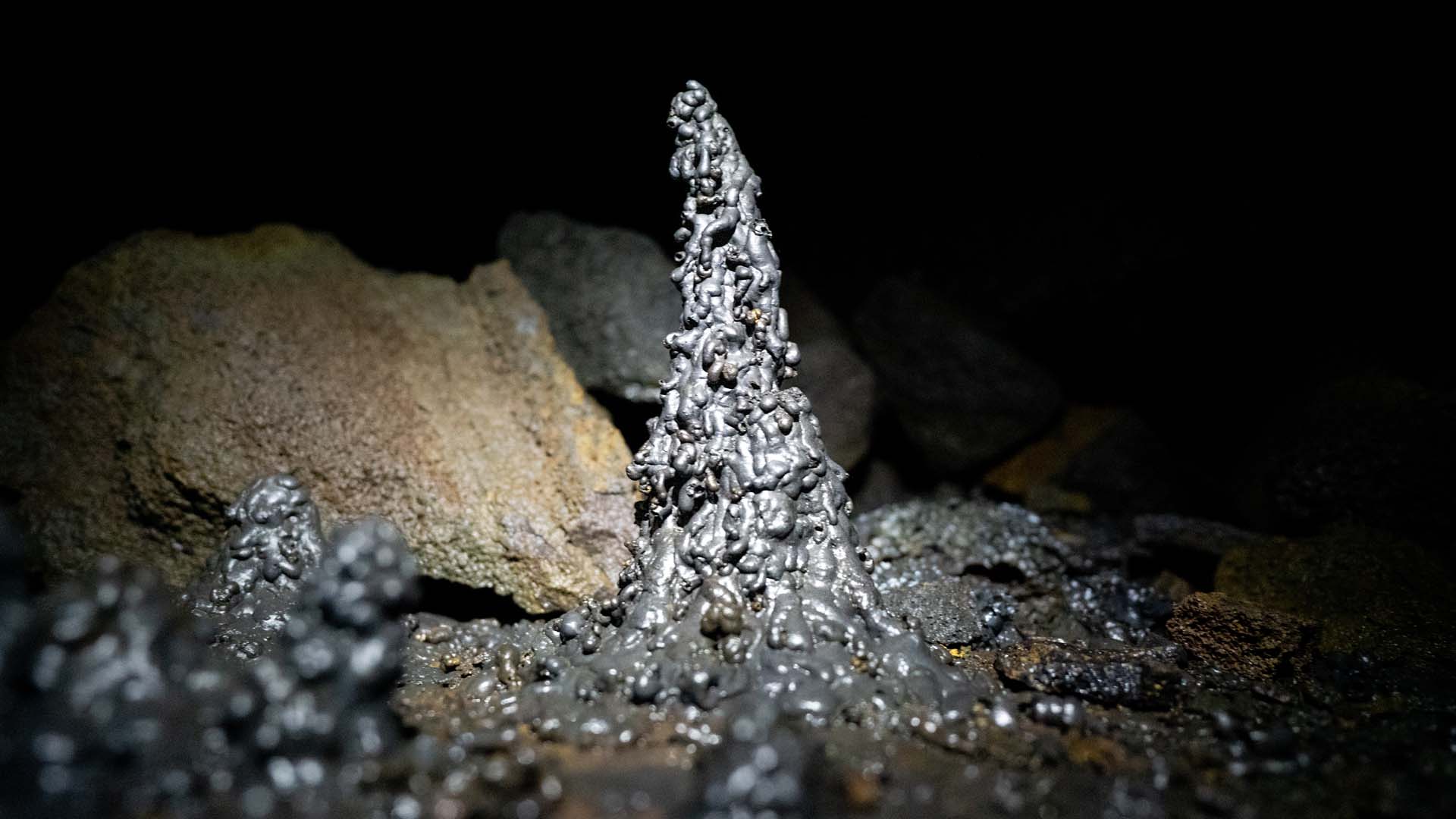
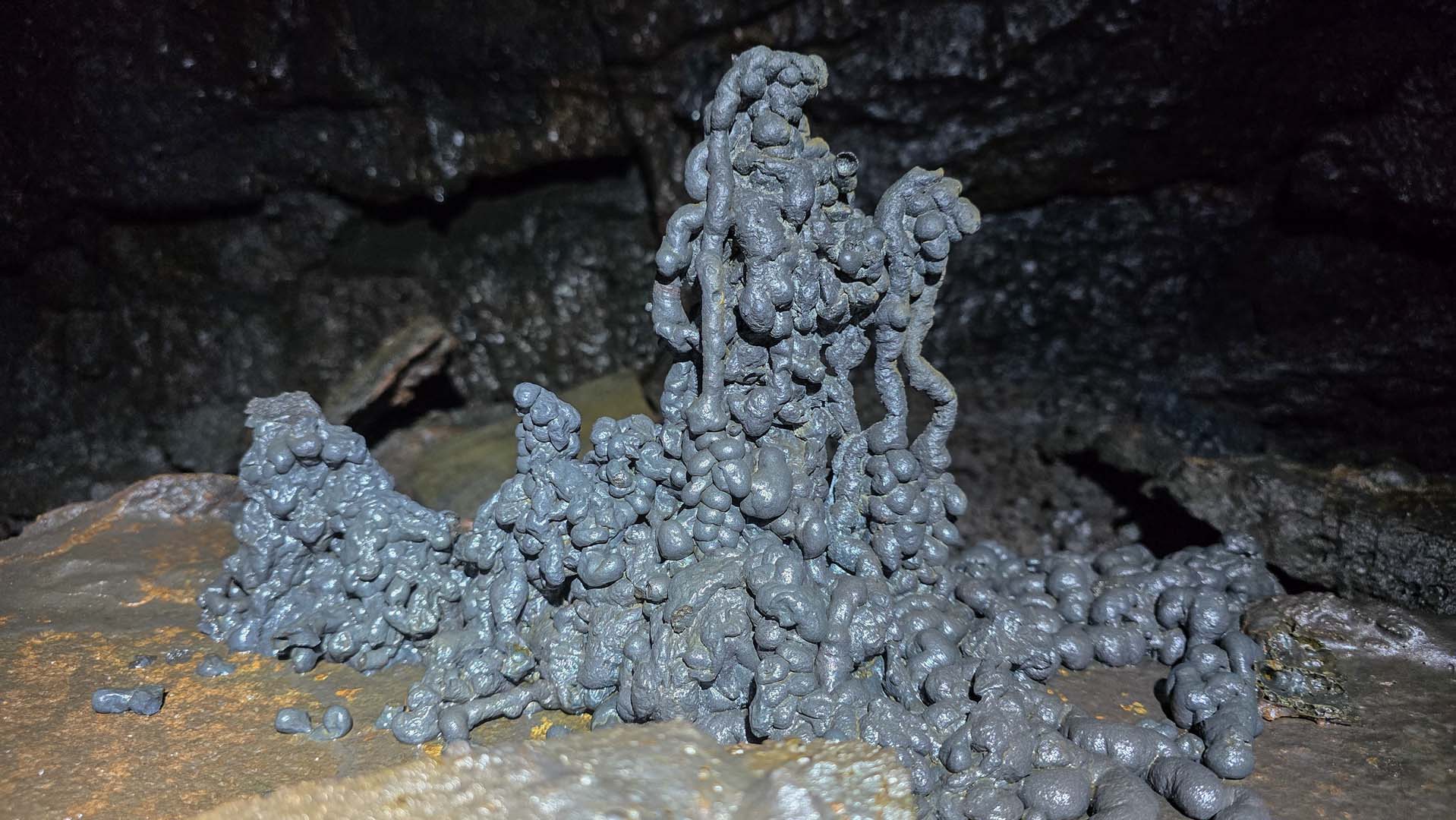
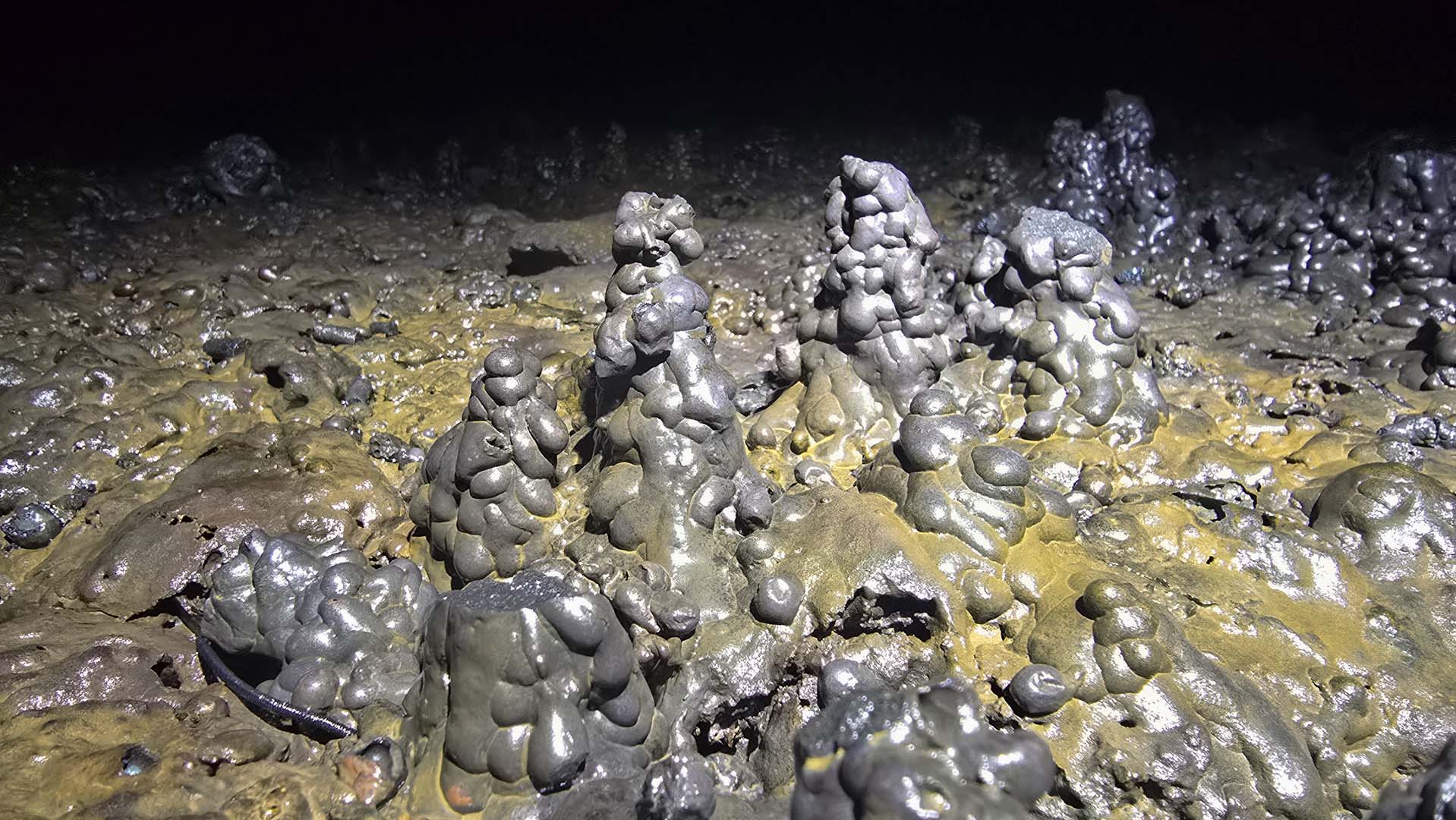
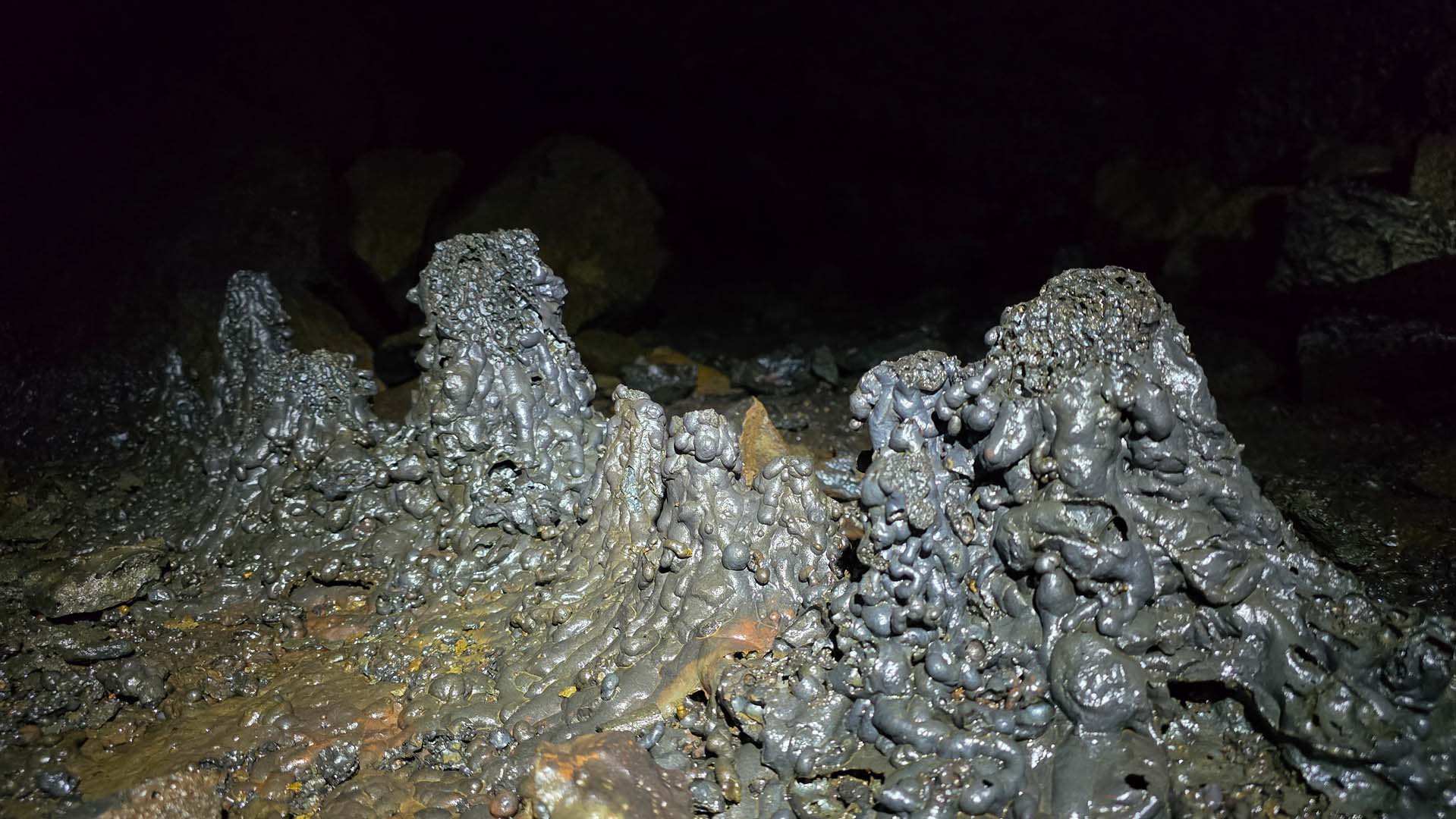
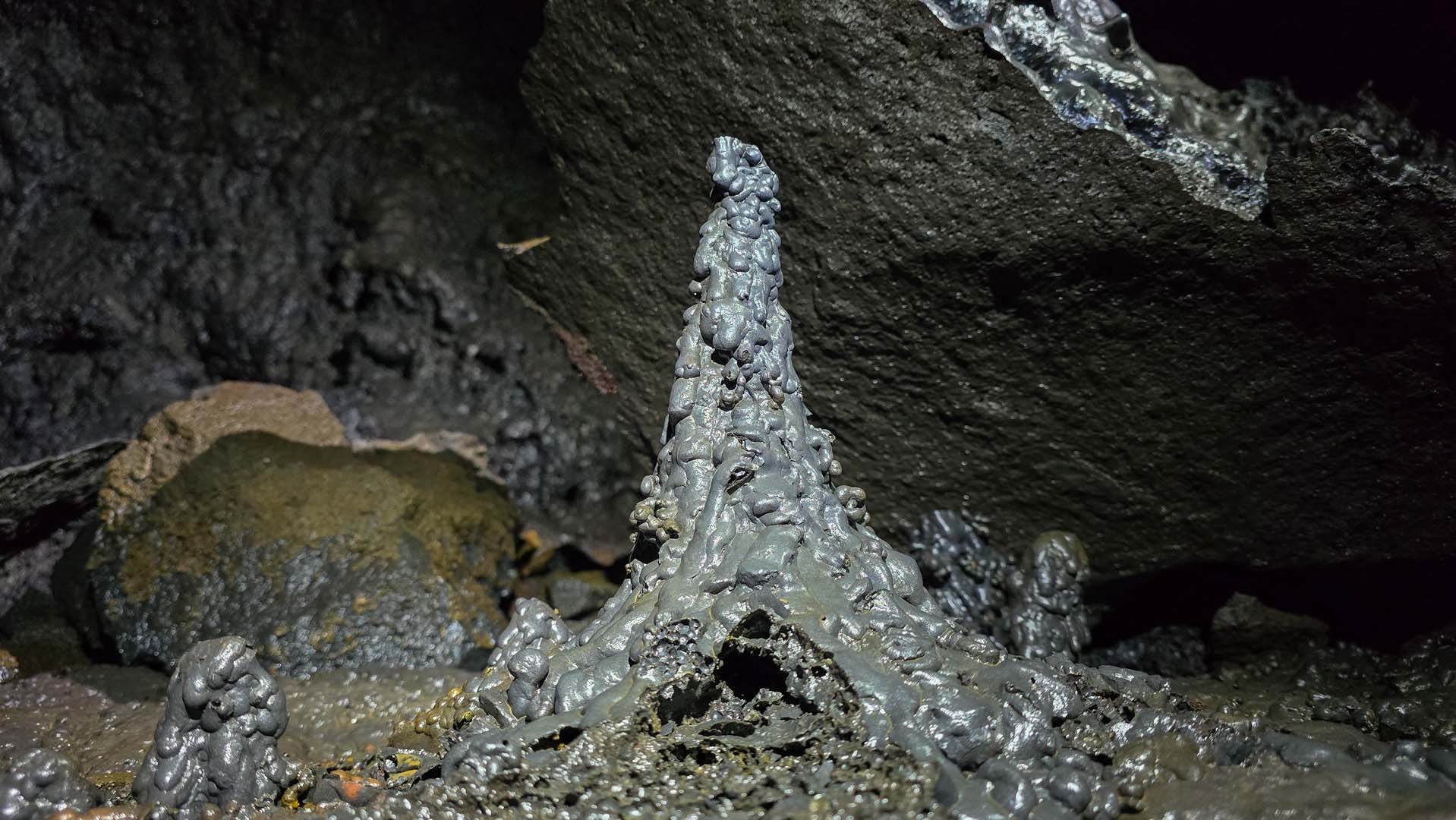
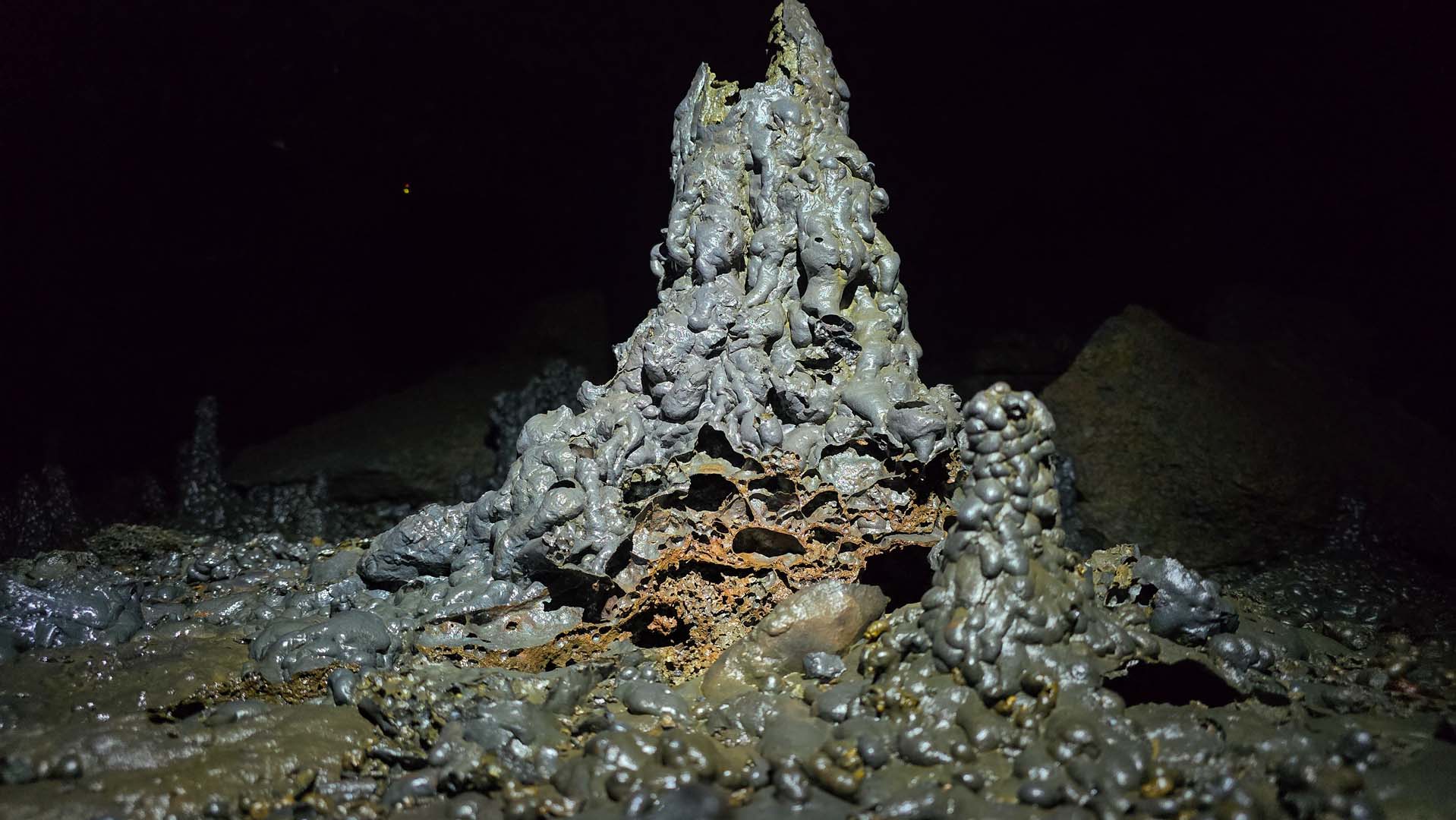
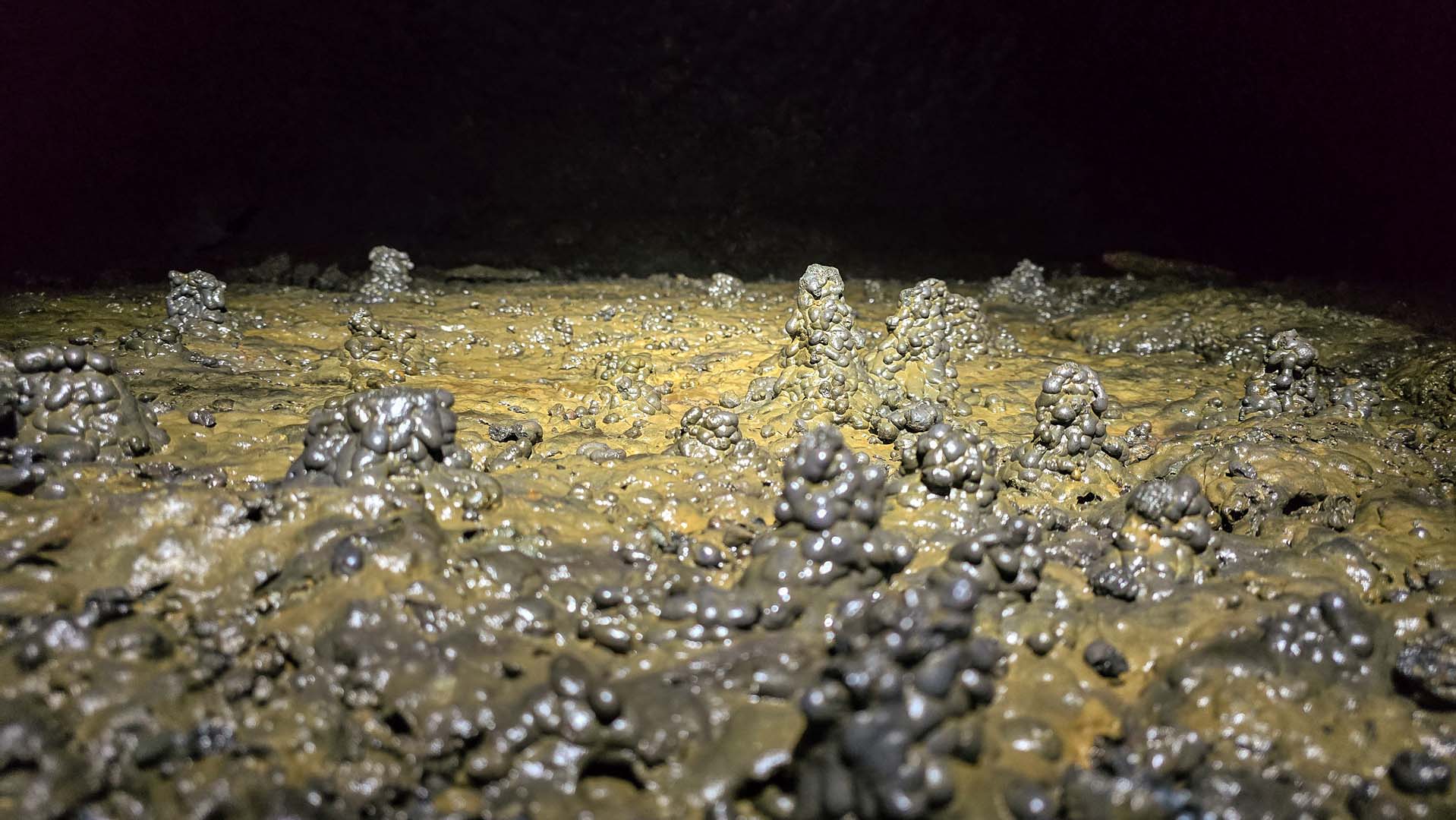
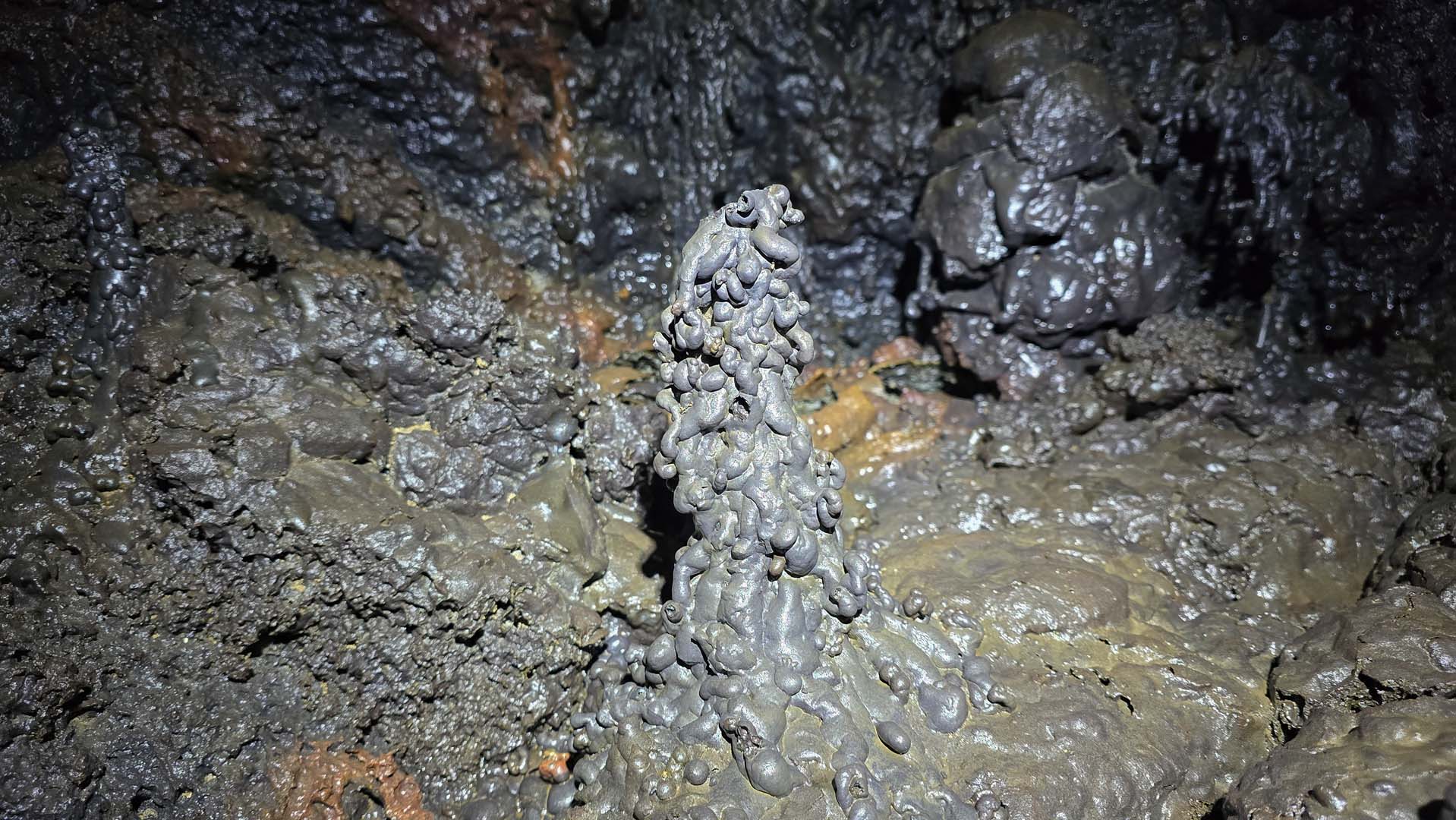
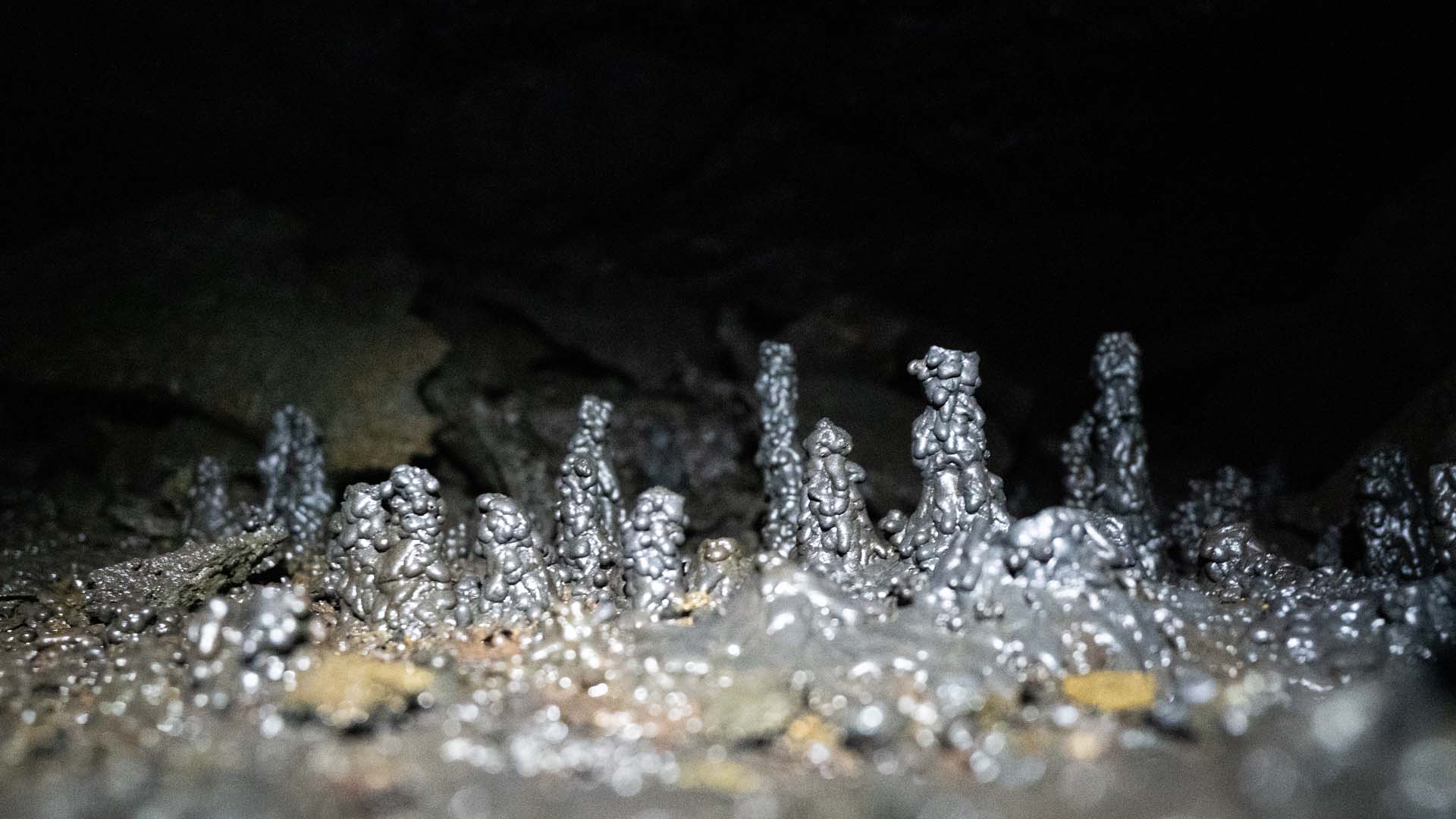
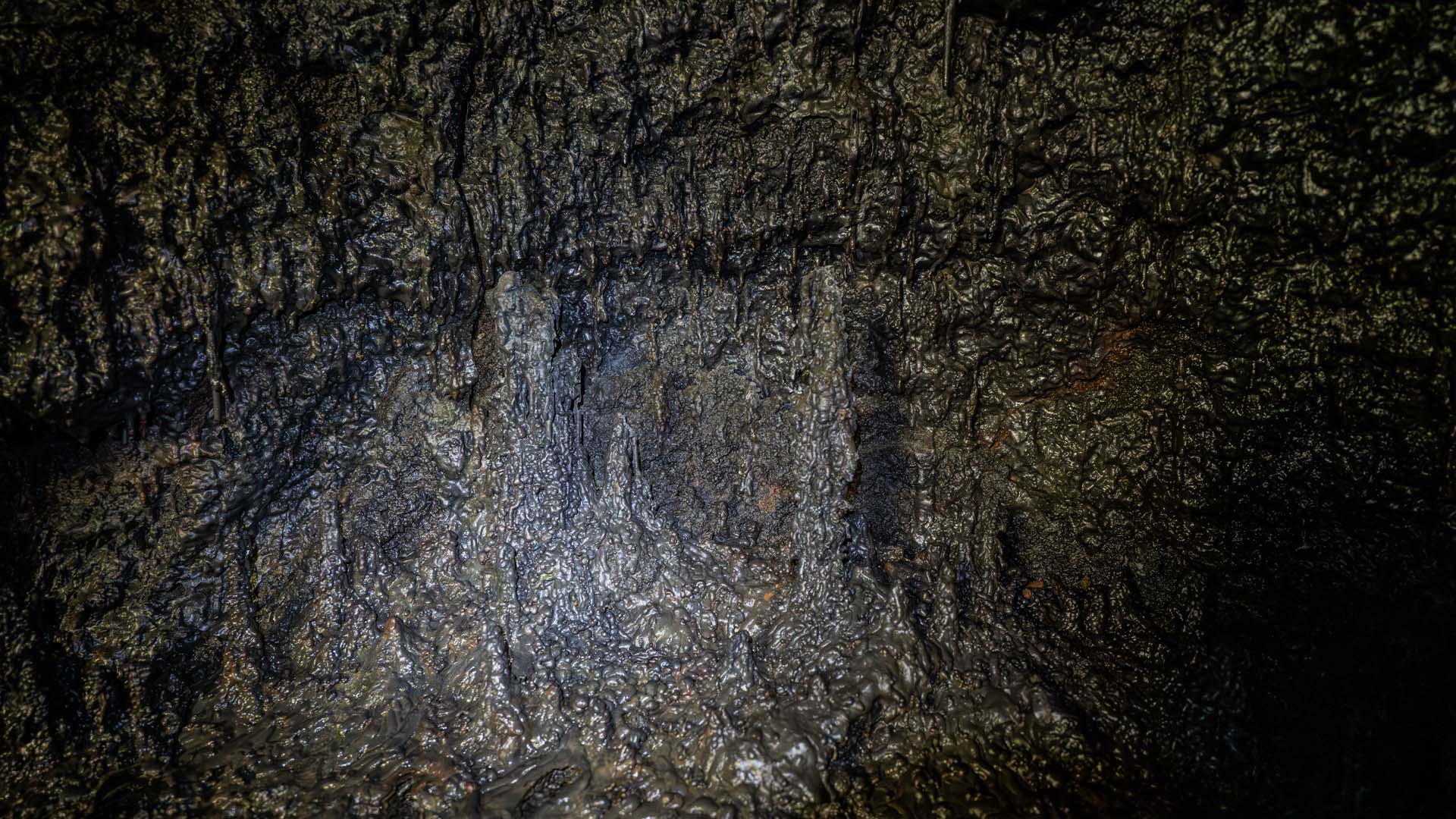
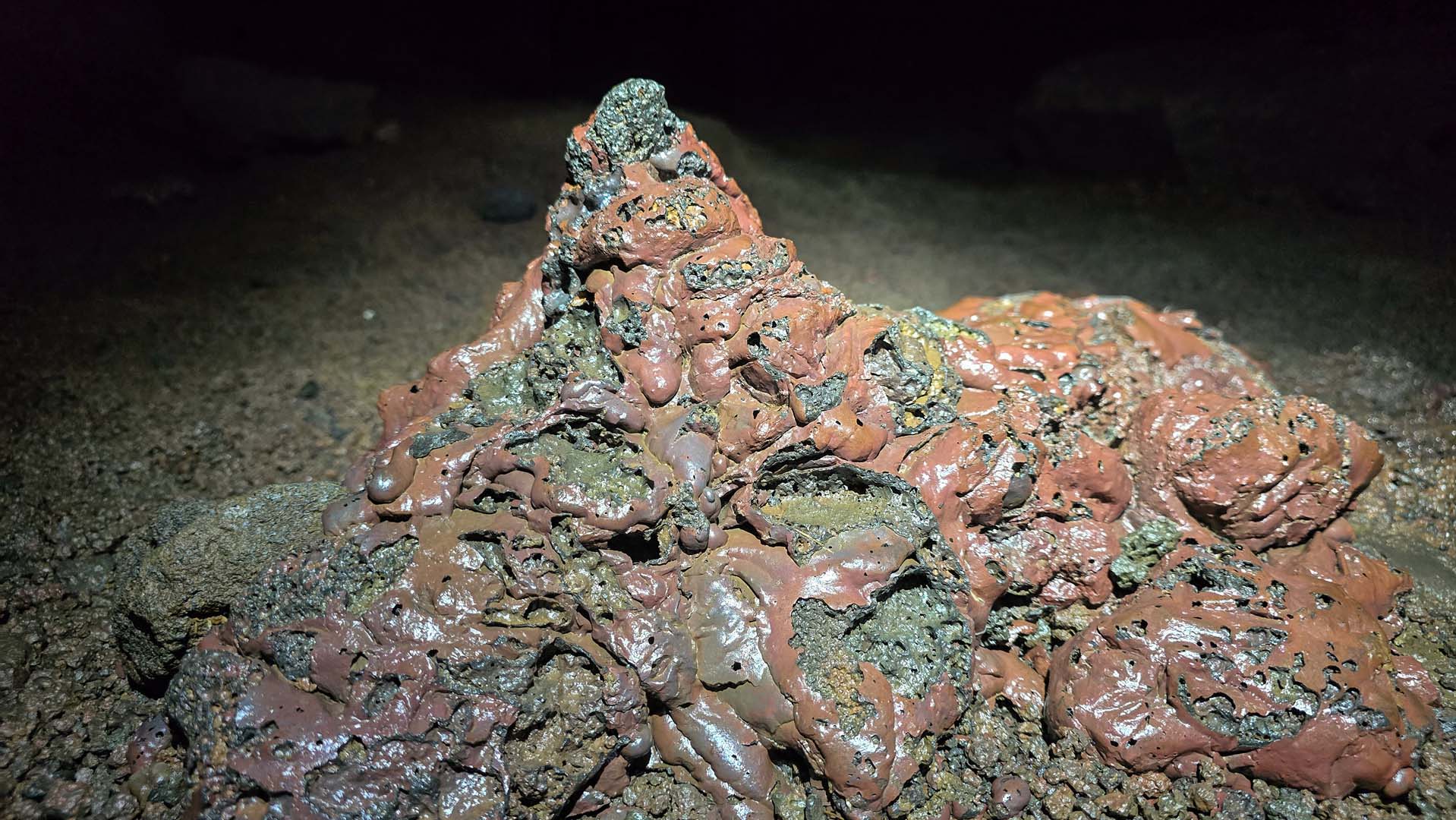
This shiny glaze on the lava stalagmite formed via flash remelting and oxidation. Intense cave heat remelted the stalagmite’s outer skin into smooth glass, which turned orange as iron in the hot rock reacted with oxygen.
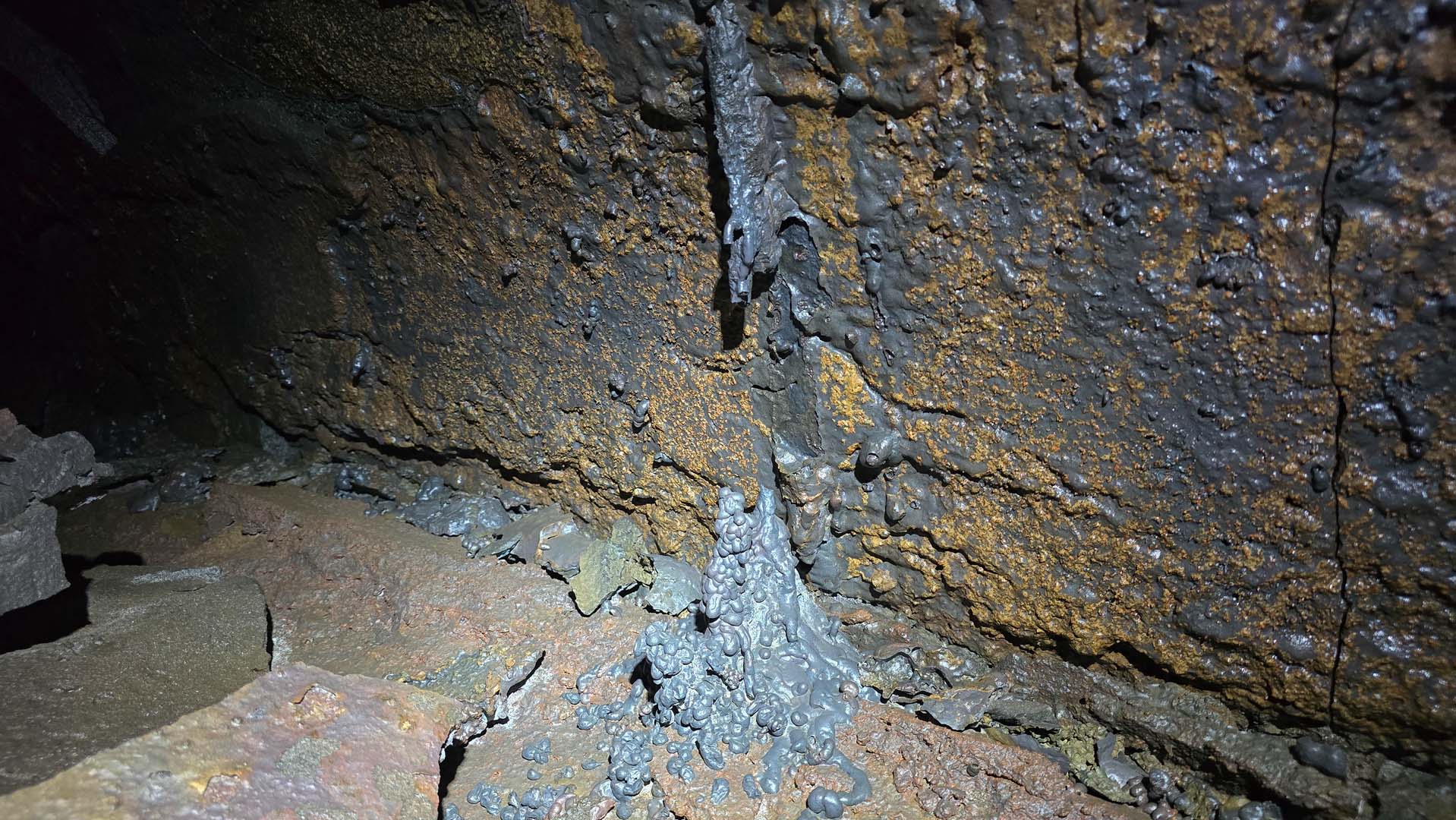
In this example we can see a stalagmite and stalactite almost joining to become a column.
The knobby, blistered appearance of this ceiling was created by gas bubbles expanding amongst the drip features.
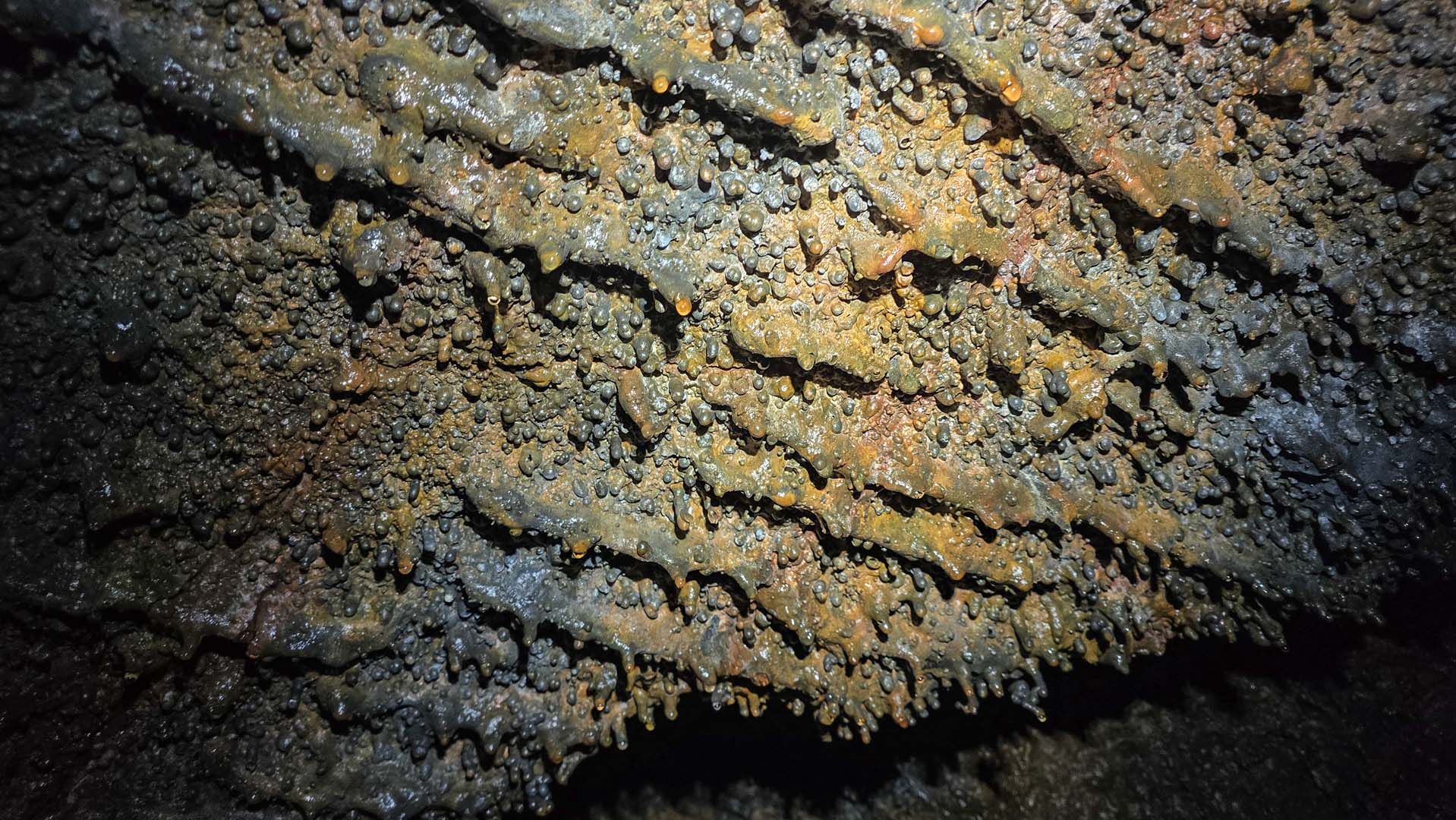
These are beaded lava stalactites. They are created by gas pressure rather than simple dripping. As the lava tube walls cooled into a semi-solid crust, intense gas pressure from crystallising rock inside the wall forced the remaining liquid lava out through tiny pores. , acting like toothpaste being squeezed from a tube. The distinctive “beads” formed because this extrusion happened in pulses. A blob would emerge and cool slightly, only for a fresh pulse of hot lava to break through its tip, creating a stacked chain of knobby cylinders that froze in place, likely within hours.
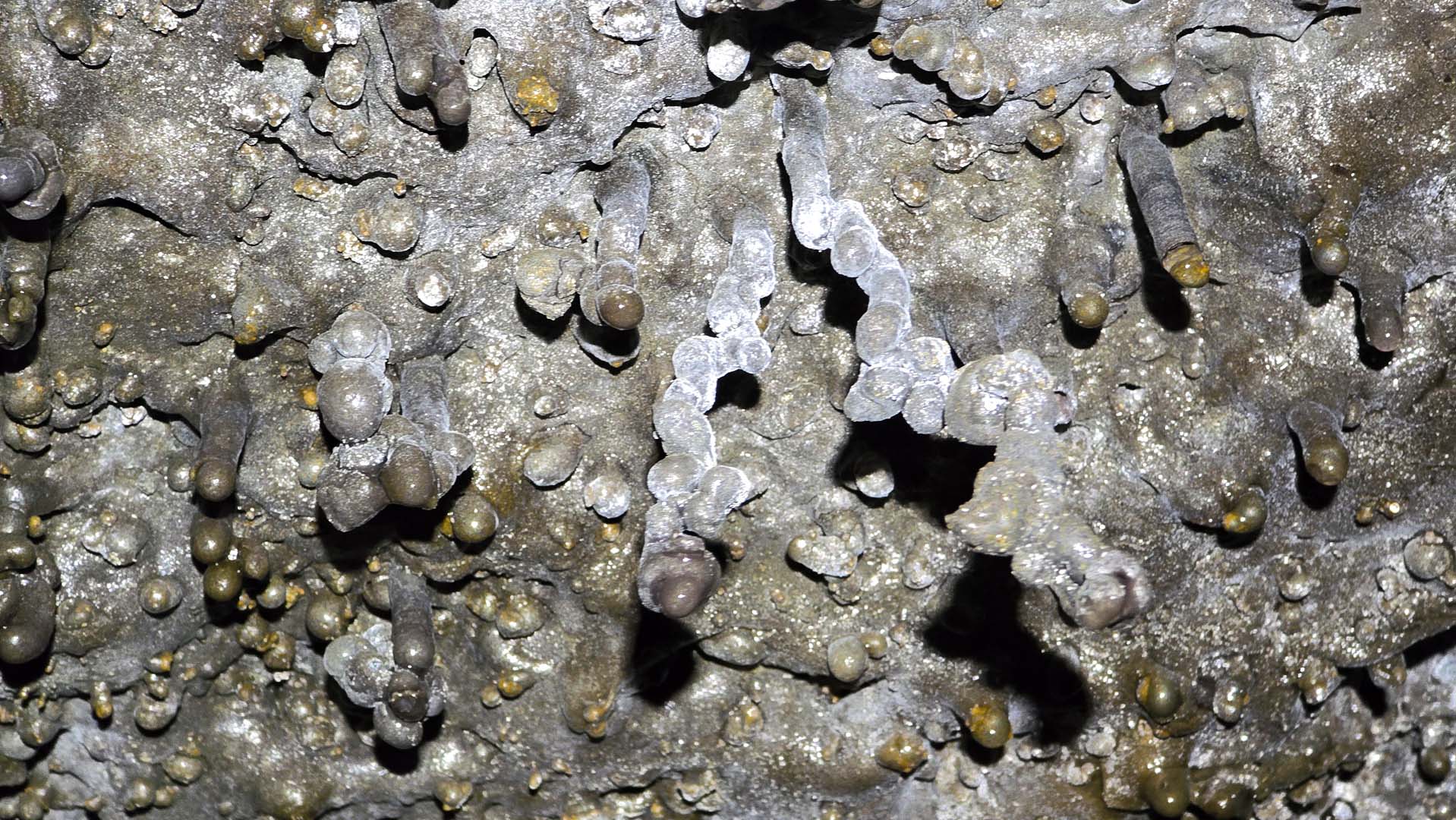
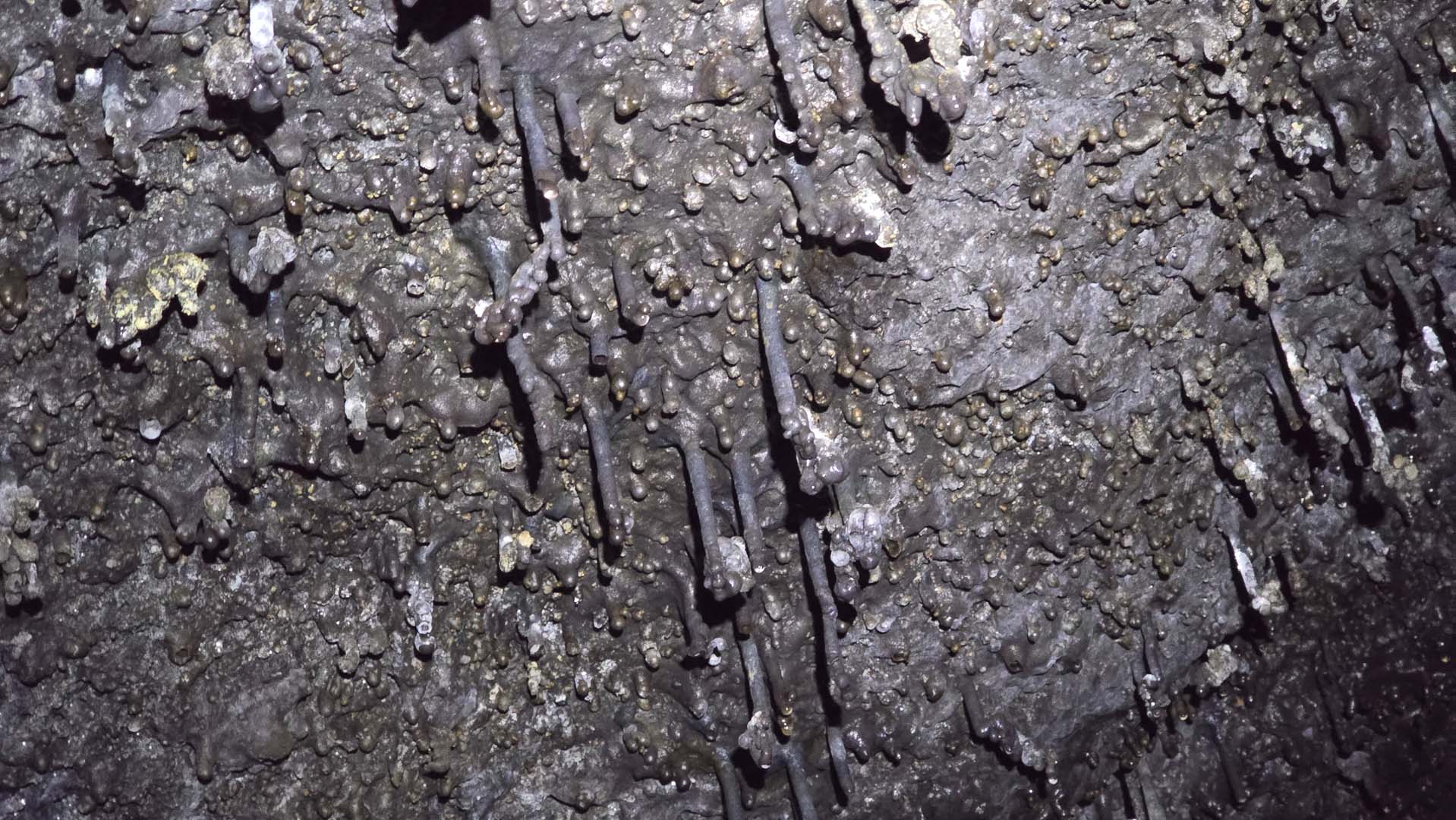
These lava straws also form through gas pressure, when the lava is pushed out as a hollow cylinder, creating a long, thin, straw-like shape.
The glazed texture forms when intense heat from the lava flow flash melts the cave walls and ceiling, creating a smooth, glassy skin over the rock. The colors come from oxidation: iron-rich areas exposed to air while hot rust into orange hematite, while areas that cool without oxygen remain dark grey.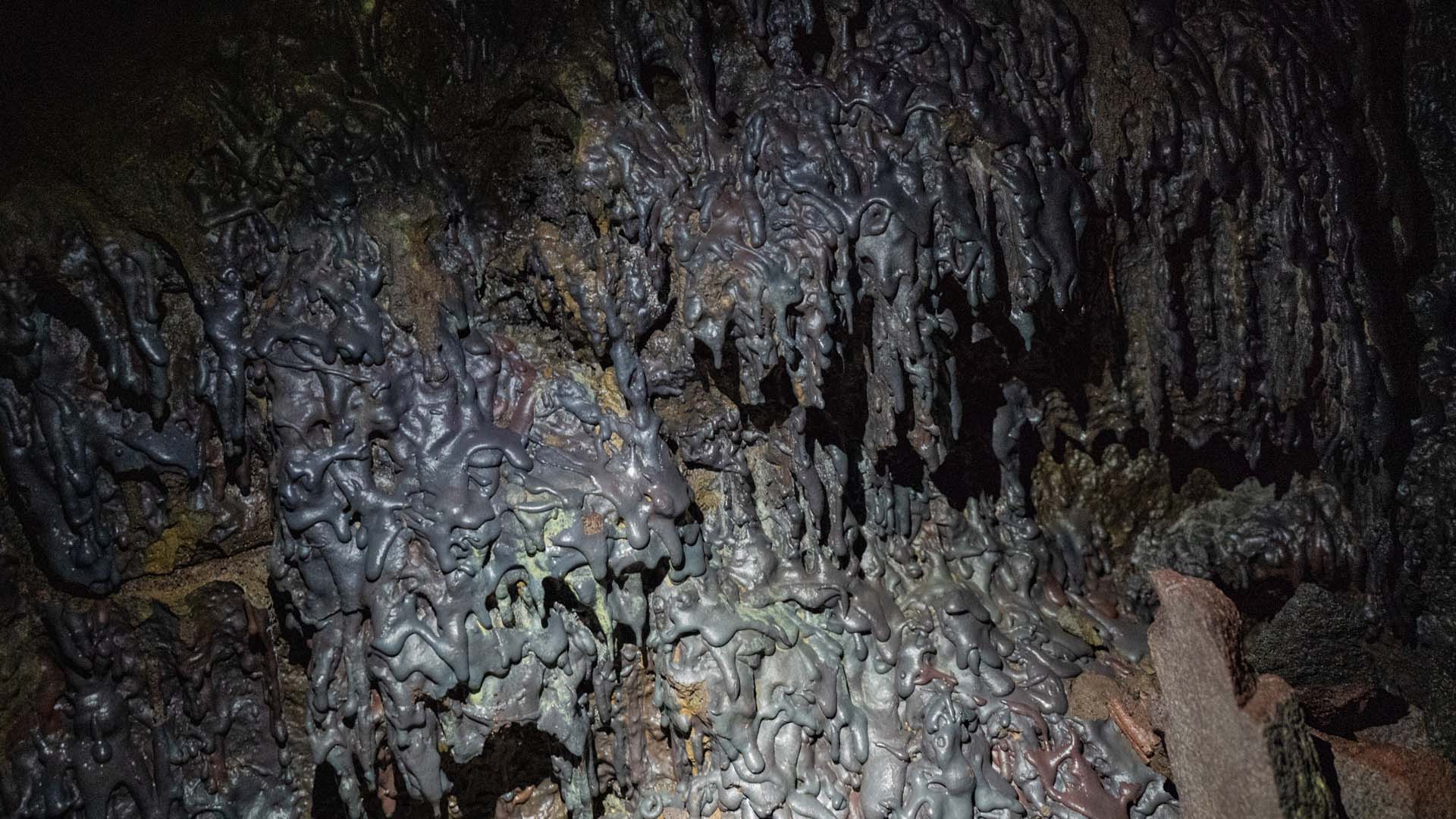
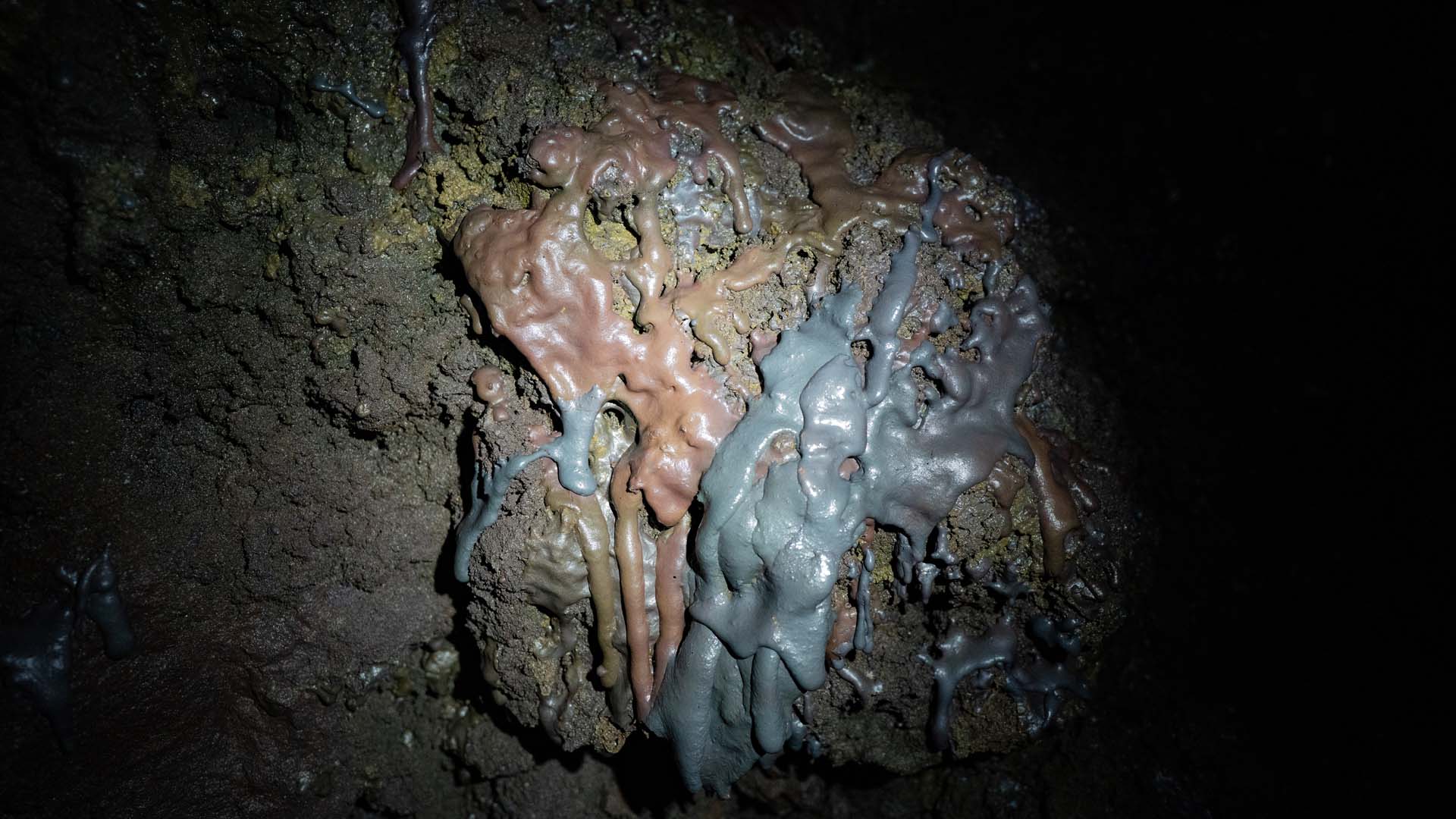
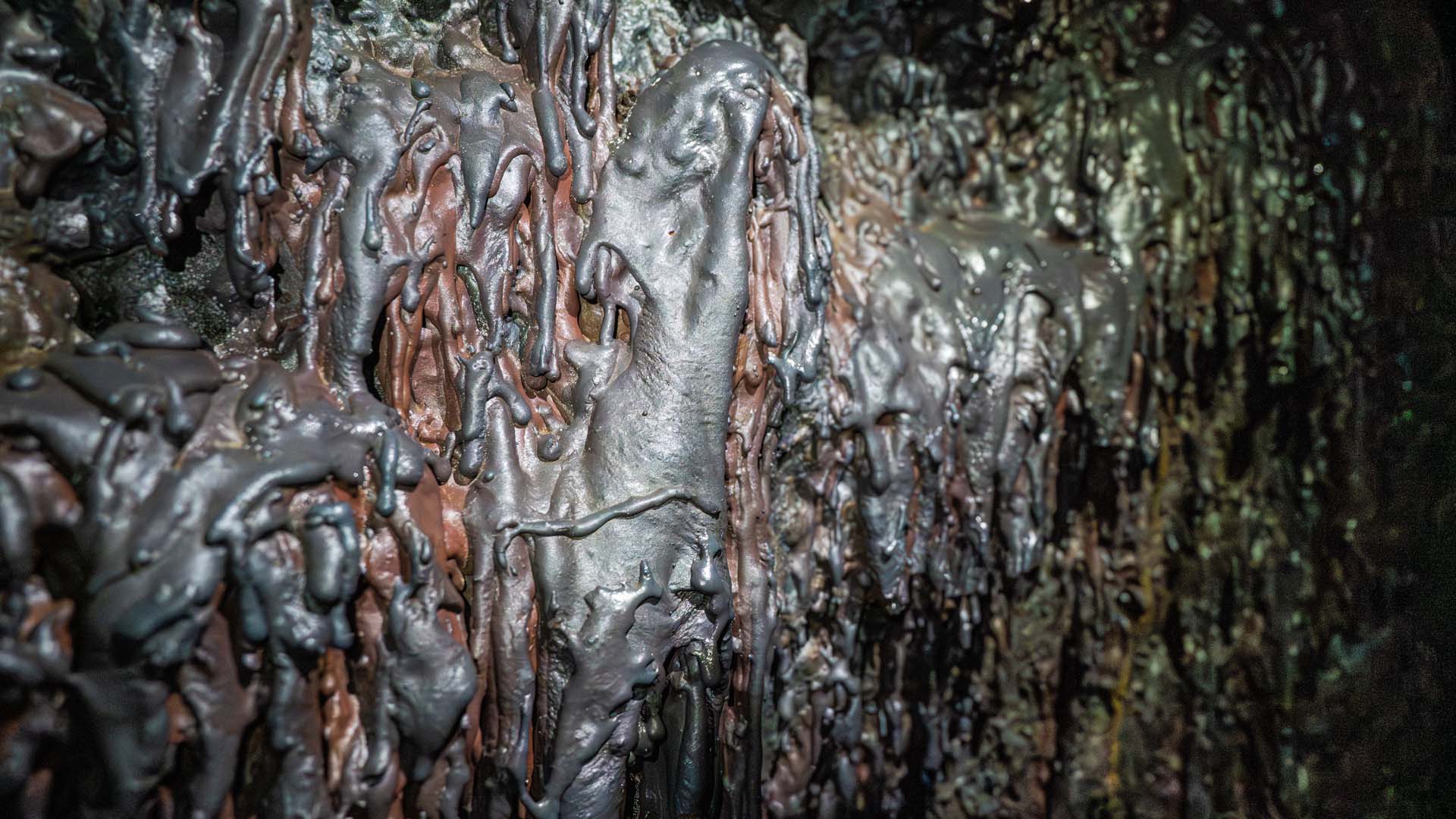
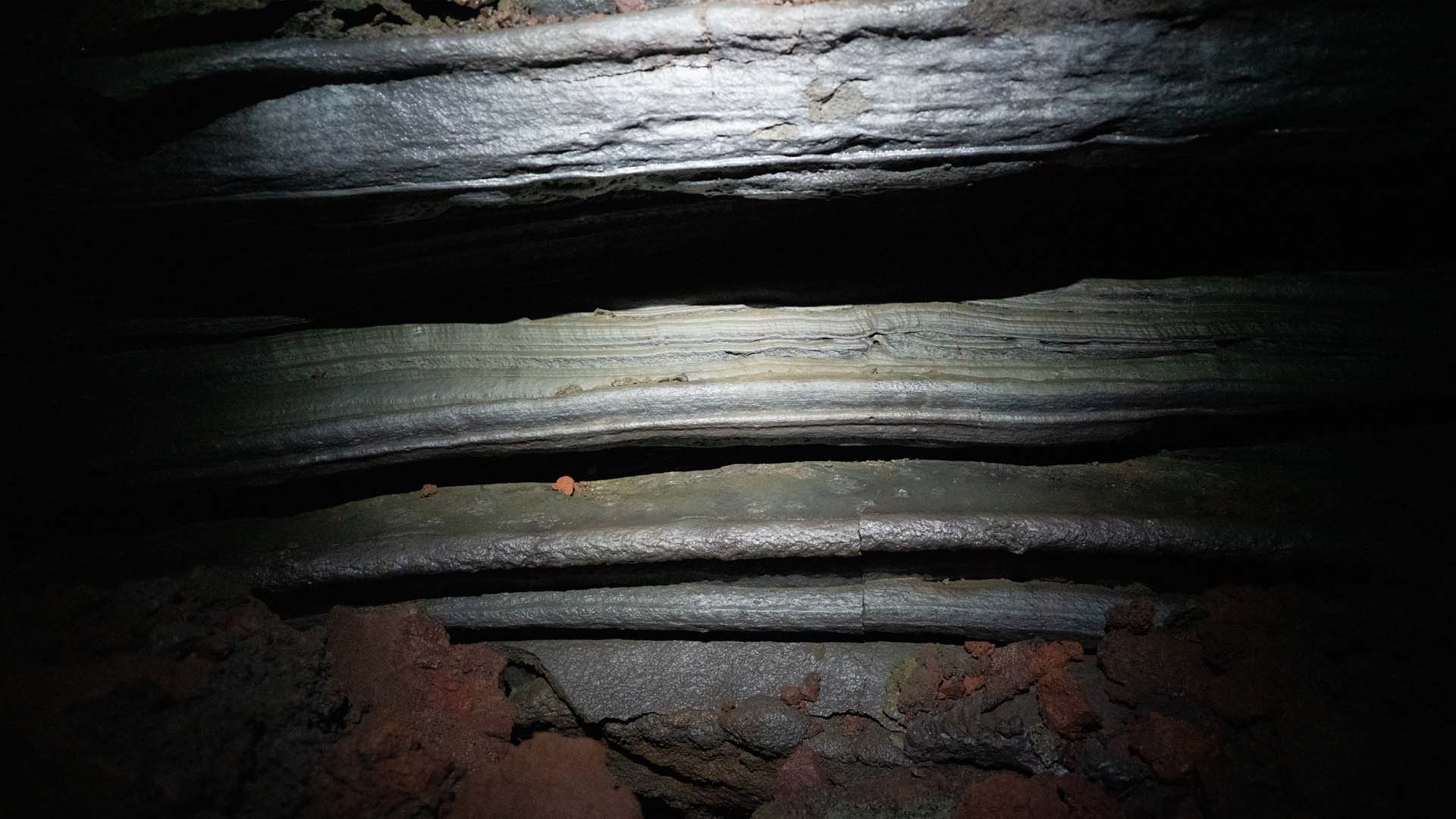
Wonderful examples of wall linings. Wall linings form when flowing lava coats the interior of the tube, creating distinct layers of rock that harden against the original walls like plaster. As the lava level fluctuates, it applies new coats, which can sometimes separate or peel away from the wall behind them due to cooling contraction or trapped gas. 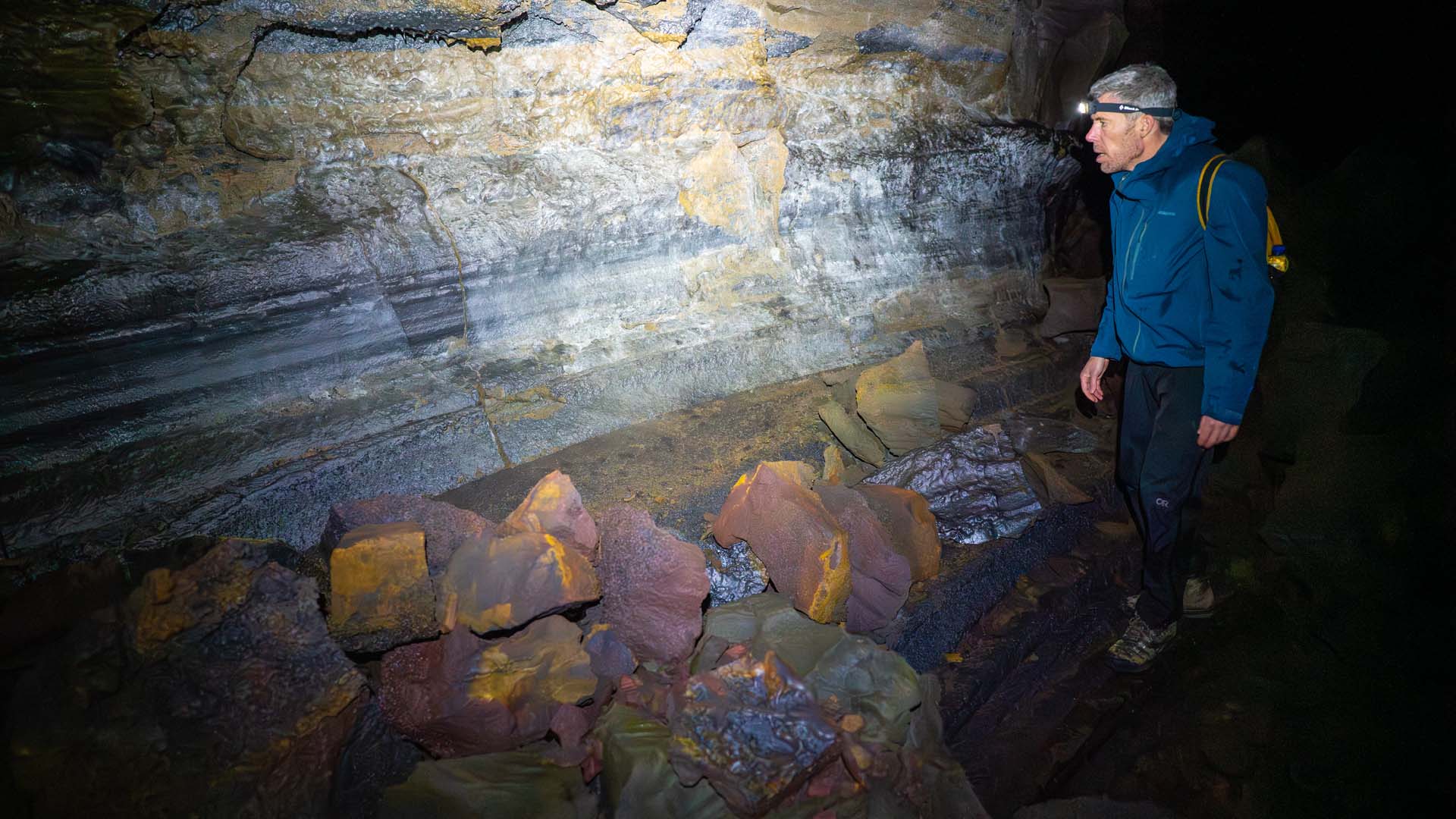
These are gas blisters created when expanding gases got trapped beneath the semi-solid skin of the cooling lava These gases push outward to form a bubble or blister. The thin skin of the blister eventually popped or broke due to the pressure, leaving behind the hollow, crater-like pits you see in the image.
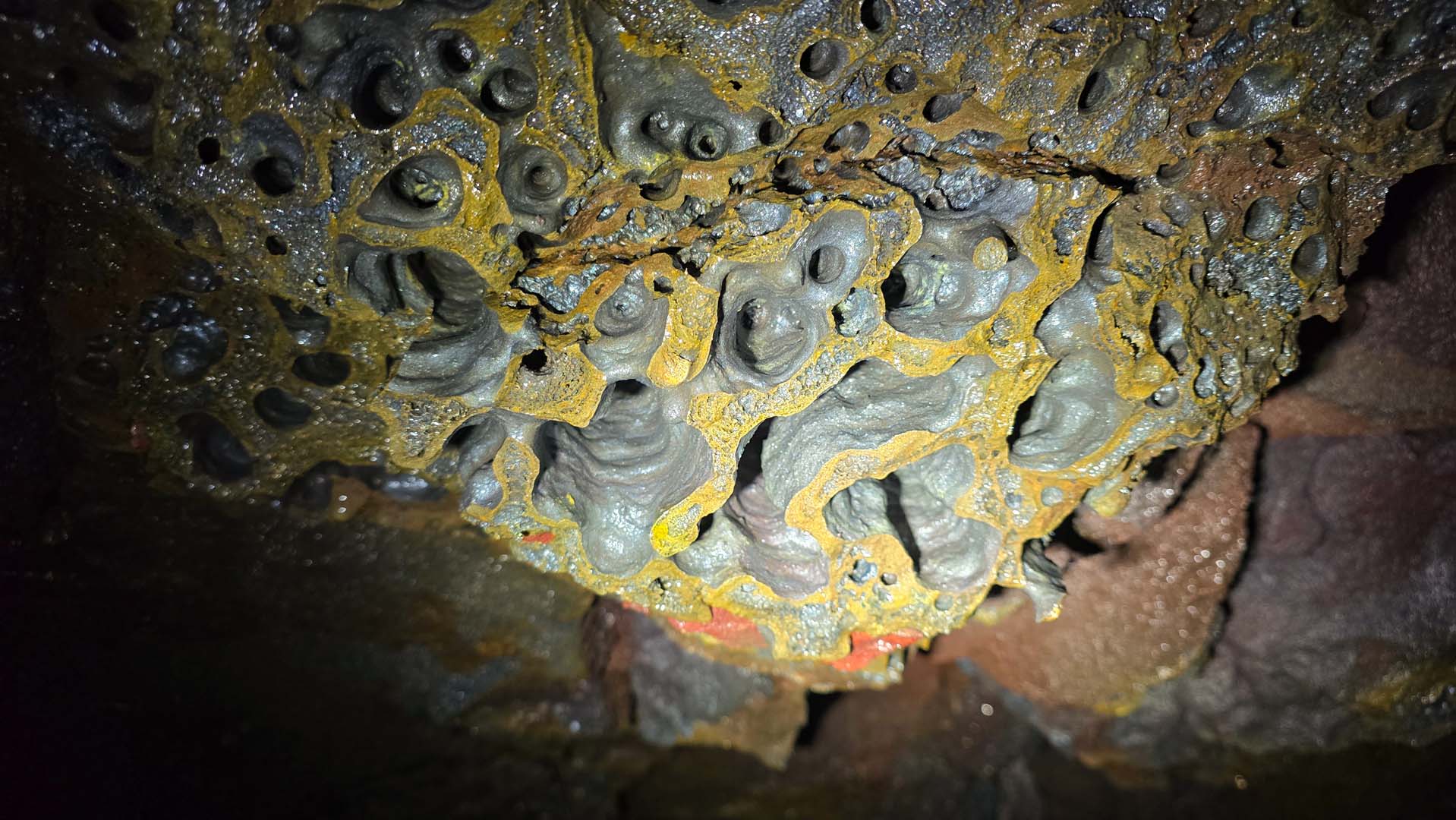
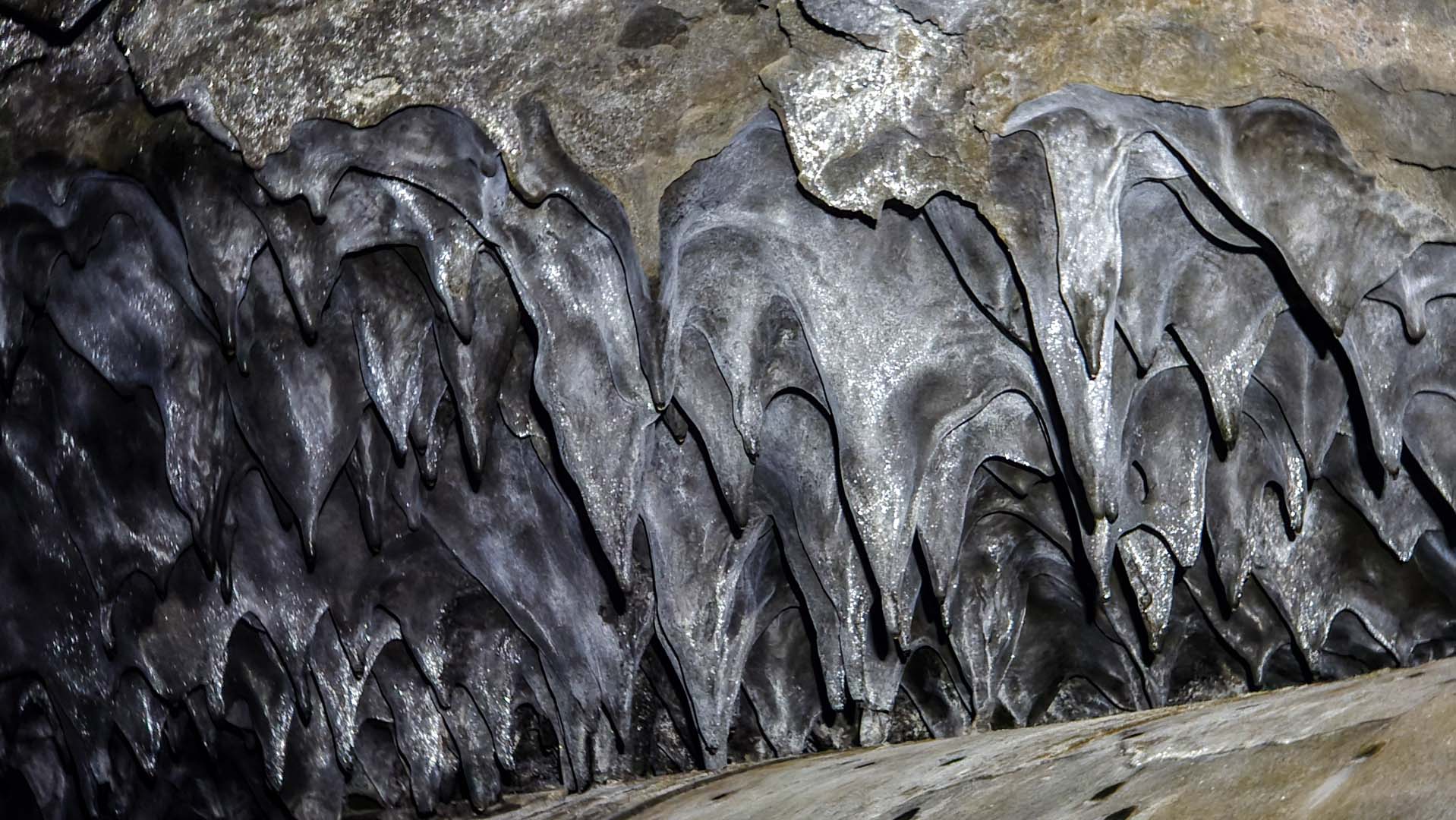
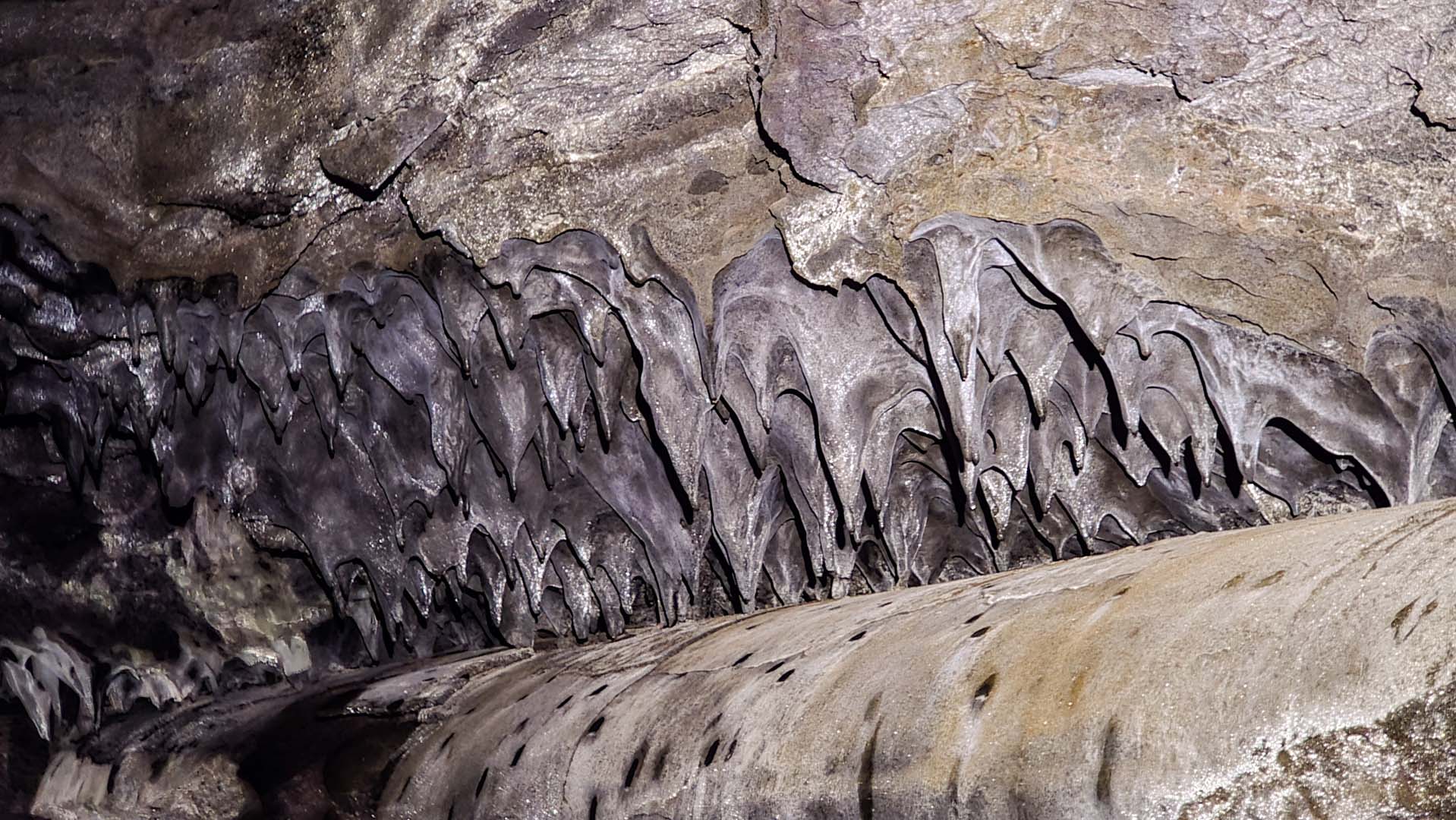
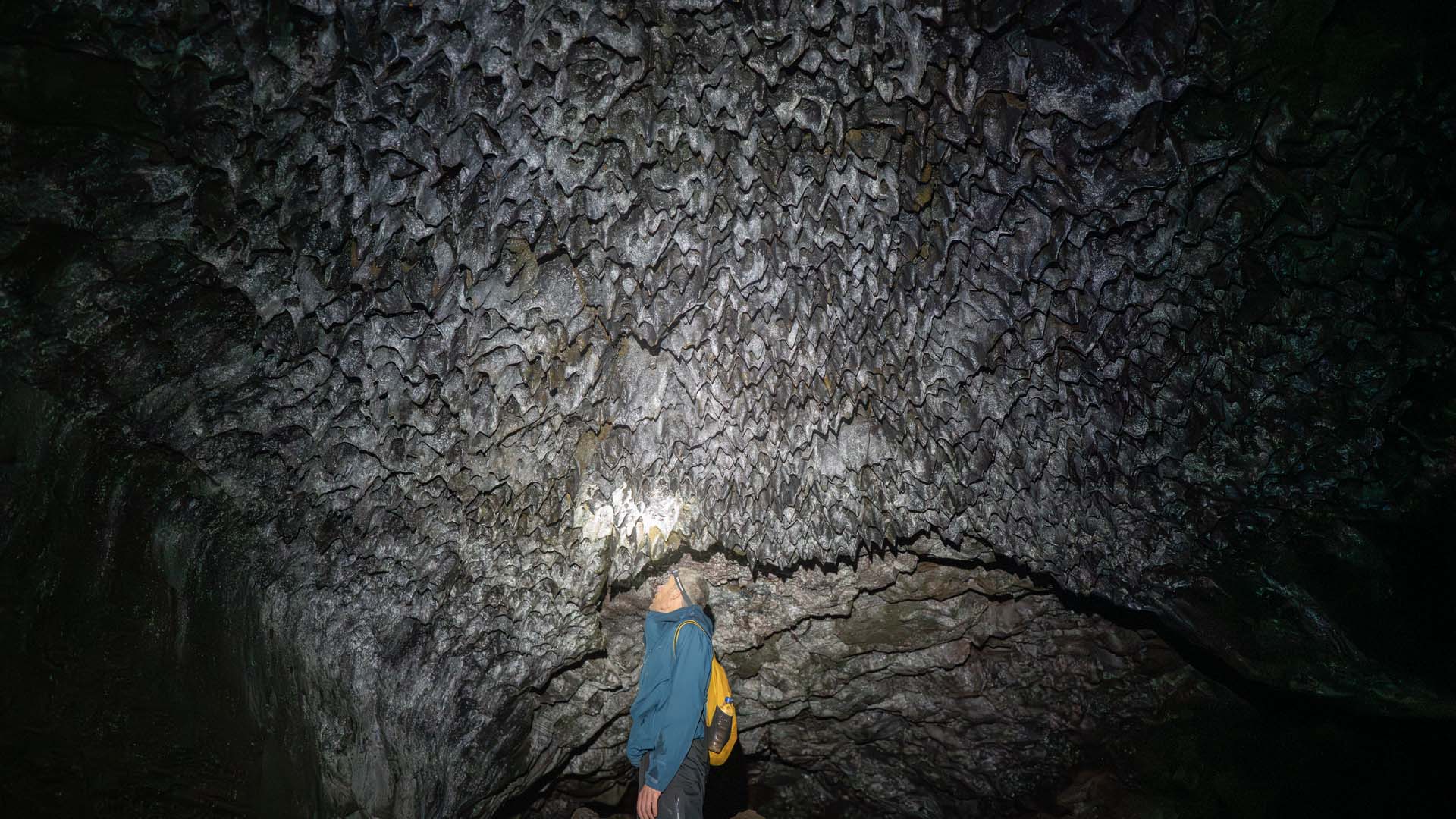
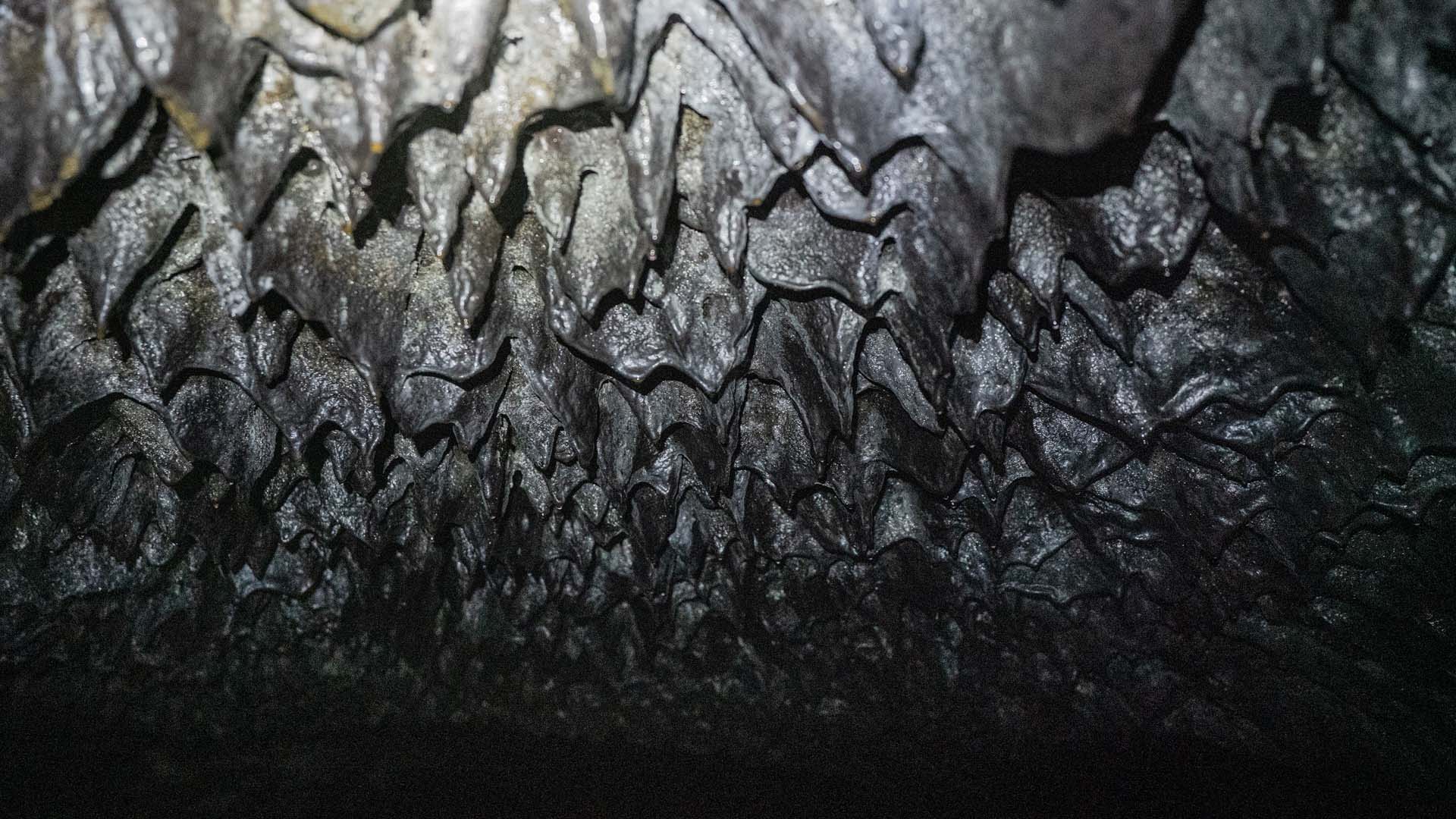
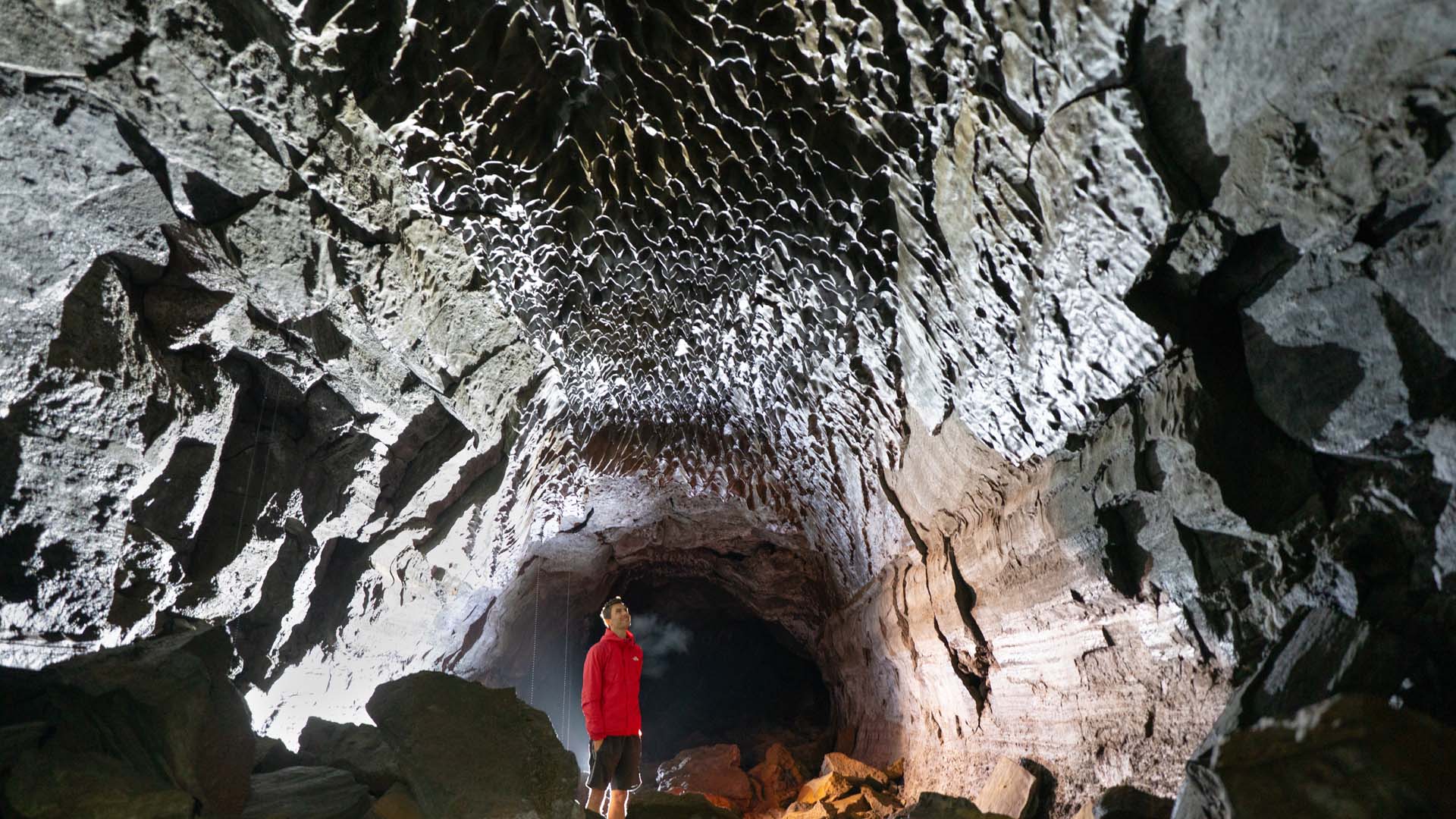
These images feature Shark Tooth Stalactites. They occur when the heat from the lava flow below remelts the ceiling, creating a semi-liquid glaze that drips downward due to gravity. As the lava level fluctuates, these drips are coated with fresh layers of molten rock, building up broad, tapered spikes that freeze in place as the cave cools.